
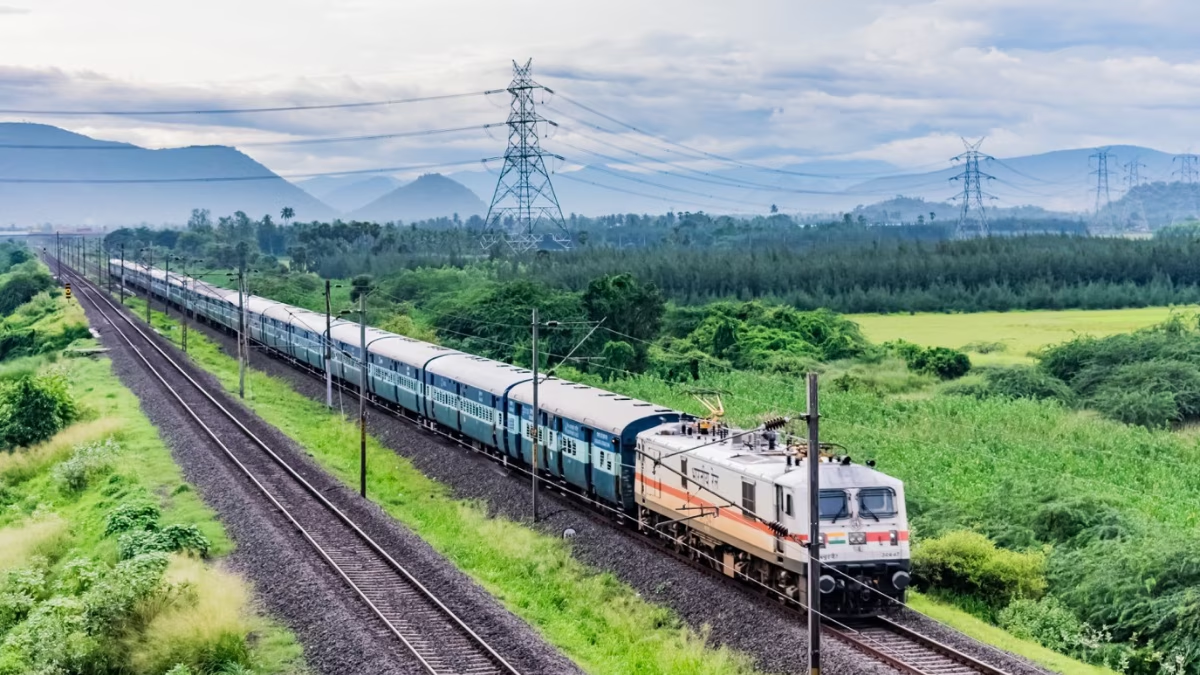

India’s rail renewal plan to fix over 7,900 kilometres of tracks in 2026 is a major infrastructure push aimed at improving safety, speed, and reliability of intercity travel. The programme has direct implications for passengers, freight movement, and regional connectivity across states.
Why the rail renewal plan matters in 2026
India’s rail renewal plan is time sensitive and rooted in operational necessity rather than expansion alone. A significant portion of the railway network was laid decades ago and carries traffic volumes far higher than originally designed. Wear and tear from heavy freight loads, increasing passenger trains, and higher average speeds has accelerated track fatigue.
The 2026 renewal drive focuses on replacing aging rails, sleepers, and ballast on high density routes. These routes connect major cities with Tier 2 and Tier 3 centres, making the plan critical for everyday intercity commuters. Track renewal is not cosmetic maintenance. It directly reduces derailment risk, allows higher permissible speeds, and cuts delays caused by speed restrictions on weak sections.
What does fixing 7,900 plus kilometres actually involve
Track renewal is a complex engineering process carried out in phases to keep trains running. It involves removing old rails, replacing sleepers with newer designs, strengthening ballast, and recalibrating alignment. In many sections, welded rails replace older jointed tracks, which improves ride comfort and stability.
The 7,900 kilometre figure includes both complete track replacement and heavy duty renewal on vulnerable stretches. Priority is given to routes with high traffic density, sharp curves, older bridges, and repeated maintenance alerts. This scale of work requires coordinated planning between engineering teams, train operations, and safety inspectors to minimise passenger disruption.
Impact on intercity travel speed and punctuality
One of the most immediate impacts of the rail renewal plan will be improved punctuality on intercity routes. Many delays today are caused by temporary speed restrictions imposed on weak track sections. Once renewed, these restrictions are lifted, allowing trains to operate closer to their designed speeds.
Passengers travelling between cities like Delhi to Jaipur, Mumbai to Nashik, Chennai to Vellore, or Howrah to Durgapur are likely to experience smoother journeys. Faster acceleration and reduced unscheduled halts can cut overall travel time even without introducing new trains. Over time, timetable reliability improves as fewer disruptions occur due to track faults.
Short term disruptions passengers should expect
While the long term benefits are clear, the renewal plan will cause short term inconvenience. During active renewal periods, trains may be rescheduled, diverted, or temporarily cancelled. Night blocks and sectional closures are commonly used to complete work faster, but some daytime disruptions are unavoidable.
Passengers on busy intercity corridors may notice temporary changes in departure times or longer travel durations. Communication and advance planning become crucial during this phase. The intent of the plan is not to reduce services but to strengthen the network for the next several decades.
Safety improvements and accident prevention
Safety is a core driver behind the rail renewal plan. Old tracks are more prone to fractures, misalignment, and ballast instability, especially during extreme weather. Renewed tracks reduce the probability of track related accidents and improve braking performance.
Modern track components also allow better integration with automated monitoring systems. Sensors and inspection tools can detect early signs of stress, enabling preventive maintenance rather than reactive repairs. For passengers, this translates into higher confidence in rail travel, especially on long intercity routes.
Benefits for freight and regional economies
Intercity passenger travel is only one part of the impact. Freight trains share many of the same corridors and benefit equally from stronger tracks. Improved track quality allows heavier loads and more consistent scheduling, which supports industries, agriculture supply chains, and small manufacturers in Tier 2 regions.
Cities connected by reliable rail corridors attract more business activity. Faster movement of goods reduces logistics costs and improves market access. Over time, this strengthens regional economies without the need for new lines or land acquisition.
How this plan fits into broader railway modernisation
The 2026 track renewal initiative complements other railway modernisation efforts such as signalling upgrades, station redevelopment, and rolling stock improvements. Newer trains can only perform optimally on high quality tracks. Renewal ensures that investments in faster coaches and engines are not limited by outdated infrastructure.
This approach reflects a shift from expansion driven growth to capacity and quality driven growth. Instead of laying more tracks everywhere, the focus is on making existing routes safer, faster, and more efficient.
What passengers can do to adapt during the renewal phase
Passengers planning intercity travel in 2026 should stay alert to schedule updates and advisories. Booking flexible tickets, checking train status closer to departure, and allowing buffer time for connections will help reduce stress.
For frequent travellers, understanding which routes are undergoing renewal can help plan alternatives temporarily. The inconvenience is real but short lived compared to the long term gains in safety and reliability.
Takeaways
The rail renewal plan targets safety and reliability on high traffic routes
Over 7,900 kilometres of track work will reduce delays and speed restrictions
Short term disruptions are expected but lead to long term travel improvements
Stronger tracks benefit both intercity passengers and freight movement
FAQs
Why is track renewal more important than adding new trains?
Without strong tracks, adding trains increases risk and congestion rather than efficiency.
Will ticket prices increase due to track renewal work?
Track renewal itself does not directly affect fares, which are set through separate policy decisions.
How long will disruptions last on affected routes?
Disruptions are typically temporary and limited to the duration of work on specific sections.
Will smaller cities benefit from this plan?
Yes, many renewed routes connect Tier 2 and Tier 3 cities to major hubs.