
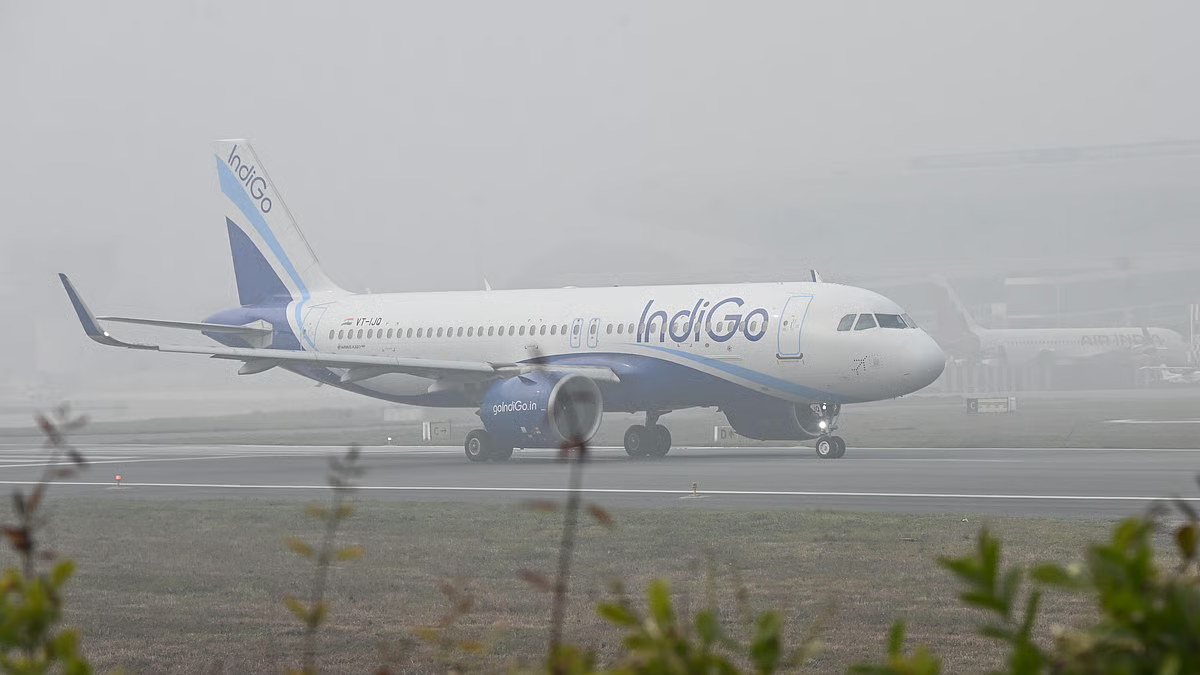

The Kolkata Shillong flight bomb scare triggered immediate aviation security protocols, leading to aircraft isolation and thorough checks. While no confirmed explosive device is publicly established in such incidents unless verified, the response highlights how aviation safety systems function during potential threats.
A bomb scare on a scheduled commercial flight is treated as a high priority security event under civil aviation norms. When a threat is received, whether through a message, call or suspicious input, airlines activate standard operating procedures coordinated with airport authorities and security agencies. In the Kolkata Shillong case, the aircraft was reportedly moved to a designated isolation area after landing, which is a routine step in bomb threat management. Such precautionary actions are mandated even if the threat later proves false.
Immediate Security Protocols Activated
When a bomb threat is reported, the pilot in command informs Air Traffic Control without delay. If the aircraft is airborne, the decision is taken based on fuel, location and risk assessment whether to divert or continue to the destination under surveillance. If already on ground, the aircraft is directed to a remote parking bay away from terminal buildings.
Isolation bays are specifically designed to reduce risk to passengers inside terminals and other aircraft. After parking, trained security personnel conduct a systematic inspection. This may include baggage re screening, cabin sweeps and use of detection equipment.
Passenger disembarkation is typically controlled and sequential. Authorities avoid chaos by issuing clear instructions through cabin crew. The goal is containment, verification and risk elimination without creating unnecessary panic.
Passenger Experience During a Bomb Scare
For passengers, a bomb scare can be unsettling. However, aviation safety procedures are built to maintain order. Cabin crew are trained to manage communication carefully. Passengers are often instructed to remain seated until clearance is given.
Delays are common during such incidents. Luggage may be rechecked individually. Identity verification processes can be repeated. While this may cause inconvenience, it ensures layered security.
Mobile communication may be temporarily restricted depending on the situation. Authorities prioritize operational control over information flow to prevent misinformation. Passengers are advised to rely only on official announcements rather than speculation.
It is important to note that many bomb threats in aviation globally turn out to be hoaxes. However, every threat is treated as credible until proven otherwise. This zero tolerance approach maintains aviation safety standards.
Aviation Security Framework in India
India’s civil aviation sector operates under strict security regulations aligned with international standards. Airports are categorized based on traffic volume and threat perception. Security screening involves multiple checkpoints including baggage scanners, passenger frisking and access control to restricted zones.
Airlines are required to maintain bomb threat assessment committees and follow documented protocols. These include evaluating the credibility of the threat, coordinating with law enforcement and documenting every action taken.
Aircraft are built with compartmentalized systems and reinforced cockpit security. Even in high risk alerts, pilots maintain communication with ground authorities throughout the process.
Impact on Flight Operations and Airline Scheduling
A bomb scare disrupts not only the affected flight but sometimes airport operations temporarily. The aircraft involved cannot resume service until security clearance is granted. This may lead to cascading delays in subsequent schedules.
Airlines often provide alternate arrangements or rebooking for passengers if delays extend significantly. Operational losses occur due to ground time, security deployment and potential reputation concerns. However, safety remains the overriding priority.
For smaller routes such as Kolkata to Shillong, which connect Tier Two and North Eastern regions, operational resilience is important. Ensuring passenger confidence in regional connectivity routes is critical for sustained growth.
What Comes Next After a Security Alert
After the aircraft is declared safe, a detailed investigation typically follows to trace the source of the threat. Law enforcement agencies examine communication channels, digital footprints and any suspicious passenger behavior.
If the threat is proven to be false and malicious, legal action can be initiated under relevant criminal laws. Aviation security threats are treated seriously and can result in severe penalties.
Airlines also conduct internal reviews to evaluate response effectiveness. Crew communication, evacuation readiness and coordination with airport authorities are assessed to improve future readiness.
For passengers, the incident serves as a reminder to take safety briefings seriously. Pre flight safety demonstrations and emergency instructions are not formalities. They are practical guides for real situations.
Maintaining Public Confidence in Aviation Safety
Despite occasional bomb scares or emergency alerts, commercial aviation remains one of the safest modes of transport. Strict screening, layered security and rapid response systems significantly reduce risk.
Transparency in communication after incidents helps maintain public trust. Clear updates about flight status, investigation progress and passenger safety are essential.
Regional connectivity in eastern and North Eastern India has expanded in recent years. Ensuring that safety standards remain uncompromised is crucial for sustaining passenger growth in these corridors.
Takeaways
• Bomb threats trigger mandatory isolation and inspection protocols
• Passenger safety procedures prioritize containment and verification
• Delays and repeated checks are part of layered aviation security
• Legal action may follow if a threat is proven malicious
FAQs
Q1: What happens when a bomb threat is reported on a flight?
The aircraft is isolated, security agencies conduct a full inspection and passengers are managed under controlled procedures until clearance is given.
Q2: Are bomb scares common in Indian aviation?
They are relatively rare, but every reported threat is treated as credible until investigated thoroughly.
Q3: Why is the aircraft moved away from the terminal?
An isolation bay reduces potential risk to other aircraft and terminal passengers during inspection.
Q4: Can passengers claim compensation after such delays?
Compensation depends on airline policy and regulatory guidelines, but safety related delays are treated differently from routine operational delays.