
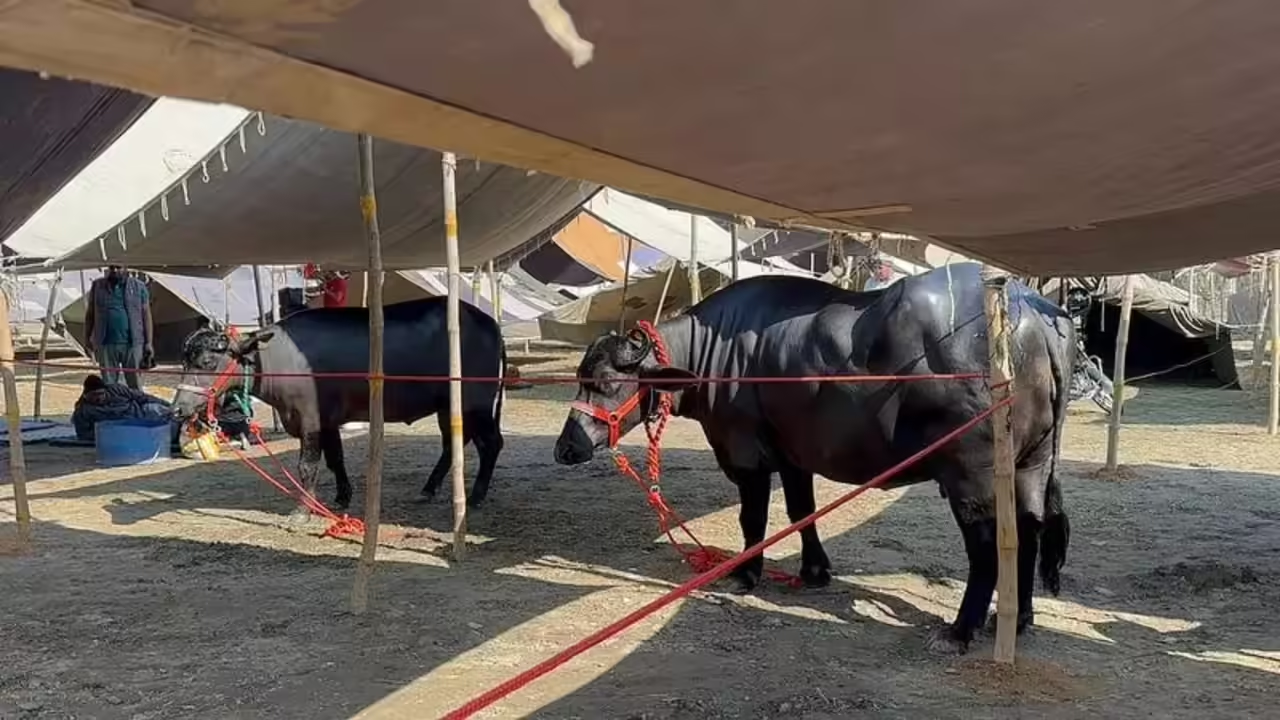

Kurukshetra Cattle Fair 2026 has seen unusually high turnout from farmers and livestock rearers across North India. This article explains the economic, cultural, and policy factors driving participation, and why the fair continues to matter for rural livelihoods and traditional livestock trade.
Understanding the intent and time sensitivity
This topic is time sensitive and news driven. The Kurukshetra Cattle Fair 2026 is a live rural event reflecting current trends in agriculture, animal husbandry, and farmer economics. The intent is to explain why participation is rising this year, not to romanticize the event or offer opinion. The tone is explanatory and grounded in on ground realities.
The main keyword Kurukshetra Cattle Fair 2026 frames the discussion around current farmer behaviour and livestock market conditions.
What the Kurukshetra Cattle Fair represents
The Kurukshetra Cattle Fair is one of North India’s most prominent rural livestock markets. It functions as a trading hub where farmers buy and sell cattle, buffaloes, horses, camels, and other livestock used for dairy, agriculture, and breeding.
Beyond trade, the fair is a meeting point for breeders, veterinarians, equipment sellers, and rural entrepreneurs. It blends commerce with tradition, making it both an economic and cultural event.
In 2026, the scale of participation reflects not just tradition but economic necessity, as farmers seek better market access and price discovery.
Rising turnout driven by livestock economics
One of the primary reasons farmers are turning out in large numbers is the growing importance of livestock income. Dairy and allied activities now form a critical part of rural household earnings, especially where crop incomes are volatile.
Livestock offers more predictable cash flow through milk sales and breeding value. The fair allows farmers to assess animal quality, compare prices, and negotiate directly without intermediaries.
With rising costs of fodder and veterinary care, farmers are more selective about buying and selling animals, making physical inspection at fairs essential.
Demand for quality breeds and breeding stock
Kurukshetra Cattle Fair 2026 has seen strong interest in indigenous and high yield breeds. Farmers are increasingly focused on productivity, disease resistance, and long term sustainability rather than just animal size.
Breeders use the fair to showcase well maintained animals, often trained to highlight strength and health. Competitive displays and informal judging help establish credibility and pricing benchmarks.
For livestock rearers, the fair provides access to buyers who understand breed value, leading to better price realization compared to local weekly markets.
Role of government schemes and awareness
In recent years, awareness of livestock related government schemes has increased. Farmers attending the fair often exchange information on subsidies, insurance, veterinary services, and breeding programs.
Extension services, veterinary camps, and informational stalls at the fair help farmers understand best practices in animal care and productivity. This knowledge sharing adds non monetary value to participation.
As awareness grows, fairs like Kurukshetra become platforms not just for trade but for rural capacity building.
Cultural pull and community participation
The fair is deeply rooted in regional culture. For many rural families, attending the cattle fair is a social event that reinforces community ties and shared identity.
Traditional activities, competitions, and exhibitions attract visitors beyond traders. This cultural pull increases footfall and creates a lively marketplace that benefits sellers.
Community participation also encourages transparency. Prices are influenced by collective observation, reducing information asymmetry that often disadvantages small farmers.
Shift from informal to organized livestock markets
Farmers are increasingly seeking organized and reputable marketplaces. The Kurukshetra Cattle Fair benefits from long standing credibility, which reassures both buyers and sellers.
Unlike informal roadside deals, fairs offer visibility, competition, and a degree of accountability. Buyers can compare animals side by side, while sellers gain access to a larger pool of potential customers.
This shift toward structured markets explains why attendance remains strong even as digital platforms emerge.
Impact on Tier-2 and rural economies
The fair has a spillover effect on the local economy. Transporters, feed suppliers, equipment sellers, and small vendors benefit from increased activity.
For Tier-2 towns and surrounding villages, the cattle fair generates short term employment and boosts local trade. Hotels, eateries, and service providers also see higher demand.
This economic ripple reinforces the fair’s relevance beyond agriculture alone.
Challenges farmers still face
Despite high turnout, challenges remain. Price volatility, rising input costs, and limited access to formal credit affect livestock rearers.
Animal health risks and transport logistics can also deter participation for some farmers. Weather conditions and regulatory requirements add uncertainty.
However, the continued high participation in 2026 suggests that farmers still see the benefits outweighing the risks.
Why Kurukshetra Cattle Fair remains relevant in 2026
In an era of digital marketplaces and changing agricultural practices, the Kurukshetra Cattle Fair continues to serve a critical function.
It combines price discovery, knowledge exchange, and cultural continuity in a way few platforms can replicate. For farmers and livestock rearers, it remains a trusted space to make important economic decisions.
The large turnout in 2026 reflects both resilience and adaptation within rural India.
Takeaways
Livestock income is driving higher farmer participation at the fair
Quality breeding and price discovery attract serious buyers and sellers
Government awareness and veterinary support add value to attendance
The fair supports both rural trade and local economies
FAQs
Why is the Kurukshetra Cattle Fair important for farmers?
It offers direct access to buyers, better pricing, and exposure to quality breeds.
What types of livestock are traded at the fair?
Cattle, buffaloes, horses, camels, and other farm animals are commonly traded.
Is the fair only about buying and selling animals?
No, it also serves as a platform for knowledge exchange and community engagement.
Why has participation increased in 2026?
Rising importance of livestock income and organized market access have boosted turnout.