
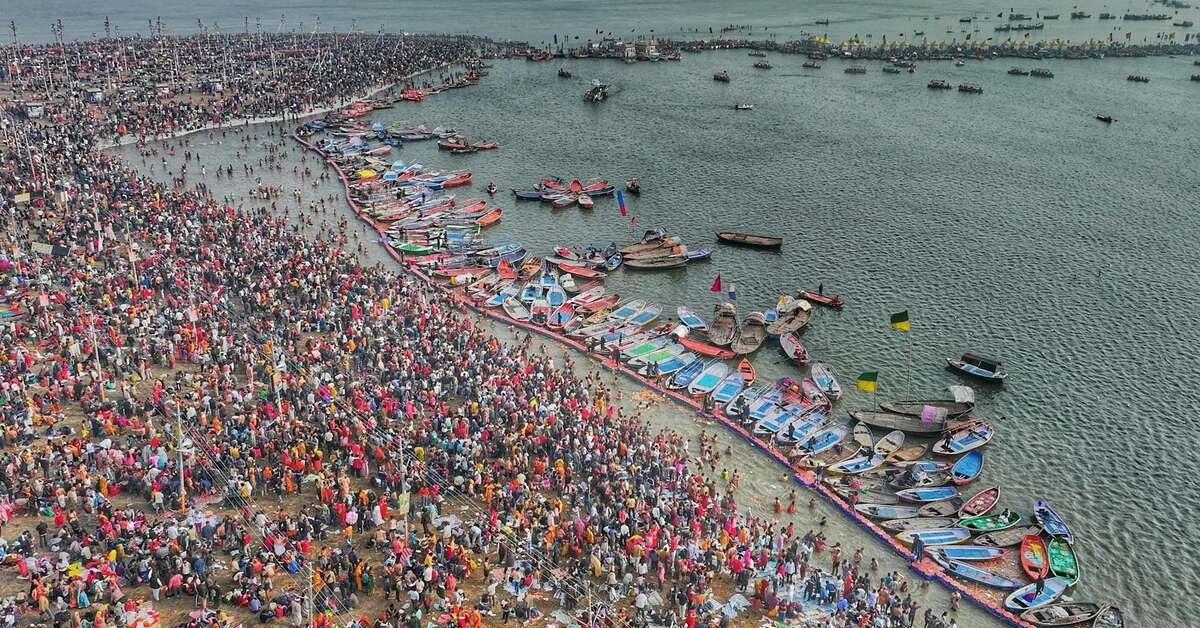

Magh Mela rituals and crowd management in Prayagraj are central to a safe and meaningful pilgrimage during the peak bathing period. This is a time sensitive topic as footfall rises daily, temporary infrastructure is active, and administrative advisories change based on crowd density and river conditions.
The intent of this topic is informational with a strong community and safety focus. Because the Mela operates on a fixed seasonal calendar and real time crowd dynamics, the tone remains factual, practical, and grounded in on-ground realities.
Understanding the Significance of Magh Mela Rituals
Magh Mela is observed during the Hindu month of Magh and centres on ritual bathing at the Triveni Sangam. Pilgrims believe that taking a holy dip during auspicious dates cleanses sins and supports spiritual discipline. Daily practices include early morning snan, kalpavas, charity, yajna, and listening to discourses.
Local pilgrims often follow fixed routines across weeks, while visitors arrive in large numbers on key bathing days. Understanding the ritual schedule helps manage expectations and reduces congestion. Early morning hours see the highest crowd concentration near ghats, while mid day and late afternoon are relatively calmer for ancillary rituals.
Pilgrims are advised to plan rituals with awareness of timing to avoid unnecessary crowd pressure during peak hours.
Peak Days and Crowd Patterns to Expect
Crowd intensity at Magh Mela is not uniform. Certain dates see sharp spikes due to religious significance, weekends, and improved transport connectivity. On these days, administration enforces tighter movement controls near ghats and pontoon bridges.
Local pilgrims should expect longer walking distances, temporary route diversions, and staggered access to bathing points. Entry and exit routes are often separated to reduce cross flow. Understanding these patterns in advance prevents panic and fatigue, especially for elderly participants.
Families and group pilgrims should agree on meeting points and timelines before entering crowded zones to avoid separation.
Entry Routes, Parking, and Movement Inside the Mela Area
Prayagraj city implements a sector based entry system during Magh Mela. Vehicles are typically allowed only up to designated parking zones on peak days. From there, pilgrims must walk or use authorised shuttle services.
Inside the Mela area, movement is regulated through barricaded corridors. Pontoon bridges are monitored for load capacity and may be temporarily closed if crowd density increases. Local pilgrims familiar with alternate routes still need to follow instructions as routes change daily.
Avoid carrying heavy luggage. Light, hands free movement improves safety and reduces congestion for others.
Safety Measures Every Pilgrim Should Follow
Personal safety during Magh Mela depends on discipline and situational awareness. Slippery riverbanks, cold weather, and dense crowds increase risk.
Pilgrims should wear footwear with grip and avoid running near ghats. Children and elderly people should be kept on the inner side of walking corridors, away from crowd pressure. Holding hands in crowded areas reduces separation risk.
Cold water immersion requires caution. People with health conditions should consult doctors before participating in early morning snan. Adequate warm clothing and hydration are essential, especially during prolonged stays.
Crowd Control Measures and Administrative Support
Authorities deploy police, volunteers, and disaster response teams across the Mela area. Surveillance systems and public announcement networks guide crowd movement and issue real time instructions.
Lost and found centres operate continuously to assist separated individuals. Medical camps are positioned near major ghats and intersections. Local pilgrims should familiarise themselves with nearest help points upon arrival.
Following instructions from volunteers and security personnel is critical. These directives are based on live crowd assessment rather than convenience.
Special Guidance for Local and Frequent Pilgrims
Local pilgrims often visit multiple times during Magh Mela, which can create a sense of familiarity. However, conditions change daily based on crowd size, river flow, and weather.
Do not assume previous day routes or timings will remain the same. Check daily advisories before leaving home. Travelling in smaller groups during peak days reduces stress and speeds movement.
Residents hosting visiting relatives should brief them on safety norms and meeting points in advance to avoid confusion.
Managing Rituals Without Contributing to Congestion
Perform rituals efficiently and move away from ghats promptly after completion. Lingering near bathing areas increases congestion and safety risk.
Charity and offerings should be planned at designated locations rather than crowded walkways. Listening to discourses can be scheduled during non peak hours when crowd pressure is lower.
Respecting shared space ensures smoother movement for all pilgrims and reduces the likelihood of administrative restrictions.
Emergency Preparedness and Health Awareness
Despite precautions, emergencies can occur. Pilgrims should carry basic identification and emergency contact details. Mobile phones should be fully charged before entering the Mela area.
In case of discomfort, dizziness, or injury, seek medical help immediately rather than attempting to exit crowded zones alone. Early reporting prevents complications.
Local residents can assist by guiding visitors calmly and discouraging panic during temporary stoppages or diversions.
Community Responsibility During Magh Mela
Magh Mela is a collective spiritual event that depends on mutual responsibility. Individual discipline directly affects crowd safety.
Avoid spreading rumours or reacting to unverified information. Trust official announcements and follow crowd flow even if it seems slower.
Community cooperation allows authorities to maintain safety while preserving the spiritual atmosphere of the Mela.
Takeaways
Magh Mela rituals require timing awareness to avoid peak crowd stress
Following crowd management instructions ensures personal and collective safety
Local pilgrims should adapt daily as routes and controls change frequently
Community discipline is key to a safe and meaningful pilgrimage
FAQs
What is the safest time for ritual bathing during Magh Mela?
Early morning is traditional but crowded. Late morning or afternoon offers safer conditions with lower density.
Are children and elderly allowed at peak bathing times?
Yes, but extra caution is required. Avoid peak congestion and keep them within protected walking corridors.
How can pilgrims get help if separated from family?
Lost and found centres and help desks operate across the Mela area. Public announcements are also used.
Do local pilgrims need to check advisories daily?
Yes. Routes, entry points, and restrictions change based on crowd conditions and weather.