
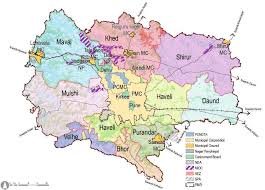

The Maharashtra government has ordered preparation of a draft structure plan for the Pune Metropolitan Region, placing urban planning in focus as the city expands rapidly. The move signals tighter land use regulation, infrastructure alignment and long term growth management for one of India’s fastest growing urban clusters.
The Pune Metropolitan Region has witnessed sustained population growth driven by IT services, automobile manufacturing, education hubs and real estate expansion. As urban sprawl stretches beyond Pune city into Pimpri Chinchwad and surrounding towns, the need for coordinated planning has intensified. The draft structure plan is expected to guide zoning, infrastructure corridors, transport networks and environmental safeguards over the coming decades.
Why a Draft Structure Plan Is Critical Now
Pune’s urban footprint has expanded sharply over the last two decades. Peripheral villages have transitioned into residential and industrial zones. Unplanned growth often leads to traffic congestion, water stress and pressure on civic amenities.
A draft structure plan provides a macro level blueprint. It maps residential, commercial, industrial and green zones while aligning them with future infrastructure projects. This prevents random land conversion and speculative construction that strain public services.
The Pune Metropolitan Region includes multiple municipal councils and local bodies. Without a unified planning framework, overlapping approvals and fragmented infrastructure development can slow progress. The new planning directive aims to reduce such inefficiencies.
Transport and Infrastructure Alignment in Focus
One of the central objectives of a metropolitan structure plan is transport integration. Pune has already developed metro rail corridors and is expanding road networks to address congestion. A structured urban development plan ensures that housing clusters are aligned with transport nodes.
Transit oriented development encourages higher density construction near metro stations and major highways. This reduces travel time and supports public transport usage. The draft plan is likely to factor in ring roads, expressway connectivity and logistics corridors.
Water supply, sewage treatment and solid waste management systems must also scale with population growth. Planning these utilities in advance reduces the risk of future bottlenecks.
Industrial and IT Expansion Considerations
Pune is a major IT and manufacturing hub in western India. Industrial belts in Pimpri Chinchwad and surrounding zones attract domestic and international investment. A metropolitan level plan helps designate industrial corridors while protecting residential zones from pollution impact.
Zoning clarity provides confidence to investors. When land use regulations are transparent, project approvals become more predictable. This encourages long term capital commitment.
In addition, emerging sectors such as electric mobility, data centers and research facilities require specific infrastructure support. A structured planning approach can allocate dedicated zones for such industries without disrupting existing urban settlements.
Environmental Safeguards and Green Zones
Rapid urbanization in the Pune Metropolitan Region has raised environmental concerns including hill cutting, river pollution and loss of green cover. A draft structure plan typically integrates environmental buffers and conservation zones.
Protection of riverbanks, hills and forest patches is essential for ecological balance. Planned green corridors can reduce urban heat and improve air quality. Water bodies must be mapped carefully to prevent encroachment.
Climate resilience is also becoming central to urban planning. Flood management, rainwater harvesting integration and sustainable drainage systems are critical for long term stability.
Impact on Real Estate and Housing Development
Urban planning decisions directly influence property markets. Once zoning regulations are clarified, developers align projects accordingly. Areas designated for mixed use or residential growth may see increased activity.
However, stricter planning norms can also limit speculative development. Height restrictions, floor space index controls and environmental compliance requirements affect construction economics.
For homebuyers, a structured metropolitan plan can improve confidence. Planned infrastructure and transport connectivity enhance property value stability over time.
Governance and Implementation Challenges
Drafting a structure plan is only the first step. Effective implementation requires coordination between metropolitan authorities, municipal corporations and state departments. Delays in approvals or policy inconsistencies can dilute impact.
Public consultation is another important aspect. Residents and stakeholders may raise concerns regarding zoning changes or infrastructure alignment. Transparent engagement improves acceptance.
Land acquisition, funding for infrastructure projects and legal clearances often determine execution speed. Without financial backing and administrative efficiency, planning documents may remain on paper.
Future Outlook for Pune Metropolitan Region
The decision to prepare a draft structure plan reflects recognition that Pune’s growth must be managed strategically. With rising migration and industrial expansion, unmanaged sprawl would increase urban stress.
If implemented effectively, the new plan can position Pune as a model for coordinated metropolitan development in Tier 2 growth regions. Balanced land use, transport integration and environmental safeguards are key pillars.
Urban planning is not just about buildings. It defines how cities function, how residents commute and how businesses operate. The Pune Metropolitan Region stands at a stage where structured planning can shape the next phase of its evolution.
Takeaways
• A draft structure plan guides land use and infrastructure alignment
• Transport integration and zoning clarity support sustainable growth
• Environmental safeguards are critical in fast expanding urban regions
• Effective coordination determines whether plans translate into action
FAQs
Q1: What is a draft structure plan in urban planning?
It is a long term blueprint outlining land use, infrastructure corridors and development guidelines for a metropolitan region.
Q2: Why is Pune preparing a new structure plan?
Rapid population growth and industrial expansion require coordinated planning to avoid congestion and infrastructure stress.
Q3: How does this affect real estate development?
Zoning regulations and infrastructure alignment influence property values, project approvals and construction norms.
Q4: Will citizens have a say in the planning process?
Typically, draft plans involve consultation stages where stakeholders can provide feedback before final approval.