
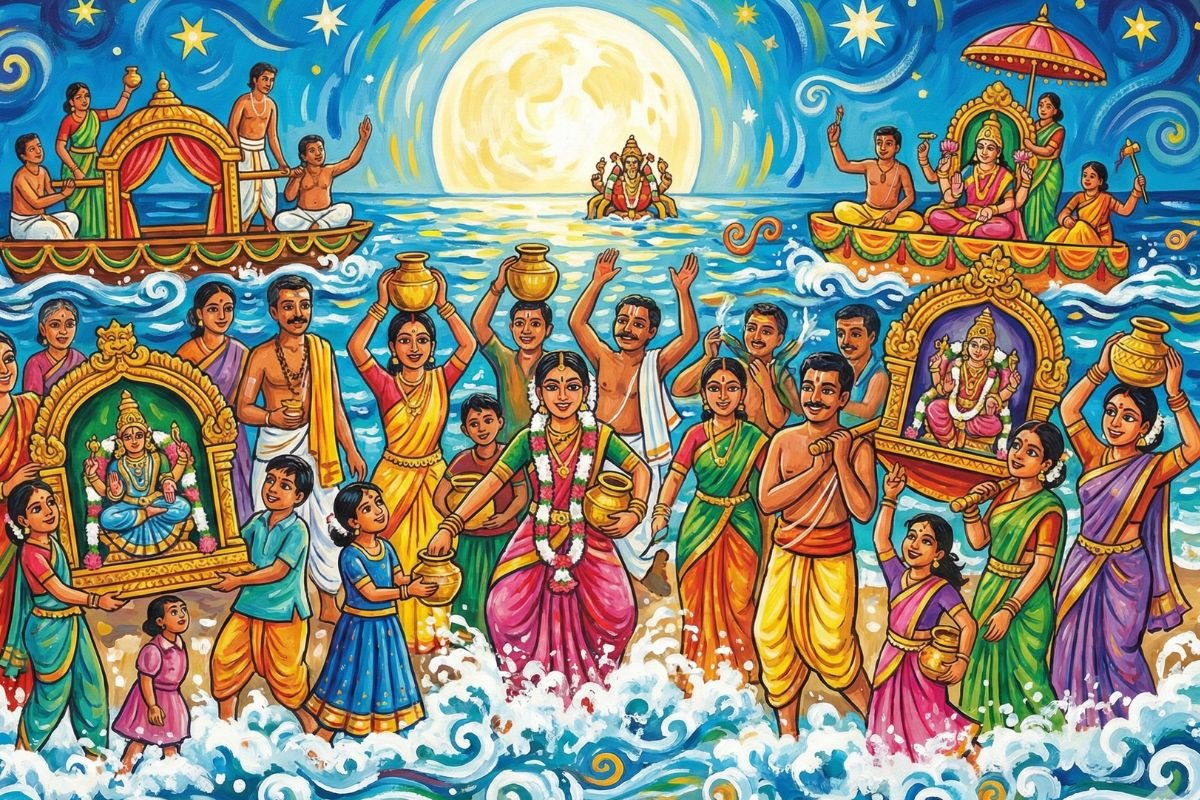

Masi Magam 2026 festival in coastal Tamil Nadu drew thousands of devotees to temple towns and seaside ghats for ritual sea baths and deity processions. The annual observance during the Tamil month of Masi combines religious ceremonies, local trade activity, and increased travel across districts.
Masi Magam occurs on the full moon day when the Magam star aligns during the Tamil month of Masi, usually falling in February or March. In 2026, coastal districts witnessed traditional theerthavari ceremonies where temple idols were taken in procession to rivers or the sea for ceremonial immersion. The festival holds deep spiritual significance and also creates short term economic momentum for small businesses.
Religious Significance and Core Rituals of Masi Magam
Masi Magam is observed in several temple towns across Tamil Nadu, including coastal regions where sea immersion rituals are central. Devotees believe that taking a holy dip during this alignment purifies past sins and brings spiritual merit.
Key rituals include:
Temple deity processions from sanctum to water bodies
Theerthavari or sacred immersion ceremony
Special abhishekam and puja at temples
Offering of prayers for family welfare
In coastal towns such as Cuddalore, Nagapattinam, and parts of Ramanathapuram district, the sea becomes the focal point of the celebration. Processions are often accompanied by traditional music, devotional chanting, and community participation.
Local authorities typically coordinate crowd management, temporary barricading, and security arrangements to handle large gatherings.
Crowd Management and Public Arrangements in 2026
With high footfall expected each year, district administrations deploy additional police personnel and medical teams during Masi Magam. Temporary traffic diversions are common near temple streets and beach access points.
Public arrangements often include:
Drinking water distribution counters
Mobile medical camps
Emergency response units
Public announcement systems for crowd guidance
Devotees are advised to follow designated entry and exit routes to prevent congestion. Sea conditions are monitored closely, especially if tides are strong. In several towns, lifeguards and disaster response teams are stationed along the shoreline during the ritual bath.
Economic Impact on Coastal Tamil Nadu Towns
Masi Magam significantly boosts the local economy in smaller coastal towns. Vendors selling flowers, coconuts, religious offerings, and prasadam experience increased sales. Temporary stalls line temple streets and beach areas.
Local businesses benefiting include:
Small eateries and tea shops
Lodges and guest houses
Auto rickshaw and taxi operators
Handicraft and souvenir sellers
For many daily wage vendors, festival days generate a substantial portion of seasonal income. Fisherfolk communities also witness indirect economic movement as seafood demand rises with increased visitors.
Short term employment opportunities such as tent setup, decoration, and event management services also see growth during this period.
Travel Tips for Masi Magam Visitors
Travel planning is important during Masi Magam due to higher than usual crowd levels. Coastal towns may experience heavy traffic and limited accommodation availability.
Practical travel tips include:
Book accommodation in advance, especially near temple areas
Arrive early morning to avoid peak crowd hours
Wear comfortable clothing suitable for temple visits
Follow safety instructions near sea bathing areas
Public transport services often run additional buses to major temple towns. However, peak hours can lead to delays. Private vehicle users should check parking availability in advance.
For elderly devotees, it is advisable to avoid overcrowded entry points and choose less congested time slots for rituals.
Cultural Continuity and Community Participation
Masi Magam reflects the cultural continuity of Tamil religious traditions. Many families participate annually, passing down rituals across generations. In smaller towns, the entire community often contributes to organising the festival.
Temple committees coordinate decorations, lighting, and special cultural programs. Classical music performances and devotional recitals are commonly organised in temple premises.
Schools and local institutions may declare partial holidays to allow participation. The festival reinforces social cohesion, especially in coastal regions where temple traditions are deeply integrated with daily life.
Environmental and Safety Considerations
Large gatherings near beaches require careful environmental management. Local administrations typically arrange waste collection drives after the festival to maintain coastal cleanliness.
Devotees are encouraged to avoid plastic offerings and dispose of ritual materials responsibly. Maintaining ecological balance is critical for towns dependent on marine ecosystems.
Safety advisories are issued to prevent overcrowding and accidental drowning during sea immersion rituals. Authorities continuously monitor weather forecasts to ensure safe conduct of events.
Takeaways
• Masi Magam 2026 drew large gatherings to coastal Tamil Nadu temple towns
• Theerthavari sea immersion rituals remain central to the festival
• Local vendors and transport operators benefit economically
• Early travel planning and safety compliance improve visitor experience
FAQs
Q1: What is the significance of Masi Magam?
Masi Magam marks a celestial alignment considered spiritually auspicious. Devotees take holy dips and participate in temple processions seeking blessings.
Q2: Which areas in Tamil Nadu are known for major Masi Magam celebrations?
Coastal districts such as Cuddalore, Nagapattinam, and Ramanathapuram are known for prominent sea immersion ceremonies.
Q3: Is sea bathing mandatory during the festival?
No. While many devotees take a ritual dip, participation in temple prayers alone is also considered spiritually meaningful.
Q4: How can visitors ensure safety during Masi Magam?
Follow official guidelines, avoid overcrowded areas, and adhere to instructions from local authorities and lifeguards.