
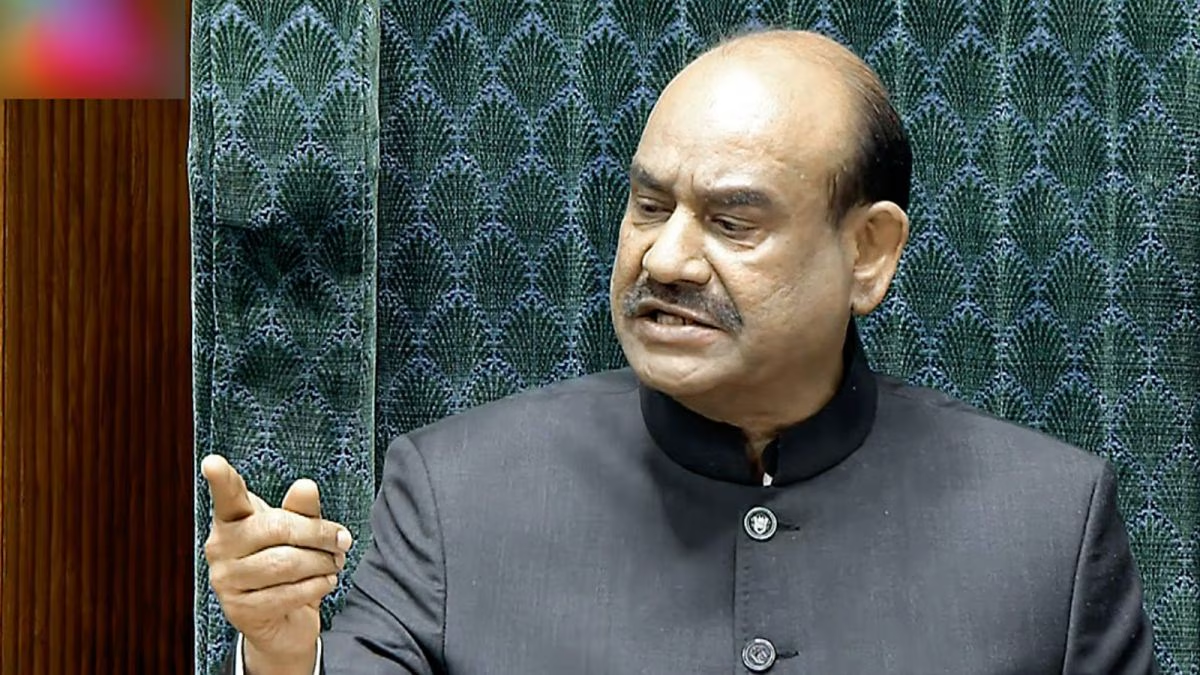

The no confidence motion against Lok Sabha Speaker Om Birla has triggered fresh debate on parliamentary conduct, opposition strategy, and democratic accountability. This article explains what the motion means, why it matters now, and how it could impact parliamentary functioning and local voters.
The intent of this topic is time sensitive news analysis. The development is linked to current parliamentary proceedings, making the tone factual, explanatory, and rooted in constitutional process rather than opinion.
What a no confidence motion against the Speaker means
A no confidence motion against the Lok Sabha Speaker is a rare parliamentary move. The Speaker is expected to remain neutral and act as the custodian of House rules and procedures. When members move such a motion, it signals a breakdown of trust between the presiding officer and sections of the House. Unlike a no confidence motion against the government, this does not threaten the executive’s survival. Instead, it questions the Speaker’s conduct, fairness, and interpretation of parliamentary rules.
Why the motion has been moved now
The timing of the motion reflects accumulated opposition grievances over how parliamentary business has been conducted. Allegations often revolve around selective allowance of debates, suspension of members, rejection of adjournment motions, and limited time for opposition voices. Moving a no confidence motion is a procedural way to formally record dissent within the system. It also places the issue on the parliamentary record, even if the motion does not succeed numerically.
Procedure and numbers involved in such motions
For a no confidence motion against the Speaker to be admitted, it must meet procedural requirements under parliamentary rules. Once admitted, it is discussed and voted upon. Given the numerical strength of the ruling alliance in the Lok Sabha, such motions are unlikely to pass unless there is a major political shift. However, the outcome is not the only objective. Debate time itself becomes a tool to raise concerns publicly and force official responses.
Impact on parliamentary functioning
In the short term, such motions add to disruptions in the House. They can slow legislative business and deepen confrontation between the treasury benches and the opposition. In the longer term, repeated confrontations over the Speaker’s role may erode the perception of institutional neutrality. This has implications beyond one session, as trust in parliamentary processes is essential for smooth lawmaking and effective scrutiny of the executive.
Political messaging behind the motion
Beyond procedure, the motion serves a political purpose. For opposition parties, it sends a message to their support base that they are resisting what they perceive as institutional bias. It also allows them to frame the narrative around democratic backsliding or reduced space for dissent. For the ruling side, rejecting the motion reinforces control over the House and projects stability. Both sides use the event to shape public perception outside Parliament.
What it means for local voters
For local voters, especially in Tier 2 and Tier 3 constituencies, such developments may appear distant but still matter. Parliamentary behavior influences how laws are debated and passed, affecting issues like prices, employment, welfare schemes, and regional development. When Parliament is frequently disrupted, legislative scrutiny weakens. Voters who value accountability may see such motions as signals of deeper political tensions that eventually shape governance outcomes.
Constitutional context and Speaker neutrality
The Constitution positions the Speaker as an impartial authority. Past Speakers have emphasized neutrality as essential to maintaining the dignity of the House. When neutrality is questioned through formal motions, it highlights the fragile balance between politics and procedure. While Speakers are elected from political parties, their role demands detachment once in office. This tension lies at the heart of repeated controversies around the Speaker’s decisions.
Likely outcomes and next steps
The most likely outcome is that the motion will be debated or discussed procedurally and then defeated due to numbers. However, the issue may not end there. Opposition parties could continue raising procedural objections, while the ruling side may tighten legislative scheduling to push through its agenda. The episode is likely to be referenced in future sessions as part of a broader pattern of parliamentary conflict.
Takeaways
- A no confidence motion against the Speaker questions institutional neutrality
- Such motions are rare and largely symbolic due to numerical realities
- Parliamentary disruptions affect lawmaking quality and scrutiny
- Voters should view this as part of a larger governance debate
FAQs
Is a no confidence motion against the Speaker common?
No, it is rare and usually reflects serious procedural disagreements.
Does this motion threaten the government?
No, it does not impact the government’s majority or stability.
Can the Speaker be removed through this process?
Only if the motion is passed by a majority, which is unlikely without cross party support.
Why should ordinary voters care about this issue?
Because parliamentary fairness affects how laws are debated and how effectively the government is held accountable.