
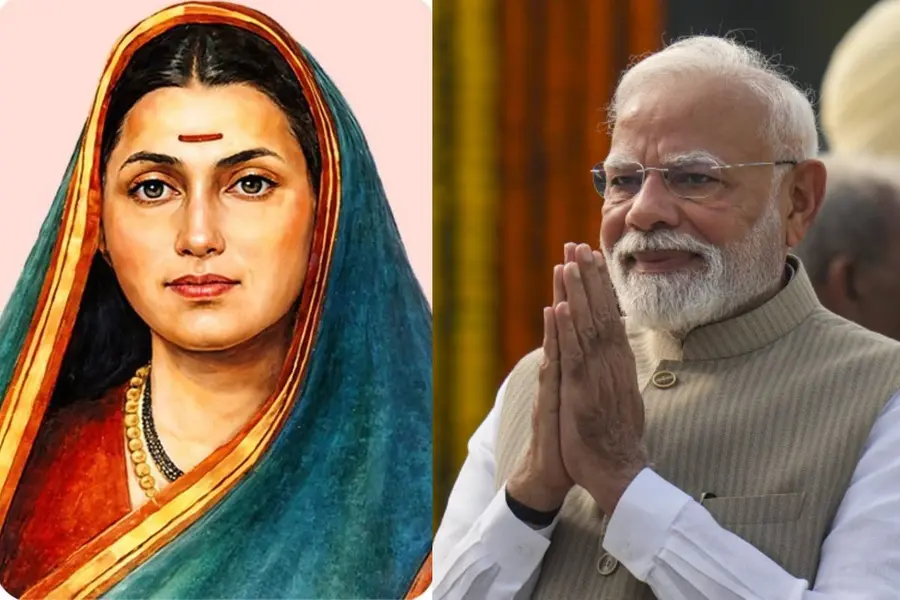

PM Modi pays tribute to Savitribai Phule on her birth anniversary each year, but the gesture carries deeper relevance today as India’s education policy continues to emphasise inclusion, access, and social reform. The tribute reconnects modern education goals with Savitribai Phule’s legacy as a pioneer of women’s education and social equality.
This topic is time sensitive and informational. The tone below follows a news reporting style while linking current policy direction with historical context.
Why Savitribai Phule’s Birth Anniversary Matters Nationally
Savitribai Phule’s birth anniversary has evolved into a moment of national reflection on education and social justice. As India’s first woman teacher, she challenged entrenched caste and gender barriers at a time when education was denied to large sections of society. Her work laid the foundation for inclusive learning long before it became a policy objective.
When the Prime Minister acknowledges her contribution, it signals continuity between historical reform movements and present governance priorities. It reinforces the idea that education is not only about infrastructure or curriculum, but also about access, dignity, and opportunity for all.
This message resonates strongly in rural and semi urban India, where educational inequality remains a lived reality.
PM Modi’s Tribute and Its Broader Policy Signal
PM Modi’s tribute to Savitribai Phule is not symbolic alone. It aligns with repeated government messaging around education as a tool for social mobility. By highlighting her role, the leadership places focus on values like gender equality, social inclusion, and empowerment through learning.
Such public recognition strengthens awareness of reformers who worked outside elite structures. It also reinforces political commitment towards education policies that target first generation learners, girls, and marginalised communities.
The timing of the tribute, amid ongoing education reforms and digital expansion, underlines the relevance of Savitribai Phule’s principles in shaping future policy execution.
Connection With India’s Current Education Policy Framework
India’s current education policy framework places strong emphasis on universal access, foundational literacy, and flexible learning pathways. These priorities echo Savitribai Phule’s belief that education should reach those excluded by social norms.
Initiatives focused on early childhood education, girl child enrolment, and regional language instruction draw from the same reformist logic. Policy emphasis on reducing dropout rates among girls reflects her lifelong struggle against social resistance to women’s education.
While modern challenges differ in scale and complexity, the underlying objective remains consistent. Education must act as a leveller rather than a privilege.
Impact on Gender Focused Education Initiatives
Savitribai Phule’s legacy directly informs the national discourse on women’s education. PM Modi’s tribute reinforces ongoing efforts to improve female literacy, school retention, and higher education participation.
Government schemes encouraging girls to complete secondary education, pursue STEM fields, and access scholarships are framed within a broader narrative of empowerment. The symbolic association with Savitribai Phule strengthens public acceptance of these initiatives, especially in conservative regions.
In Tier 2 and Tier 3 districts, such messaging plays a critical role in shifting societal attitudes. Policy alone cannot change norms, but historical validation accelerates acceptance.
Relevance for Marginalised and First Generation Learners
Savitribai Phule worked primarily with communities excluded from formal education. PM Modi’s tribute highlights the ongoing need to prioritise these groups within education planning.
First generation learners face challenges beyond enrollment. Language barriers, financial constraints, and lack of academic support often limit outcomes. Current policy interventions focus on bridging these gaps through digital platforms, community based schooling, and teacher training.
By invoking Savitribai Phule’s work, the government underscores that inclusion is not an optional policy add on but a central objective of the education system.
Influence on Public Discourse and Academic Institutions
National recognition of social reformers shapes academic discourse. Schools and colleges increasingly include discussions on Savitribai Phule’s contributions in curriculum, seminars, and public events.
This helps students understand education as a social process, not just a career pathway. It also encourages institutions to reflect on access, representation, and campus inclusivity.
The tribute strengthens the cultural legitimacy of education reform debates, making them part of mainstream public conversation rather than policy circles alone.
Challenges That Still Remain
Despite progress, challenges persist. Learning outcomes vary widely across regions. Gender gaps continue in higher education participation in certain states. Infrastructure improvements do not always translate into quality education.
Savitribai Phule’s legacy reminds policymakers that reform requires persistence. Structural change demands both policy intent and social cooperation. Tributes are meaningful when followed by consistent implementation and accountability.
The reminder is timely as India balances expansion with quality in its education system.
What This Means Going Forward
PM Modi’s tribute to Savitribai Phule reinforces education as a national priority rooted in social reform. It strengthens the moral framework behind policy decisions and connects modern governance with historical struggles.
For educators, students, and administrators, the message is clear. Education reform is not just about future skills but about correcting historical exclusion.
Takeaways
- The tribute links modern education policy with social reform history
- Savitribai Phule’s legacy reinforces focus on inclusion and gender equality
- Policy messaging helps shift social attitudes in smaller cities and rural areas
- Education reform requires both symbolism and sustained execution
FAQs
Why is Savitribai Phule important in Indian education history
She was India’s first woman teacher and a pioneer of education for women and marginalised communities.
What is the significance of PM Modi’s tribute
It reinforces national commitment to inclusive and equitable education.
Does this tribute impact current education policies
It strengthens public alignment with policies focused on access, gender equality, and social mobility.
How does this affect students today
It promotes awareness of education as a tool for empowerment and social change.