
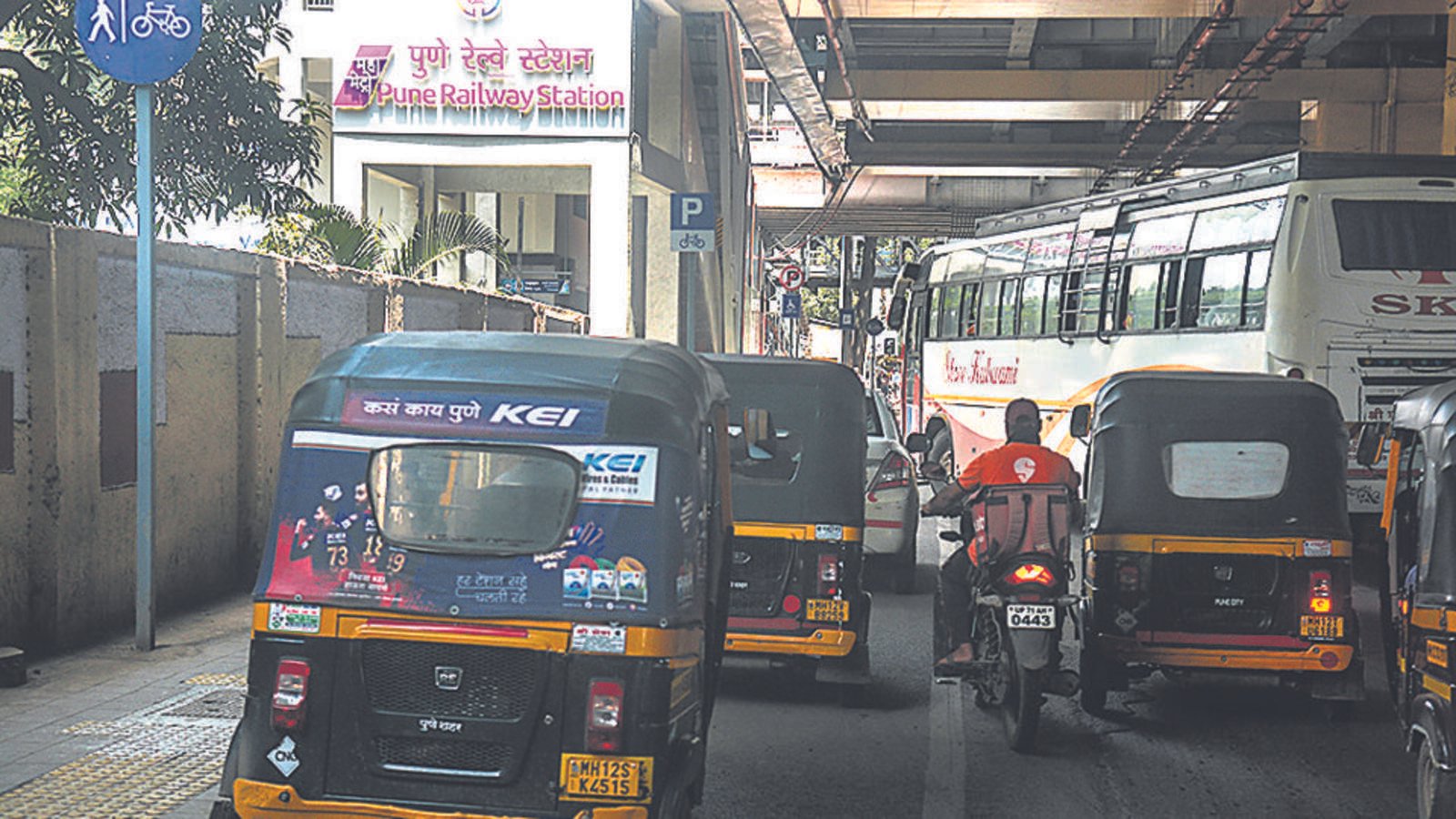

Prepaid and shared auto services have started at Pune Metro SNDT station to improve last mile connectivity for commuters. The new facility aims to help passengers travel easily from the metro station to nearby residential areas, offices, and educational institutions.
The move is part of Pune Metro’s effort to make public transport more convenient by solving the last mile problem. With organized auto services now available at SNDT station, daily commuters can access safe and predictable transport options immediately after exiting the metro.
Pune Metro Introduces Prepaid Auto Services at SNDT Station
The Pune Metro SNDT station has introduced prepaid auto services to help commuters find quick transportation after leaving the metro premises. Prepaid auto systems allow passengers to pay a fixed fare at a designated counter before boarding the auto rickshaw.
This system helps eliminate confusion about fares and reduces the risk of overcharging. Passengers receive a payment slip after paying at the counter, and the auto driver is required to follow the assigned fare.
The prepaid auto service is particularly helpful for commuters who travel short distances to nearby residential neighborhoods, colleges, and office zones. Instead of searching for an auto outside the station, passengers can now access organized transport directly at the metro exit.
Such facilities are common in major railway stations and airports, and metro authorities are gradually introducing them to improve commuter convenience.
Shared Auto Service to Strengthen Last Mile Connectivity
Along with prepaid autos, shared auto services have also been introduced at the SNDT metro station. Shared autos allow multiple passengers traveling in similar directions to share the same vehicle.
This system reduces travel costs and increases the number of commuters that autos can serve during peak hours. For short distance routes around the metro station, shared autos are often faster and more economical than hiring a private ride.
Shared autos also help reduce traffic congestion around busy transport hubs. When multiple passengers travel together, fewer vehicles are required to serve the same number of commuters.
Metro authorities believe that combining prepaid autos with shared transport options will make the station more accessible to people living within several kilometers of the metro line.
Why Last Mile Connectivity Matters for Metro Systems
Last mile connectivity plays a crucial role in the success of any metro rail network. Even if metro trains provide fast travel across the city, commuters still need convenient transport options to reach their final destinations.
In many cities, the distance between a metro station and residential or commercial areas can range from one to five kilometers. Without reliable last mile options, passengers may find it inconvenient to use metro services regularly.
Cities across India have introduced different solutions to address this issue. These include feeder buses, e rickshaws, bicycle sharing programs, and organized auto rickshaw services.
By introducing prepaid and shared autos at SNDT station, Pune Metro is attempting to make the travel experience smoother for commuters who rely on the metro for daily transportation.
Impact on Daily Commuters and Local Areas
The introduction of organized auto services at the Pune Metro SNDT station is expected to benefit several groups of commuters.
Students studying at nearby colleges and universities will be able to travel between campuses and metro stations more easily. Office workers commuting to nearby business districts may also find it convenient to use shared autos during peak hours.
Residents living close to the metro corridor may benefit from faster connectivity to other parts of Pune without needing private vehicles.
Local auto drivers may also gain consistent passenger demand through the prepaid system. Organized auto stands often create steady business opportunities because commuters prefer structured services over negotiating rides on the street.
If the system functions efficiently, it could encourage more people to adopt public transport instead of relying on personal vehicles.
Future Plans for Metro Feeder Services in Pune
Transport planners across Indian cities are increasingly focusing on integrated mobility systems. This means metro networks, buses, autos, and other transport services are coordinated to provide seamless travel.
Pune Metro has been gradually expanding its network and improving commuter facilities at different stations. Feeder services such as auto stands and shared transport systems are expected to be introduced at additional stations in the future.
Such improvements are important as the metro network grows and attracts more daily riders. Easy access to first mile and last mile transport can significantly increase metro ridership.
Urban planners also emphasize that better last mile connectivity reduces road congestion and encourages environmentally friendly travel.
With organized transport options like prepaid and shared autos, metro stations can become efficient mobility hubs for the surrounding neighborhoods.
Takeaways
Pune Metro has introduced prepaid and shared auto services at SNDT station.
The new system aims to improve last mile connectivity for metro commuters.
Prepaid autos offer fixed fares while shared autos provide affordable travel options.
Improved transport access may encourage more people to use Pune Metro services.
FAQs
What is the new facility introduced at Pune Metro SNDT station?
Prepaid auto and shared auto services have been introduced to help passengers travel easily from the station to nearby areas.
How does a prepaid auto system work?
Passengers pay a fixed fare at a designated counter before boarding the auto and receive a slip that confirms the payment.
What are shared autos in metro stations?
Shared autos allow multiple passengers traveling in similar directions to share the same ride, making the journey cheaper and more efficient.
Why is last mile connectivity important for metro networks?
Last mile connectivity ensures passengers can easily reach their final destination after exiting the metro, making public transport more practical for daily use.