
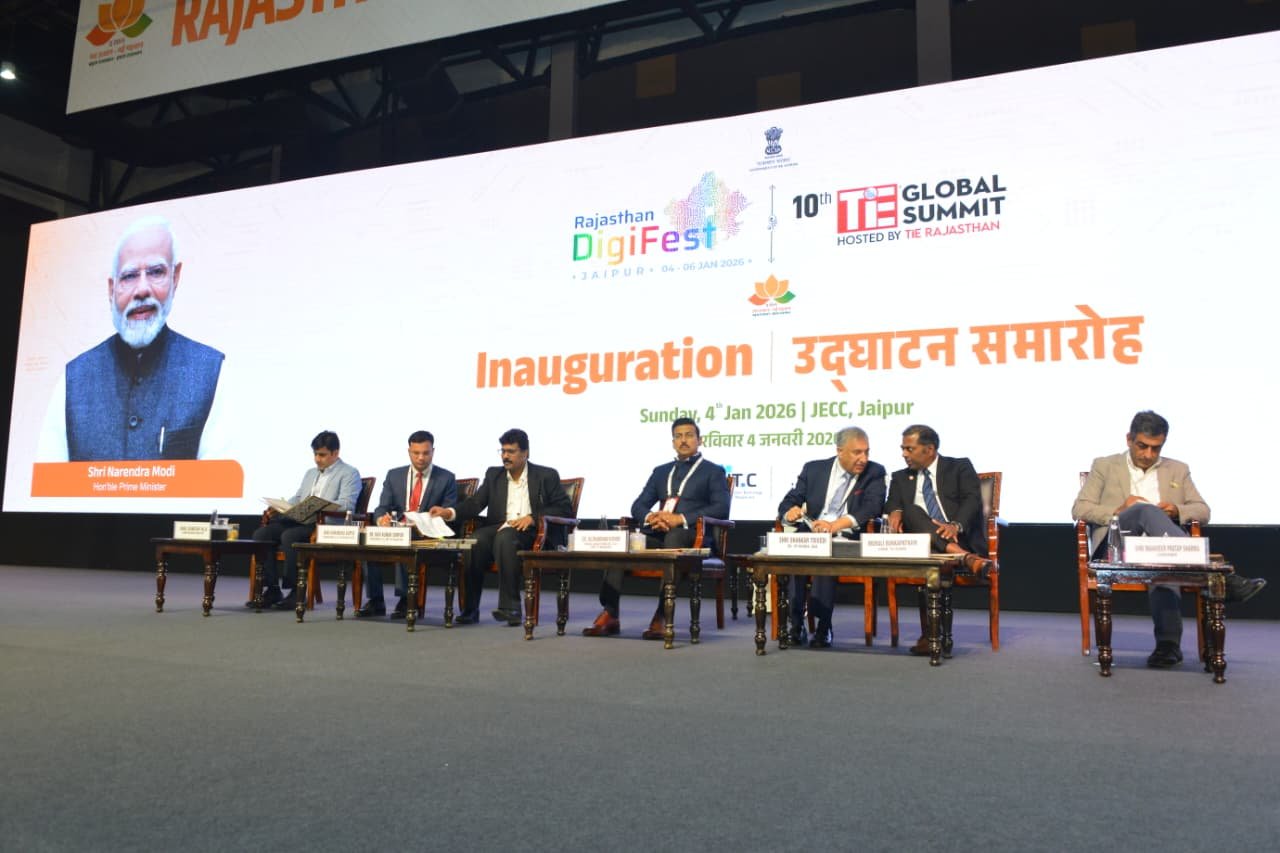

Rajasthan DigiiFest 2026 has positioned local startups on an international platform, moving beyond exhibitions to real business outcomes. The event signaled a shift from pitch focused showcases to deal driven engagement, with policy backing, enterprise participation, and cross border interest converging in Jaipur.
This topic is time sensitive and news oriented. The tone is factual and analytical, focused on outcomes, signals, and implications rather than promotion.
What Rajasthan DigiiFest 2026 Was Designed to Achieve
Rajasthan DigiiFest 2026 was not structured as a conventional startup fair. The intent was clear. Create a bridge between regional innovation and global capital, enterprise buyers, and technology partners.
The event aligned state digital policy priorities with startup needs. Instead of broad innovation themes, the focus remained on applied technology in governance, fintech, agritech, tourism tech, health tech, and SME enablement. This narrowed scope helped attract relevant stakeholders rather than generic footfall.
For Rajasthan based startups, the value came from access. Access to decision makers, not just mentors. Access to markets, not just visibility. That distinction shaped outcomes.
Why the Event Mattered for Local Startups
Local startups often struggle with credibility outside their home state. DigiiFest addressed this gap by placing them in structured B2B and B2G interactions.
Several startups reported enterprise level discussions that would normally take months to initiate. Government departments explored pilot deployments, while global technology firms evaluated partnerships instead of acquisitions.
Secondary keywords like Rajasthan startup ecosystem and Tier II startup growth apply here. The event reinforced that Tier II startups can compete globally when platformed correctly.
Importantly, participation costs were lower than national tech summits, making it accessible to early stage founders.
Key Deal Patterns That Emerged
While not every discussion translated into signed agreements, clear deal patterns emerged.
First, pilot based engagements dominated. Government bodies and large enterprises preferred limited scope pilots before scaling. This is positive for startups with strong execution capability.
Second, cross border collaborations focused on technology integration rather than funding. Global firms explored co development, white labeling, and regional delivery partnerships.
Third, fintech and govtech startups saw the most traction. Use cases around digital payments, citizen services, and compliance automation aligned well with state and enterprise needs.
The absence of headline funding announcements does not reduce impact. Early commercial traction often matters more than capital raises at this stage.
Role of Government and Policy Signaling
Government presence at Rajasthan DigiiFest 2026 was not symbolic. Policy signaling played a major role in founder confidence.
Clear articulation of digital governance priorities, startup procurement frameworks, and innovation friendly regulations reduced ambiguity. Startups gained clarity on how to engage with the public sector without prolonged delays.
This matters because B2G contracts are high impact but high friction. Events that reduce that friction create tangible value.
The state also positioned itself as a facilitator rather than an owner of innovation. That approach resonates better with founders and investors alike.
Global Interest Without Metro Bias
One of the most notable outcomes was the absence of metro bias. Global delegates engaged with startups based on product readiness, not location.
This challenges the assumption that international exposure requires a Bengaluru or Delhi address. With proper curation, Tier II ecosystems can attract serious attention.
Several startups reported follow up discussions post event, indicating sustained interest rather than event driven networking.
For Rajasthan’s ecosystem, this sets a precedent. Global access does not require relocation if local platforms are credible.
What Startups Did Right at DigiiFest
Startups that gained traction shared common traits. Clear use cases. Demonstrable pilots. Real revenue or adoption metrics.
Founders who avoided jargon and focused on outcomes stood out. Those who aligned their pitch with the specific needs of attendees performed better than those delivering generic decks.
Preparation mattered. Startups that researched participants and tailored conversations achieved more than those relying on chance meetings.
This reinforces an operational truth. Platforms create opportunity, but execution converts it.
Gaps and Limitations Observed
Despite positives, gaps were visible. Hardware and deep tech startups saw limited traction due to longer evaluation cycles.
Early stage startups without pilots struggled to convert interest into next steps. This highlights the need for pre event readiness programs.
There was also limited representation from private equity and late stage investors. The focus remained on partnerships and pilots rather than large funding rounds.
These gaps are not failures but indicators of where future editions can evolve.
What DigiiFest Signals for Tier II Startup Events
Rajasthan DigiiFest 2026 signals a shift in how Tier II startup events are structured. Outcomes over optics. Engagement over footfall. Policy alignment over announcements.
It sets a benchmark for other states aiming to build credible startup platforms. Scale matters less than relevance.
If follow through on pilots and partnerships is sustained, the event’s long term impact will exceed its immediate visibility.
Takeaways
Rajasthan DigiiFest 2026 prioritised deals and pilots over hype
Local startups gained direct access to global and enterprise stakeholders
Govtech and fintech startups saw the strongest traction
Tier II ecosystems can attract global interest with focused curation
FAQs
Did Rajasthan DigiiFest 2026 result in funding announcements
The event focused more on pilots, partnerships, and commercial discussions than large funding deals.
Which startup sectors benefited the most
Fintech, govtech, and digital services startups aligned closely with attendee needs.
Was the event useful for early stage startups
Early stage startups benefited mainly through exposure, while those with pilots gained concrete opportunities.
What makes DigiiFest different from other startup events
Its emphasis on execution ready startups, policy alignment, and structured interactions set it apart.