
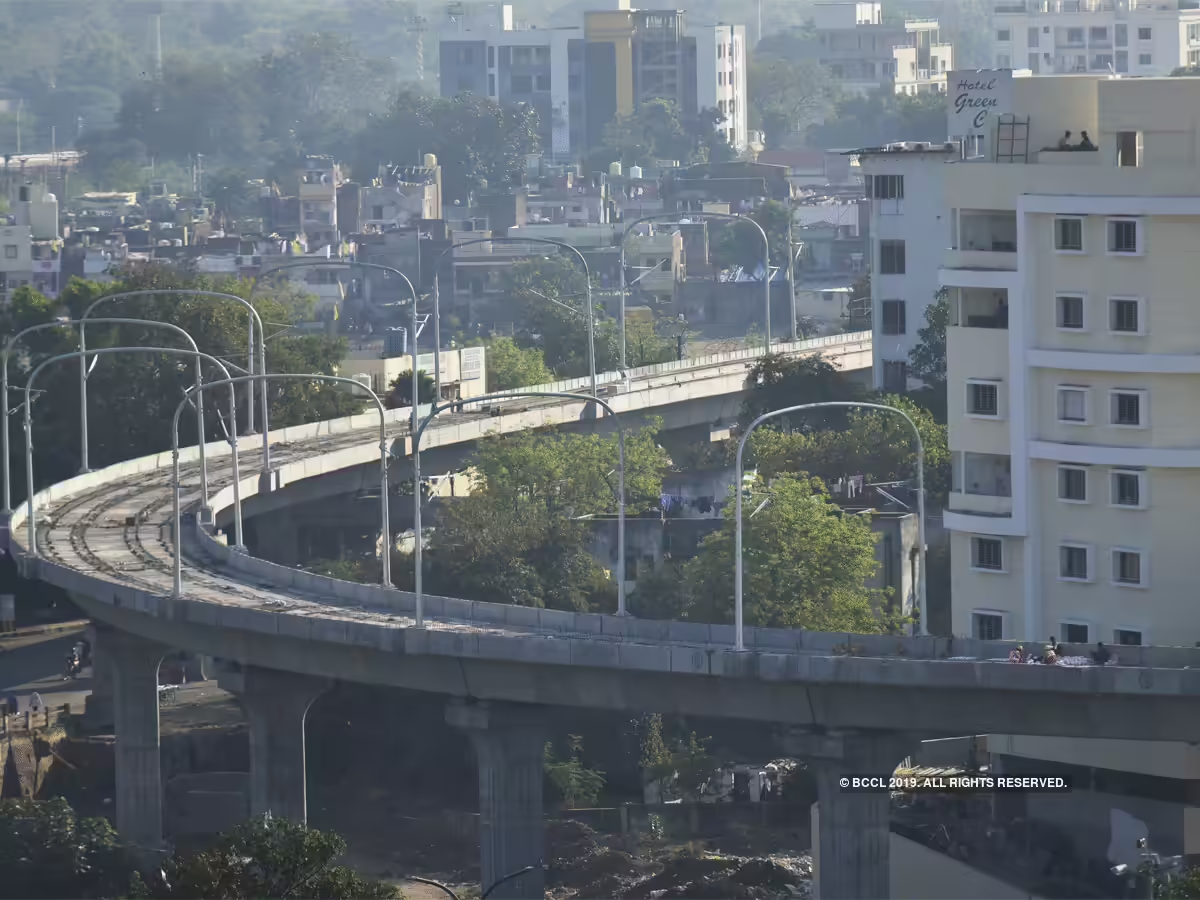

UP Smart City projects entering the final phase signal a major shift in urban infrastructure across Tier-2 districts in Uttar Pradesh. With multiple projects nearing completion, the focus is now on real ground impact in mobility, sanitation, safety, and digital governance.
UP Smart City Mission Progress and Current Status
UP Smart City projects are part of the national Smart Cities Mission led by the Ministry of Housing and Urban Affairs. Cities like Lucknow, Varanasi, Agra, Kanpur, and Prayagraj were selected to implement infrastructure upgrades using technology-driven solutions.
As the mission approaches its final phase, most cities have completed core projects related to roads, surveillance systems, water supply, and public spaces. The focus has now shifted to operational efficiency and long-term sustainability.
Several districts have reported high completion rates in area-based development zones, where concentrated improvements were planned. These zones act as model areas for broader city-level expansion in the future.
Urban Mobility Improvements and Traffic Management Systems
One of the most visible impacts of UP Smart City projects is in urban mobility. Cities have introduced integrated traffic management systems, smart signals, and upgraded road infrastructure to reduce congestion.
In cities like Lucknow and Kanpur, intelligent traffic systems use real-time data to manage vehicle flow. This has improved travel time during peak hours, especially in busy commercial areas.
Public transport infrastructure has also seen upgrades, including better bus stops, digital tracking, and route optimization. While not all cities have metro systems, smart mobility solutions are helping bridge the gap.
For daily commuters in Tier-2 districts, these changes translate into more predictable travel and reduced delays.
Smart Surveillance and Public Safety Enhancements
Another major component of UP Smart City projects is the deployment of surveillance systems. Cities have installed CCTV networks connected to integrated command and control centers.
These centers monitor traffic, law enforcement activities, and emergency responses in real time. This has improved coordination between departments and faster response to incidents.
In Varanasi and Prayagraj, such systems have been used during large public gatherings to manage crowd control and ensure safety.
While concerns around privacy exist, authorities emphasize that these systems are aimed at improving public safety and urban management efficiency.
Water Supply, Sanitation, and Waste Management Upgrades
Smart City projects have also focused on basic urban services such as water supply and sanitation. Many cities have implemented smart water meters and leak detection systems to reduce wastage.
Solid waste management has improved with better collection systems, segregation practices, and processing facilities. Some cities have introduced GPS tracking for waste collection vehicles to ensure timely service.
Public toilets, drainage systems, and cleanliness initiatives have also been upgraded, aligning with broader national sanitation goals.
For residents, these improvements address long-standing issues related to water shortages and waste disposal in growing urban areas.
Digital Governance and Citizen Services Expansion
A key goal of UP Smart City projects is to enhance digital governance. Cities have launched mobile apps and online portals for services such as property tax payment, grievance redressal, and utility management.
Integrated command centers also support data-driven decision making by city authorities. This allows quicker identification of issues and more efficient resource allocation.
In Tier-2 districts, digital adoption is gradually increasing, with more citizens using online platforms for civic services. This reduces the need for physical visits to government offices.
However, digital literacy remains a challenge in some areas, requiring continued awareness efforts.
Economic and Real Estate Impact in Tier-2 Cities
The near completion of UP Smart City projects is expected to boost local economies. Improved infrastructure attracts businesses, increases investment, and creates job opportunities.
Real estate markets in cities like Lucknow and Varanasi have already seen increased demand in areas with completed smart infrastructure.
Commercial activity is also rising in upgraded zones, with better roads and public spaces encouraging retail and service businesses.
For Tier-2 districts, these developments position them as emerging urban centers with improved living standards.
Challenges and Long-Term Sustainability Concerns
Despite progress, UP Smart City projects face challenges related to maintenance and long-term sustainability. Infrastructure requires continuous monitoring and funding to remain effective.
Some cities have reported delays in specific components due to administrative or financial constraints. Ensuring uniform implementation across all districts remains a key concern.
There is also a need to integrate smart solutions with existing urban systems to avoid fragmentation.
The final phase will determine how effectively these projects transition from development to sustained operation.
Takeaways
- UP Smart City projects are nearing completion across major Tier-2 districts
- Urban mobility, safety, and sanitation have seen measurable improvements
- Digital governance is reducing dependency on physical government offices
- Long-term success depends on maintenance and consistent execution
FAQs
1. Which cities in Uttar Pradesh are part of the Smart City Mission?
Cities include Lucknow, Kanpur, Varanasi, Agra, and Prayagraj among others.
2. What is the main goal of UP Smart City projects?
The goal is to improve urban infrastructure using technology for better living standards.
3. How do these projects benefit daily residents?
They improve transport, safety, sanitation, and access to digital services.
4. Are all Smart City projects fully completed?
Most are in the final phase, with some components still under implementation.