
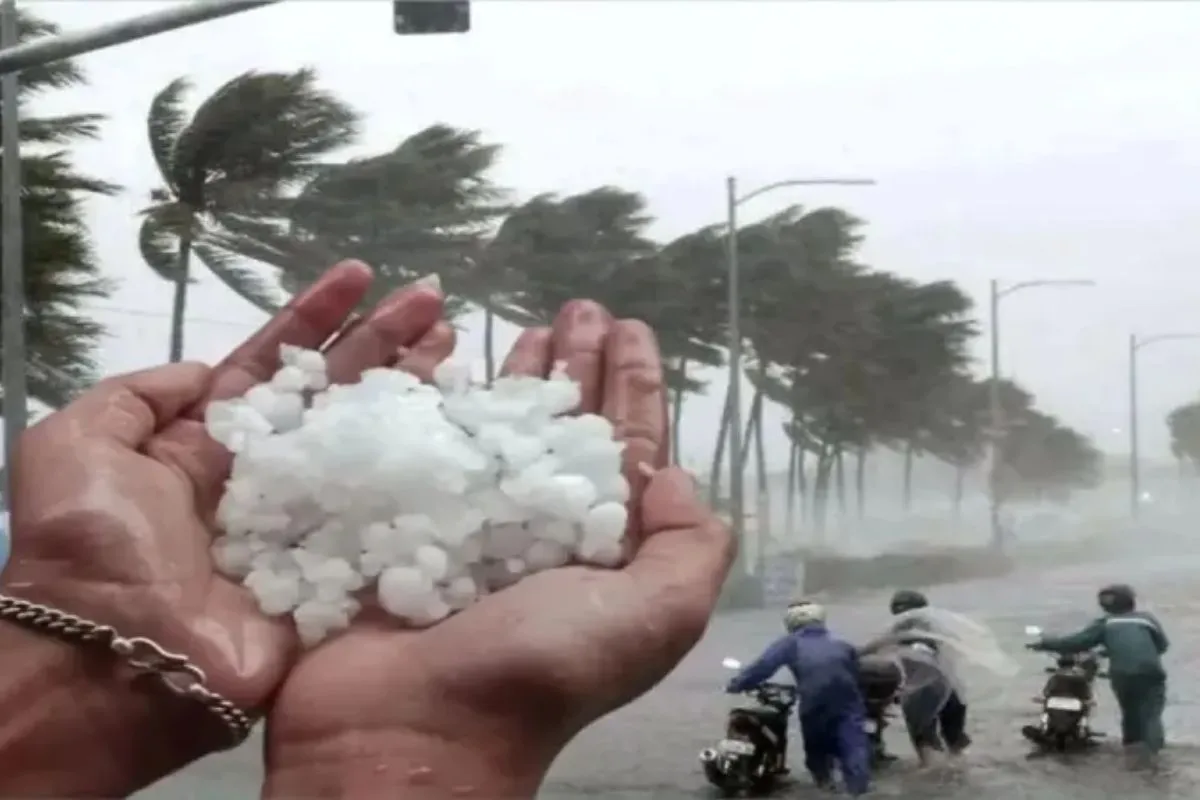

A weekend weather alert has been issued after sudden rain and hail affected parts of Rajasthan and nearby regions. The abrupt change in conditions has disrupted travel, damaged crops in select districts and brought a temporary dip in temperatures across northwestern India.
The weekend weather alert for Rajasthan follows a sudden spell of rain and hail triggered by active western disturbances. Such systems commonly affect north and northwest India during winter and early spring, bringing unseasonal showers, thunderstorms and occasional hailstorms. Over the past few days, several districts reported cloudy skies, gusty winds and sharp temperature variations.
What Caused the Sudden Rain and Hail in Rajasthan
The current spell of rain and hail in Rajasthan is linked to a western disturbance moving across north India. Western disturbances are extratropical storms that originate over the Mediterranean region and travel eastward, carrying moisture into the Indian subcontinent.
When these systems interact with local weather conditions, they can trigger rainfall, thunderstorms and hail, particularly in districts of northern and eastern Rajasthan. Cities such as Jaipur, Alwar, Bharatpur and surrounding regions often experience such activity during late winter.
Hail forms when strong updrafts within thunderclouds carry raindrops upward into freezing temperatures, allowing ice pellets to develop. Once they become heavy, they fall to the ground as hailstones. These events are usually short lived but can be intense.
Temperature Drop and Wind Impact Across Regions
Following the rainfall, many areas recorded a noticeable dip in daytime temperatures. Cloud cover and precipitation reduce solar heating, leading to cooler afternoons and nights. Residents who had begun experiencing warmer pre summer conditions suddenly faced a return of winter like chill.
Gusty winds accompanied the rain in several districts, increasing the risk of falling branches, temporary power disruptions and traffic slowdowns. Wind speeds during thunderstorm activity can intensify briefly, especially when hail is involved.
Neighboring states including parts of Haryana, Delhi and western Uttar Pradesh also witnessed similar weather patterns. This broader impact is typical when a strong western disturbance influences the region.
Impact on Agriculture and Rabi Crops
The rain and hail have raised concerns among farmers, particularly those cultivating rabi crops such as wheat, mustard and gram. At this stage of the crop cycle, unseasonal rain can have mixed effects.
Light rainfall may benefit standing crops by providing additional moisture. However, heavy showers combined with hail can flatten crops, damage grains and reduce yield quality. Hailstones can directly injure plants and affect flowering or grain filling stages.
Mustard crops are especially vulnerable to strong winds and hail during the pod development stage. Wheat nearing maturity can also suffer if exposed to excess moisture and lodging caused by wind.
Local agricultural departments typically conduct ground assessments after such weather events to evaluate crop damage and determine compensation eligibility where applicable.
Urban Disruptions and Travel Advisory
In urban centers, sudden rain and hail often lead to waterlogging in low lying areas. Traffic congestion increases when visibility drops and roads become slippery. Motorists are advised to reduce speed and maintain safe distance during wet conditions.
Two wheelers are particularly at risk during hail events as roads can become uneven and slick. Pedestrians should avoid standing under trees or unstable structures during thunderstorms due to the risk of falling debris.
Air and rail services may face minor delays during severe weather, though such disruptions are usually temporary unless accompanied by prolonged storm activity.
Authorities often issue advisories urging residents to remain indoors during intense thunderstorms and avoid unnecessary travel until conditions stabilize.
What Residents Should Expect Next
Western disturbances typically pass within a few days, after which skies begin to clear and temperatures gradually rise. However, intermittent cloud cover and isolated showers may continue depending on atmospheric conditions.
Residents should monitor official weather updates for district specific forecasts. Farmers are advised to secure harvested produce and ensure proper drainage in fields to prevent water accumulation.
As north India transitions toward spring and early summer, fluctuations between warm spells and sudden rain events are not uncommon. Staying informed helps reduce both agricultural and urban risks.
Precautionary Measures for Safety
Residents should secure loose objects on rooftops and balconies during high wind warnings. Power fluctuations can occur during thunderstorms, so protecting sensitive electronic devices is advisable.
Farmers can use protective measures such as timely harvesting of mature crops where feasible. Proper storage of grains in moisture resistant facilities reduces post harvest losses.
School authorities and local administrations may adjust schedules if severe weather persists. Public awareness plays a critical role in minimizing avoidable damage.
Takeaways
• Sudden rain and hail in Rajasthan are linked to active western disturbances
• Temperatures dropped temporarily due to cloud cover and precipitation
• Rabi crops such as wheat and mustard may face localized damage
• Residents should follow travel and safety advisories during thunderstorms
FAQs
Q1. Why does Rajasthan experience hail during winter and early spring?
Western disturbances interacting with local atmospheric conditions can create strong thunderclouds that produce hail.
Q2. Does unseasonal rain always damage crops?
Light rain may benefit crops, but heavy rain and hail can cause lodging, grain damage and reduced yield.
Q3. How long do such weather systems usually last?
Western disturbances generally influence the region for a few days before moving eastward.
Q4. Should residents expect more such events this season?
Weather fluctuations are common during seasonal transition periods, so additional short spells cannot be ruled out.