
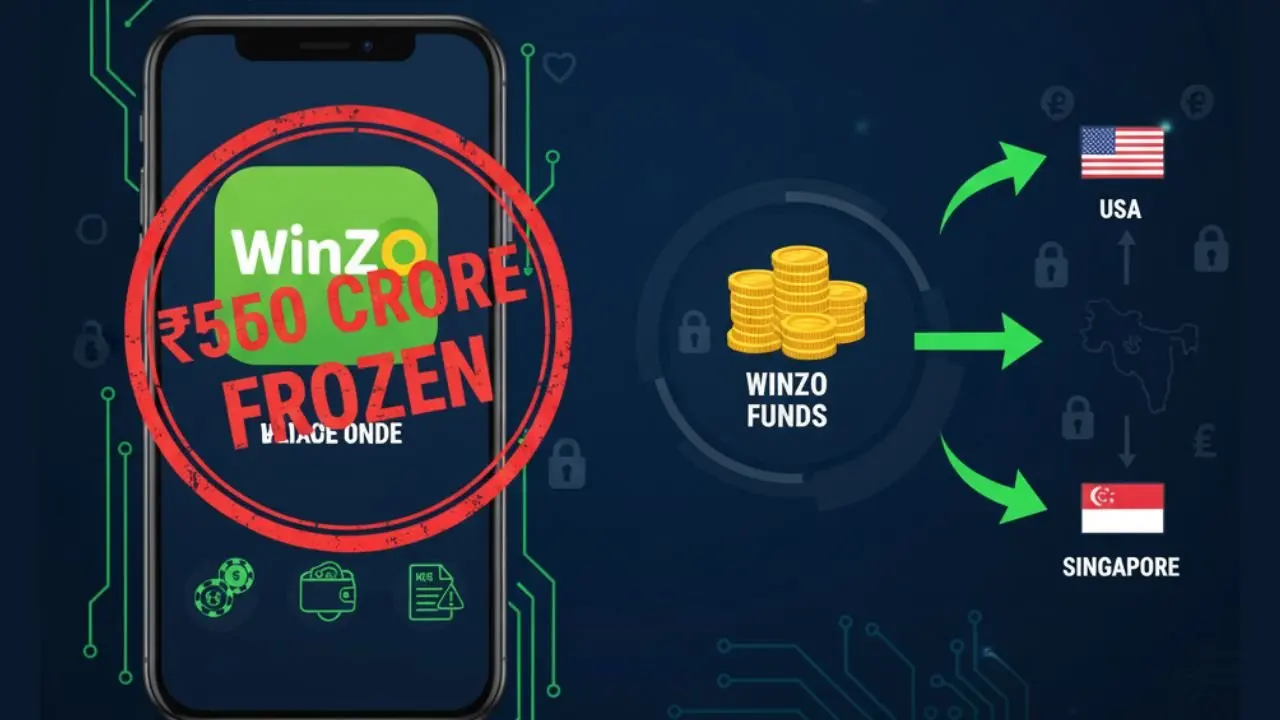

The crackdown on WinZO and similar platforms sends a clear warning: unregulated real-money gaming now carries serious legal, financial, and trust risks. Small-town users reliant on these apps could face frozen funds, disrupted withdrawals, and increased scrutiny of online money-games.
Background: crackdown intensifies on real-money gaming
The main keyword financial-fraud crackdown describes the recent wave of enforcement against online gaming firms offering real-money games. Authorities invoked anti-money-laundering laws to freeze assets worth hundreds of crores and arrested founders of leading platforms. This action followed passage of a new national law banning real-money games, aiming to curb fraud, addictive behaviour and illicit fund flows. What was once a booming segment — especially among small-town and rural users — now stands under legal and regulatory crosshairs.
The sweep is not just about law-enforcement visibility. It reflects a broader shift in how the state treats online games of chance or money reward. The crackdown appears geared toward protecting consumers, preventing financial mis-use, and reinforcing that operating or participating in real-money games carries tangible consequences.
What happened at WinZO: fund freeze, founder arrests, compliance vacuum
At the centre of the crackdown is WinZO, which was accused of continuing real-money operations and holding large user funds even after the new law came into force. Enforcement agencies froze over ₹500 crore in bank balances, fixed deposits and investments linked to the firm. The founders were arrested under money-laundering charges and brought before court custody. Numerous office premises were searched across major cities, signalling that the probe seeks to capture the full scale of alleged malpractices.
For users, this means withdrawals and pending balances may be stuck until investigations conclude or legal clarity arrives. The freeze raises uncertainty over refunds or payouts previously promised. For smaller towns — where many users may have limited alternative financial options — this could translate into sudden loss of access to their funds or delayed payments. The compliance vacuum also makes it difficult for platforms to guarantee safety for lingering user balances.
Implications for online gaming platforms nationwide
The crackdown serves as a deterrent. Platforms that continue offering real-money games face serious legal and financial fallout. Many firms have already suspended paid contests, shut down real-money features, or moved to free-to-play models. Uncertainty over regulatory status and potential asset freezes discourage fresh investment or marketing.
Beyond that, the regulatory atmosphere is set to tighten. The government’s new legislation establishes heavy penalties — imprisonment and fines — for operators, promoters, and even payment intermediaries. Platforms will need to register under the law’s licensing regime if they want to operate legally. This means a full overhaul of business models, compliance systems, fund segregation, and transparent payout mechanisms.
For investors and smaller startups, the risk-reward calculation has changed drastically. Many may abandon real-money formats altogether rather than risk liquidation, legal action or abrupt closure. The industry could shrink sharply, consolidating under a few regulated players or shifting focus to social games, e-sports, or non-monetary formats.
Risks for small-town and rural users relying on real-money games
Users in smaller towns often lack sophisticated banking links, financial literacy or access to alternate investment options. Real-money gaming apps provided a convenient — if risky — way for quick gains. With platforms shut down or under investigation, these users now face blocked withdrawals and unresolved account balances. Many did not diversify funds elsewhere.
In places with limited digital infrastructure, recalling funds could be more difficult. Users might need to rely on local depositors or wait out long legal processes. There’s also a trust deficit: even if platforms resume operations, many users may be hesitant to re-deposit money, fearing repeat freezes or closure.
This crackdown could also push users toward unregulated offshore platforms, which remain risky and often illegal. That neglects the government’s aim to curb fraud and prevent financial misuse — potentially exacerbating the very problem regulation sought to solve.
What users and platforms should do now: precaution and compliance
Users should avoid depositing new money into platforms whose legal status is uncertain. They must treat existing balances as potentially inaccessible and proceed cautiously. For those who still wish to game online, shifting to licensed social-gaming platforms or non-monetary formats reduces risk.
Platforms, on the other hand, must re-architect systems — follow compliance norms, segregate user funds, implement transparent withdrawal policies, and fully cooperate with regulators. Without this, any operation remains liable to enforcement. Investors and operators should re-assess viability of real-money gaming in the current regulatory climate.
Takeaways
Real-money gaming now carries legal and financial risk; frozen funds and founder arrests are a warning to platforms and users
Many small-town users may lose access to deposited funds or face payment delays
Platforms must shift to compliant social or e-sports models if they want to operate legally
Regulation aims to protect users — but may also push some toward unregulated, riskier alternatives
FAQs
Is online money gaming banned across India now
Yes. The new law prohibits real-money gaming nationwide, and regulators have started enforcing it strictly against platforms and promoters.
If I have money deposited on a gaming app, is it safe now
Not necessarily. With assets frozen and funds under investigation, withdrawals and refunds may face delays, or remain uncertain until legal resolution.
Can gaming platforms resume operations after compliance
They can, but only after fulfilling licensing, fund-segregation, and regulatory norms. Players should verify compliance before re-depositing money.
What should small-town users do if real-money platforms shut down
Avoid chasing offshore or unregulated sites. Switch to legal social-games, digital savings, or traditional investments to safeguard funds.