
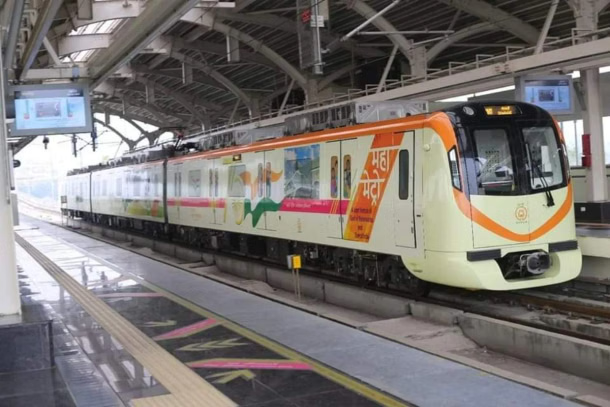

Nagpur Metro Phase-2 has spent only about 16.8 percent of its ₹6,708 crore budget so far, signalling a slow rollout in key corridors. While civil work and land acquisition continue, the low expenditure reflects earlier delays, material constraints and staggered fund release. Commuters should brace for mixed progress over coming months but can expect partial connectivity improvements before full completion by 2027–28.
Why expenditure remains low despite ongoing work
Phase-2’s modest budget utilisation traces to years of preliminary holdups and structural constraints. The expansion plan — adding roughly 43.8 km and more than 30 stations to the existing network — was officially approved in late 2022, but construction only gained momentum in 2024–25. Early tasks such as land acquisition, geotechnical surveys, design clearances and shifts in sand supply have delayed heavy civil and track work. Because metro construction follows a rising-expenditure curve — with major outlays coming during span-launching, track laying and rolling stock procurement — the impact of low spending should ease over time.
Phase-2 progress: what’s moving, what’s still hanging
Certain segments are showing visible development. Span-launching operations have begun on corridors including Wardha Road in Reach-1A, indicating upcoming elevated viaduct construction and station work. A 6.4 km stretch from Lokmanya Nagar to Hingna (Reach-3A) has already entered advanced civil stages, improving access to peripheral suburbs and industrial zones. Rolling-stock tenders were issued in November 2025, signalling that once structural work finishes, trains may arrive soon.
However, only about 53 percent of required land has been acquired so far. Sections passing through private property remain partially unapproved or under dispute, stalling construction in those zones. Additionally, a recent severe shortage of construction-grade river sand across Maharashtra halted work on several stretches, forcing the agency to consider alternative materials. That shortage added an unexpected delay to the already stretched schedule.
How delays affect commuters now
On key stretches — especially near industrial hubs like Butibori MIDC — commuters are already facing extended travel times. Road space reductions for pier and girder works have turned previously short 20-minute commutes into hour-long traffic jams during peak hours. Until structural completion and alternate traffic plans are delivered, congestion and travel unpredictability may persist.
What to expect over the next 18–24 months
With rolling-stock contracts out and span-launching underway, expect gradual acceleration. Civil works, deck-slab laying, viaduct finishing and station construction should pick up pace. Portions of metro corridors — especially Reach-3A and parts of Reach-1A — may open for limited operations by late 2026 or early 2027. Once major structural hurdles are handled, expenditure should speed up sharply and push toward full commissioning by 2027–28.
Takeaways
Slow budget spend reflects earlier stalls in approvals, land acquisition and material shortages rather than project abandonment
Active girder launching and rolling stock procurement suggest acceleration ahead
Commuters must adjust to traffic slowdowns and interim disruptions in metro-work areas
Partial corridor openings by 2026–2027 are possible before full Phase-2 launch
FAQs
Why has Nagpur Metro Phase-2 spent so little so far
Large parts of the budget are allocated to civil works, rolling stock and stations, which only begin once land, design, and materials are ready. Early delays in land acquisition and sand shortage restricted spend.
Is the project cancelled or on hold
No. Visible progress in span-launching, tender issuance and segment-wise work confirm that Phase-2 remains active and underway.
Will commuters get metro access soon
Yes, limited access on some corridors — particularly suburban stretches — is likely by late 2026 or early 2027, depending on construction pace.
What should daily commuters do meanwhile
Plan for extended travel times on affected roads, avoid peak hour traffic near construction sites, and explore alternate transport like bus or private vehicles until metro sections become functional.