
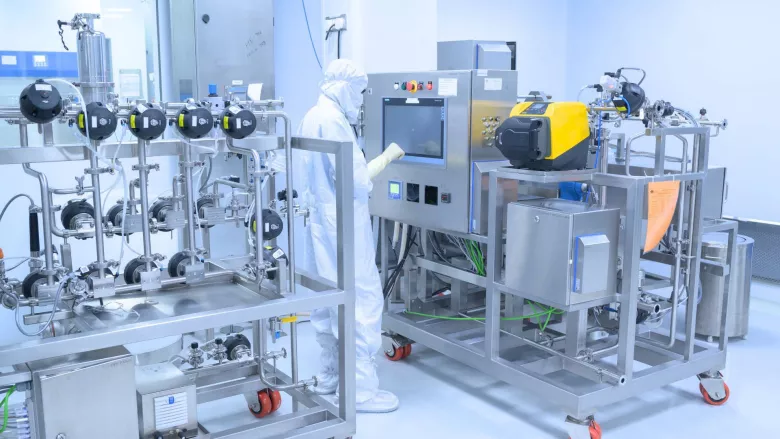

India’s biopharma leap is accelerating through coordinated government missions, expanding research clusters and growing private investment. This is a time sensitive, industry focused topic that carries national economic implications, particularly for manufacturing hubs outside major metros that stand to gain from new opportunities in production, supply chain and skilled employment.
Biopharma refers to biological and biotechnology driven pharmaceutical production, including vaccines, biologics, biosimilars, diagnostics and advanced therapies. India has long been a global supplier of generic drugs, but the shift toward high value biologics is opening a new growth chapter. This transformation is no longer limited to established pharma centres. As demand for distributed manufacturing grows, Tier 2 and Tier 3 industrial cities are emerging as beneficiaries. Understanding how this shift works helps manufacturing clusters prepare for investment and capability building.
India’s biopharma momentum and why it is accelerating
India’s success in vaccine production and rapid scaling capacity demonstrated the country’s ability to handle complex biological manufacturing. This helped trigger renewed global confidence in India’s biopharma potential.
National missions focused on research infrastructure, incubation, clinical trials and regulatory maturity have expanded rapidly. Private companies are now investing in fermentation units, R&D labs and biologics plants. These steps strengthen the entire value chain, from early research to mass production.
Crucially, biopharma relies heavily on specialised manufacturing discipline, skilled technicians and reliable supply chains. These requirements create opportunities for industrial cities that already host engineering, chemical or electronics manufacturing.
How non metro hubs stand to gain from new biopharma demand
Manufacturing hubs outside metros offer cost advantages, land availability and established industrial ecosystems. Cities like Indore, Aurangabad, Vadodara, Nagpur, Mysuru, Visakhapatnam and Baddi already support pharma or chemical units. They can expand into biopharma with targeted capability building.
Biopharma production requires controlled environments, cold chain facilities, quality testing labs and precision equipment manufacturing. Many Tier 2 industrial areas already host companies that produce packaging materials, machinery parts, sensors, electronics and automation tools. These complementary industries can integrate into biopharma supply chains faster than new greenfield locations.
Government incentives further support decentralised production to reduce pressure on metro clusters and encourage balanced regional growth.
Rise in demand for skilled workforce in smaller industrial cities
Biopharma growth demands technicians trained in biotechnology, microbiology, bioprocessing, quality control and lab management. Smaller cities with strong university networks in science and engineering can supply this talent.
Local institutions in states like Maharashtra, Karnataka, Gujarat, Tamil Nadu and Andhra Pradesh already offer specialised biotech programmes. As biopharma expands, these institutions can collaborate with industry to offer apprenticeships, certification courses and practical training.
The shift also encourages reverse migration. Skilled professionals working in metros may move back to Tier 2 hubs if job opportunities match their expertise. This trend strengthens smaller cities and reduces pressure on metro labour markets.
Supply chain expansion and localised manufacturing clusters
Biopharma needs stable supply of reagents, filtration systems, culture media, stainless steel systems, single use kits, packaging and specialised logistics. Building these value streams exclusively in metros is neither efficient nor scalable.
Manufacturing hubs beyond metros can take on specialised components and create satellite clusters that support centralised production. Cold chain providers, equipment manufacturers, automation firms and industrial service companies in small cities can integrate into biopharma networks through partnerships and subcontracting.
This model mirrors the successful decentralised growth seen in auto components and electronics manufacturing, where Tier 2 hubs play a critical role in national output.
Strengthening regulatory and quality frameworks in non metro zones
Biopharma production requires strict compliance with global standards. To support decentralised growth, regulators are working to streamline inspections, documentation and quality frameworks across multiple states.
Non metro industrial hubs are upgrading testing labs, quality assurance facilities and certification centres. This reduces reliance on metro based quality infrastructure and speeds up production cycles.
As regulatory maturity spreads, more companies in smaller cities will qualify for global supply chains, increasing exports and expanding regional capabilities.
Opportunities for startups and ancillary industries
The biopharma leap is not limited to large companies. Startups working in synthetic biology, biotech automation, diagnostic kits, AI driven drug discovery and lab equipment design can thrive in smaller cities where operational costs are lower.
Ancillary industries like precision engineering, bioprocess hardware, robotics, cold chain management, and waste treatment systems will see rising demand. These sectors have strong representation in Tier 2 hubs, giving them an entry point into a fast growing market.
Collaboration between local MSMEs and biopharma companies can create innovation clusters that diversify manufacturing ecosystems.
Long term transformation of India’s industrial landscape
If India sustains its biopharma momentum, the geographical spread of manufacturing will shift over the next decade. More states will host end to end industrial corridors supporting research, production and logistics.
This broader distribution strengthens national resilience, reduces dependence on a few urban clusters and generates balanced economic development. For local communities, it brings skilled employment, higher income stability and long term industrial growth.
Biopharma’s rise is therefore not only a scientific achievement but also a structural shift that redefines India’s industrial potential beyond metropolitan boundaries.
Takeaways
Biopharma expansion creates new opportunities for Tier 2 industrial hubs
Skilled workforce growth supports decentralised manufacturing
Supply chains will expand into smaller cities to meet biopharma needs
Balanced development benefits both industry and local communities
FAQ
Can smaller cities realistically host biopharma facilities
Yes. Many already support chemical, pharma or engineering units, making them suitable for controlled biopharma environments with targeted upgrades.
What skills are most in demand for biopharma jobs
Biotech, microbiology, quality control, lab operations and bioprocess engineering are key skill areas.
Do MSMEs in small cities benefit from the biopharma leap
Yes. They can supply equipment, components, logistics and support services to large biopharma companies.
Will biopharma reduce India’s dependence on metro based manufacturing
Over time, yes. Distributed clusters help diversify production and strengthen national manufacturing resilience.