
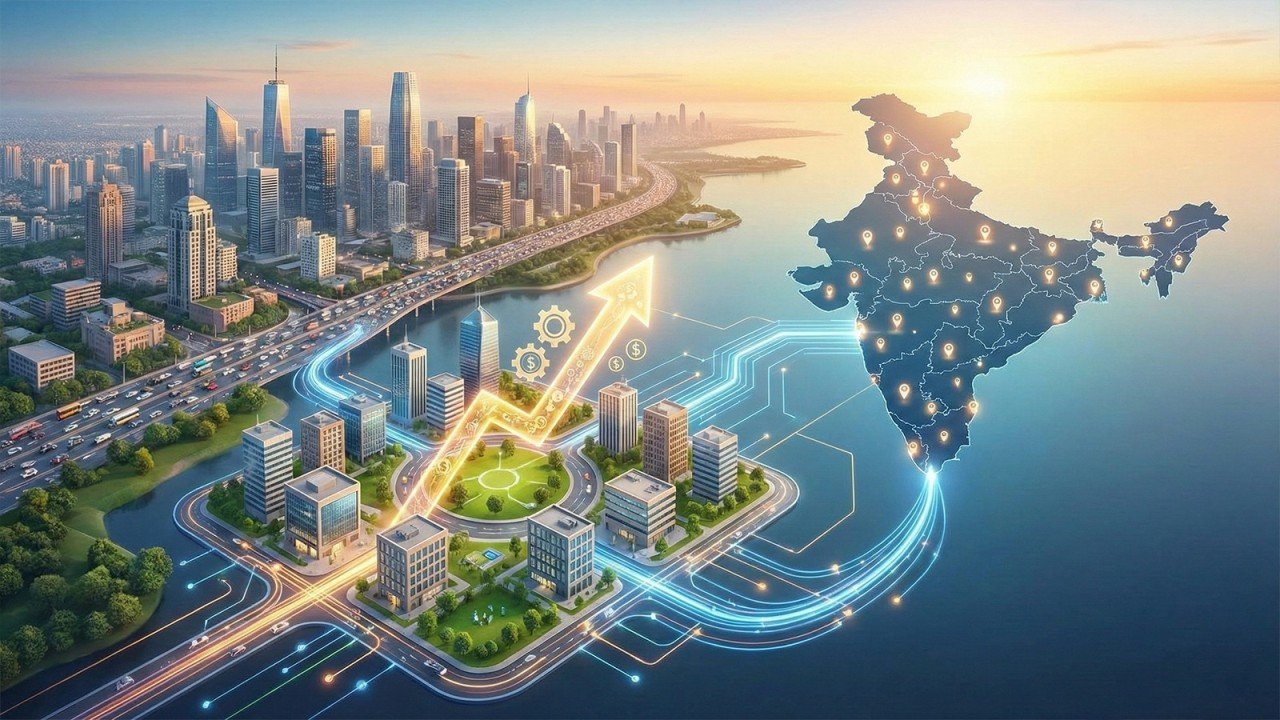

Smaller Indian cities are witnessing rising interest from real estate developers and startup founders. Lower operating costs, improving infrastructure, and growing digital connectivity are turning Tier 2 and Tier 3 cities into attractive destinations for businesses and investors.
Why Smaller Indian Cities Are Emerging as Growth Centers
Smaller Indian cities are emerging as the next real estate and startup growth hubs as businesses and professionals look beyond major metropolitan areas. Rising costs in large cities such as Mumbai, Delhi, and Bengaluru have encouraged companies and entrepreneurs to explore opportunities in Tier 2 and Tier 3 locations.
Real estate developers and investors are increasingly focusing on cities like Indore, Nagpur, Jaipur, Coimbatore, Surat, and Lucknow. These cities offer comparatively lower property prices, expanding infrastructure, and growing consumer markets.
Another major factor driving this shift is digital connectivity. With widespread internet access and affordable data services, startups no longer need to operate exclusively from major technology hubs. Entrepreneurs can build businesses from smaller cities while serving customers across the country.
This combination of economic and technological factors is gradually transforming smaller cities into important business and investment destinations.
Infrastructure Development Supporting Regional Growth
Infrastructure development has played a significant role in the rise of smaller cities as business centers. Government investment in highways, rail connectivity, airports, and urban infrastructure has improved accessibility and logistics across several regions.
Improved transportation networks allow companies to move goods and services more efficiently between cities. For example, better road connectivity between industrial areas and urban markets helps businesses reduce logistics costs.
Urban infrastructure improvements such as water supply systems, electricity availability, and digital communication networks also make these cities more attractive for businesses and residents.
Government initiatives focusing on smart city development and regional urban planning have further strengthened infrastructure in many emerging urban centers.
As connectivity improves, businesses find it easier to establish offices, warehouses, and manufacturing units outside traditional metropolitan areas.
Lower Costs Attracting Startups and Businesses
One of the biggest advantages of operating in smaller cities is the significantly lower cost of doing business. Office rents, employee salaries, and operational expenses are often much lower compared to large metropolitan cities.
For startups that are operating with limited funding, lower costs allow founders to allocate more resources toward product development, technology, and marketing rather than high rental expenses.
Real estate prices also play a major role in attracting companies. Commercial spaces in Tier 2 cities are generally more affordable, allowing businesses to set up larger offices at lower costs.
Residential affordability is another advantage. Employees working in smaller cities often benefit from lower housing costs and shorter commuting times, which can improve overall quality of life.
These cost advantages are encouraging many entrepreneurs to launch new ventures in cities that previously received less attention from the startup ecosystem.
Growing Talent Pool in Tier 2 and Tier 3 Cities
Another important reason why smaller cities are emerging as startup hubs is the availability of a growing talent pool. Educational institutions across India are producing skilled graduates in fields such as engineering, management, and information technology.
Many students from smaller cities previously migrated to metropolitan areas in search of job opportunities. However, with the expansion of local business ecosystems, more professionals are choosing to work closer to their hometowns.
Remote work trends and digital collaboration tools have also reduced the need for physical presence in major corporate hubs. Companies can now hire skilled professionals from different cities without requiring relocation.
Several technology startups have already established offices in Tier 2 cities where they can recruit skilled workers at competitive costs while maintaining high productivity.
This availability of talent combined with lower operational expenses is strengthening the business environment in smaller cities.
Real Estate Growth Driven by Urban Expansion
The growing business activity in smaller cities has created strong demand for residential and commercial real estate. As companies establish offices and industries expand operations, more professionals move into these urban areas.
Real estate developers are responding by launching new residential projects, commercial office spaces, and mixed use developments in emerging cities.
Improved infrastructure and employment opportunities also attract migrants from nearby towns and rural areas, further increasing housing demand.
Retail spaces, shopping centers, and co working facilities are also expanding in these cities as consumer spending grows alongside economic activity.
This combination of economic development and urban expansion is transforming several smaller cities into vibrant real estate markets.
Takeaways
• Smaller Indian cities are becoming attractive destinations for startups and real estate investment
• Improved infrastructure and connectivity are supporting regional economic growth
• Lower operational costs make Tier 2 and Tier 3 cities appealing for entrepreneurs and businesses
• Growing local talent pools are strengthening startup ecosystems in smaller urban centers
FAQ
Why are startups moving to smaller Indian cities
Startups are moving to smaller cities because operational costs such as rent and salaries are lower while infrastructure and internet connectivity continue to improve.
Which cities are emerging as new startup hubs in India
Cities such as Indore, Jaipur, Nagpur, Surat, Coimbatore, and Lucknow are increasingly attracting startups and real estate investment.
How does infrastructure influence real estate growth
Improved transportation, digital connectivity, and urban infrastructure make cities more accessible and attractive for businesses and residents.
Are smaller cities becoming long term business centers
Yes. As infrastructure and economic activity expand, many Tier 2 and Tier 3 cities are developing into important regional business and startup hubs.