
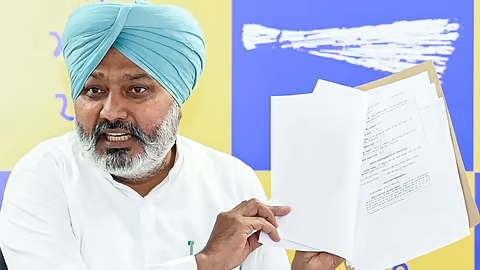

The 71 crore cheque distribution across 142 villages in Punjab is a time sensitive development that directly affects rural infrastructure in the Malwa, Doaba and Majha regions. This government funding signals a focused push to accelerate village level improvements in roads, water supply, sanitation and community facilities that have been pending in several districts.
The funding initiative matters because rural infrastructure drives mobility, agriculture productivity and public service delivery. When villages receive targeted allocations, local bodies can complete stalled projects and start new works that support long term development.
Understanding how the village funds are structured and allocated
The fund distribution is part of a structured rural development initiative where each selected village receives a defined grant based on population size, infrastructure gaps and priority projects approved by the district administration. While the overall amount totals 71 crore, the individual allocations vary depending on project readiness and the category of work.
In regions like Malwa, Doaba and Majha, village level development depends on coordinated planning between Panchayats, district engineers and rural development departments. Allocations typically support core works such as internal road repairs, drainage improvement, drinking water pipelines and school facility upgrades.
The cheque distribution confirms that administrative approval is complete and the funds can now move into execution. This matters for villages that have prepared estimates and have been waiting for financial clearance.
Why the Malwa region is positioned for rapid on ground work
Malwa has some of the largest rural populations in Punjab and faces recurring issues linked to road conditions, groundwater stress and agricultural transport challenges. For this region, the village level funding is likely to prioritise internal link roads, water storage structures and repair of health sub centres.
Many Panchayats in Malwa maintain pre approved project lists. Once funds reach their accounts, they can begin tendering or direct implementation depending on the cost threshold. Because local labour availability is high, Malwa villages usually execute projects faster.
The funding also supports the region’s agriculture oriented economy. Better rural roads reduce crop transport delays and lower vehicle maintenance costs for farmers. Water system repairs improve household access and stabilise community supply during peak summer months.
How Doaba will use the funds for connectivity and civic services
Doaba, known for its high migration and NRI linked villages, focuses heavily on civic amenities, public spaces and education infrastructure. Many villages in Doaba have pending works in drainage systems, community halls, street lighting and school boundary walls.
The 71 crore allocation unlocks these works because funds were a major bottleneck for finishing approved projects. Panchayats in Doaba often collaborate with NRI associations for additional contributions. Having government funds available strengthens their ability to complete projects without long delays.
Doaba’s smaller geographical spread means infrastructure improvements can show visible impact quickly. Better street lighting, upgraded drainage and community facility repairs directly improve the living environment for residents and returning migrants.
Majha’s focus on border area infrastructure and essential facilities
Majha’s rural development needs include border area infrastructure, sewage systems, link roads and public service buildings. Villages near the international border often deal with limited service access due to their strategic location.
For Majha, the village funding will support works like road strengthening, water supply line expansion and repairing government buildings such as Anganwadi centres or Panchayat Ghars. These improvements help maintain stability in communities that rely heavily on government services.
Majha also experiences higher weather related wear on roads and community assets. Timely fund utilisation will allow faster repairs before the next monsoon cycle.
Why the funding matters for overall rural governance
The cheque distribution is more than a financial exercise. It signals that rural development plans for the financial year are moving into the execution phase. When funds reach village accounts, accountability increases because Panchayats must record utilisation, maintain audit trails and complete works within timelines.
For residents, this funding round provides visible improvements that directly influence quality of life. Better roads reduce commute challenges for students and workers. Improved water pipelines reduce contamination risk. Pavement and drainage repairs reduce seasonal flooding.
At a governance level, successful execution builds trust in district administration and strengthens the Gram Sabha process where residents monitor progress and review expenditure.
Expected outcomes for agriculture, mobility and public services
In all three regions, the 71 crore distribution is expected to generate immediate work opportunities for local labour. Rural infrastructure projects typically rely on local workers rather than external contractors, which boosts village level income temporarily.
Agriculture transport improves when link roads are repaired or renewed. Public safety increases with better lighting and community infrastructure. Health services benefit when sub centres and sanitation systems receive upgrades.
These improvements also help villages qualify for future development schemes because completed projects demonstrate readiness and compliance.
Takeaways
Funding accelerates completion of pending village infrastructure projects across three regions
Malwa, Doaba and Majha will see improvements in roads, water systems and civic facilities
Village level execution strengthens governance and creates local work opportunities
Upgraded infrastructure supports agriculture, mobility and public services
FAQs
How soon will villages see the impact of this funding
Most projects begin within weeks once tendering or direct implementation starts. Visible improvements usually appear within two to six months depending on project size.
Which types of projects get priority under such village level funding
Road repairs, drinking water pipelines, drainage systems, community buildings and school infrastructure typically receive top priority.
Can residents monitor how these funds are used
Yes. Utilisation details are shared in Gram Sabha meetings, Panchayat records and district level audit reviews.
Why do allocations differ between villages
Each village receives funds based on population, infrastructure needs, project readiness and approved estimates.