
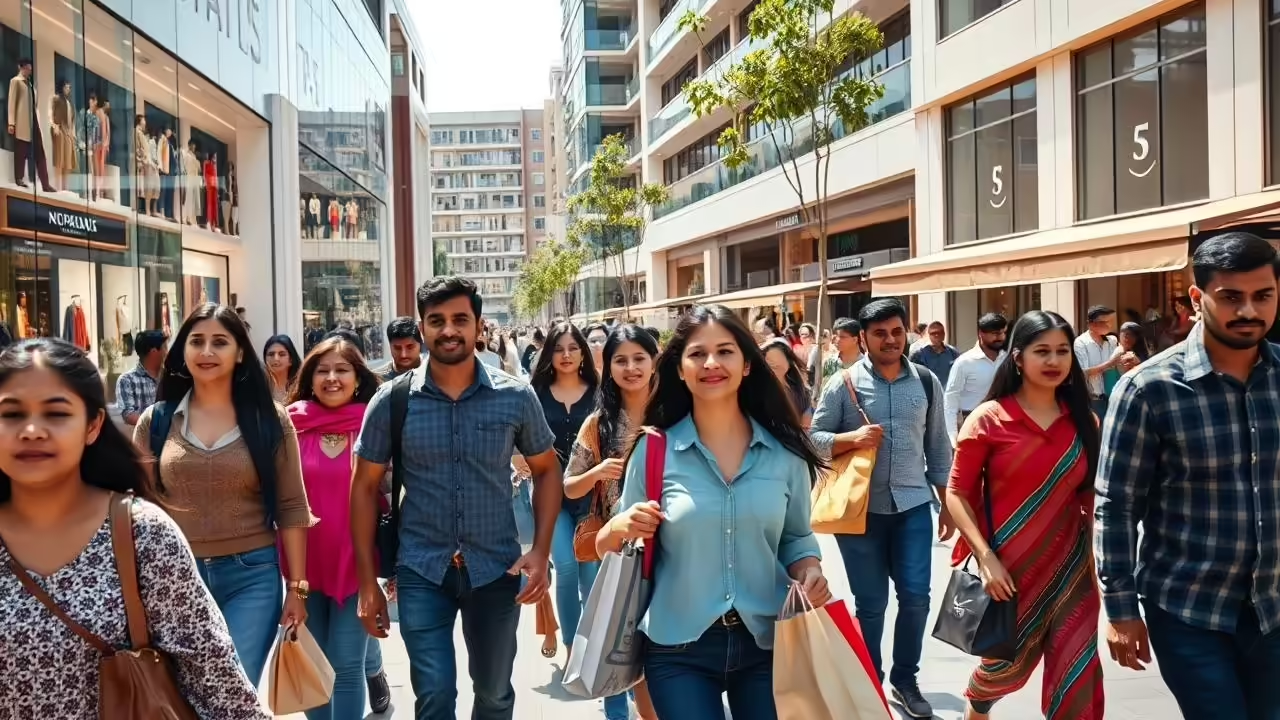

Short summary paragraph: India’s retail boom in Tier-2 and Tier-3 cities reflects rising consumption and a major leasing surge, signalling a shift in the country’s retail geography. The main keyword “retail boom” captures how smaller cities are now key growth engines in retail real estate and spending.
Changing consumption dynamics in smaller Indian cities
The retail boom in Tier-2 and Tier-3 cities is driven by new consumer behaviour and improved infrastructure in places beyond metros. With increasing disposable incomes, greater smartphone and internet penetration, these cities are rapidly evolving from peripheral markets to core demand centres. Retail leasing data shows strong expansion into non-metro urban centres, indicating that brands and developers now see these areas as viable investment zones rather than fringe markets. This shift underscores that consumption change is not just superficial but structural in India’s second-tier urban landscape.
Massive new retail supply meets evolving store formats
Retail leasing and development numbers confirm that Tier-2 and Tier-3 cities are receiving large volumes of new supply. For example, over 25 million square feet of new retail space is expected in these cities by 2029. Retailers are launching stores, malls and food & beverage outlets in cities such as Jaipur, Ludhiana, Coimbatore and Lucknow. The retail boom partly emerges because these cities had been under-served by organised retail, meaning newer malls and branded stores offer fresh experiences. Retailers are also experimenting with shorter lease terms, smaller format stores and omnichannel integration targeted at smaller city consumers.
Brand strategy and retail expansion into non-metro areas
The leasing surge reveals that brands are actively redesigning market strategy. Instead of focusing only on metros, they are using Tier-2/3 cities for first-time store launches, regional prototypes and test beds for new formats. Premium and bridge-to-luxury brands are entering these markets as consumer aspirations rise. The retail boom shows that companies are betting on younger, mobile-connected shoppers in smaller cities who are brand aware and willing to spend. That means retail expansion is shifting from metro saturation to hinterland opportunity. Retailers are also placing greater emphasis on experiential retail—combining shopping with dining, entertainment and socialising—to engage consumers in these new markets.
Infrastructure, real estate and investor confidence
Behind the retail boom lies a strong real-estate and infrastructure story. Investors and developers are acquiring land in emerging cities, developers are building mixed-use projects combining retail, hospitality and offices, and companies are responding to improved connectivity, infrastructure and urbanisation patterns. The leasing surge indicates growing investor confidence in these markets. As more institutional-grade malls come up in Tier-2/3 cities, developers are telling retailers that the site, catchment and supply chain are becoming comparable to metro markets. The consumption shift thus reflects both demand side changes and supply side readiness.
Implications for retailers, consumers and cities
For retailers the retail boom means that growth engines are changing. Brands must localise inventory, pricing and formats to fit smaller city dynamics. For consumers in smaller cities, this means greater access to branded products, services and modern retail experiences closer to home. For cities, increased retail development brings job opportunities, urban vibrancy and higher tax revenues—but also infrastructure challenges (traffic, utilities, parking). The leasing surge therefore signals a transformation of urban economies, retail landscapes and consumer culture across India.
Takeaways
• The retail boom in Tier-2 and Tier-3 cities signals a structural consumption shift away from just metro-centric growth.
• Leasing data shows large scale new retail supply targeted at smaller cities, with formats adapted to regional markets.
• Retailers are aggressively expanding beyond metros, tailoring their strategies to local demand and brand aspiration.
• Infrastructure readiness, investor confidence and real-estate supply are aligning to support this surge in retail activity.
FAQs
Why are Tier-2 and Tier-3 cities now attractive for retail expansion?
Because rising incomes, enhanced connectivity, smartphone/internet growth and under-served organised retail make these locations high-potential markets.
Does the retail boom imply over-supply risk?
While supply is rising, leasing demand in many smaller cities is keeping pace, reducing vacancy risk compared to older metro models.
How should retailers adapt their products and formats for smaller cities?
They should customise store size, stock mix, pricing tiers and service levels, and integrate local culture and consumer behaviour into strategy.
What does the shift mean for shoppers in non-metro cities?
Shoppers in smaller cities will see more branded stores, organised malls, modern services and access to global brands that were once metro-centric.