
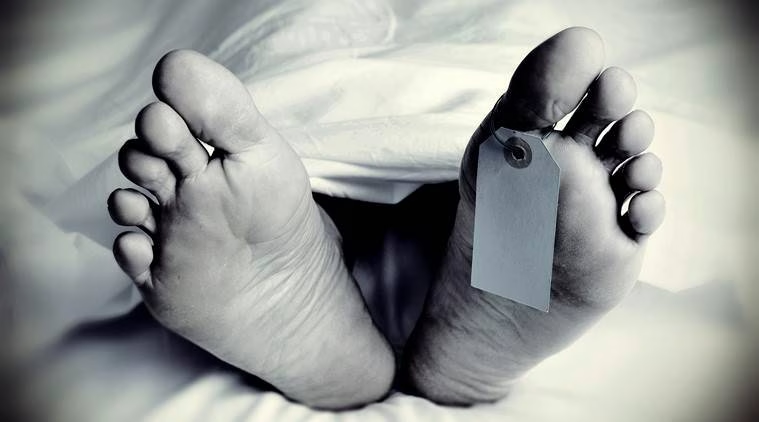

The delay in operationalising the two crore rupee post mortem centre at King George’s Medical University has exposed critical infrastructure gaps affecting public health in Uttar Pradesh. The centre remains non functional due to a fund shortage, despite the building being completed, increasing pressure on existing forensic services and slowing medico legal processes.
Why the KGMU post mortem centre is critical for UP’s health system
The new post mortem centre was designed to expand KGMU’s forensic capacity, reduce congestion and support the growing medico legal workload from Lucknow and surrounding districts. Uttar Pradesh handles one of the highest numbers of medico legal cases in India, making timely death examinations essential for accurate reporting, legal evidence and public health documentation.
Currently, KGMU’s existing unit is handling more cases than it was built for, creating delays in autopsies and forensic evaluations. The new centre was expected to relieve this burden. However, the absence of funds for essential equipment, specialised installations and staffing approvals has halted progress, turning an almost ready facility into an idle structure.
How a funding gap stalled a nearly completed forensic facility
Although the building is structurally complete, crucial components such as autopsy tables, cold storage equipment, biohazard management systems, ventilation units and forensic tools are still pending. These items require a separate financial release, which has not been approved yet.
Forensic centres must meet strict operational standards for safety, documentation and legal compliance. Without essential installations, the centre cannot begin even partial operations. As a result, the facility stands unused, increasing operational pressure on the older mortuary and creating inefficiencies in handling rising caseloads.
Impact on medico legal workload and police investigations
With only one functional unit managing the entire load, turnaround time for autopsy reports has increased. Families face longer waiting periods, which affects funeral procedures and adds emotional strain. More importantly, police investigations relying on timely medico legal reports experience delays, affecting evidence quality and slowing judicial processes.
In criminal cases, delays in obtaining forensic reports can weaken the chain of evidence. For sudden or suspicious deaths, timely examinations are crucial for determining cause of death. The continued delay in opening the new centre forces law enforcement agencies to depend on overstretched resources, increasing the risk of operational bottlenecks.
Why UP faces recurring challenges in forensic infrastructure expansion
UP’s high population density and rising urbanisation have increased medico legal cases significantly. However, investment in forensic and mortuary infrastructure has lagged behind. Many district level facilities continue to operate with outdated equipment and limited manpower, pushing complex or high profile cases to major institutions like KGMU.
The delay at KGMU highlights broader structural issues such as slow fund clearance, overlapping administrative responsibilities and inconsistent project monitoring. These systemic challenges often convert completed buildings into non functional assets until final approvals are received.
Consequences for families, frontline workers and hospital systems
Families waiting for autopsies face long queues and repeated visits. Uncertainty about examination timelines adds distress in cases requiring post mortem documentation for insurance, legal claims or criminal complaints.
Forensic doctors and mortuary staff at KGMU shoulder extended workloads with limited workspace and safety resources. Overcrowded mortuaries increase risks of exposure to biohazard material and reduce operational efficiency. With no additional space coming online, staff fatigue continues to grow, affecting both accuracy and speed of examinations.
The hospital system also bears the operational fallout. Departments relying on forensic input for clinical or research work face delays, slowing academic and institutional processes.
Administrative response and possible pathway to operationalisation
University officials have indicated that the final fund release is pending approval. Once sanctioned, procurement of equipment and installation processes can begin. These include setting up refrigeration chambers, autopsy instruments, waste disposal systems and digital documentation infrastructure.
After installation, the centre must undergo safety checks, trial runs and staffing alignment before opening to the public. If funds are cleared in the current cycle, commissioning could be completed within a few months. However, continued administrative delays may push operationalisation further, extending the pressure on existing facilities.
Why resolving the delay is essential for UP’s public health priorities
A fully functional post mortem centre contributes to improved investigation quality, faster forensic reporting and better public health monitoring. Death data from autopsies helps authorities track patterns related to accidents, infectious diseases and injuries. Without adequate forensic capacity, crucial data remains slow or incomplete.
Completing the KGMU centre aligns with the state’s broader goal of strengthening tertiary medical infrastructure. It also builds public trust, assuring residents that medico legal processes are handled efficiently and transparently. Addressing the funding gap quickly would provide measurable improvements in service delivery and legal outcomes.
Takeaways
The KGMU post mortem centre remains inactive due to pending funds despite construction completion
Delays increase pressure on existing facilities and slow police investigations
Forensic staff and families face the immediate fallout of infrastructure gaps
Timely fund release is essential to operationalise the centre and strengthen public health systems
FAQs
Why is the post mortem centre not operational yet
The centre lacks essential equipment and staffing approvals because the final financial allocation required for setup has not been released.
How does the delay affect legal and criminal investigations
Investigations relying on autopsy reports face delays, which can weaken evidence and slow judicial processes.
Can the facility function partially before full equipment installation
No. Forensic centres must meet strict medical and legal standards before conducting examinations, making partial operations unsafe and non compliant.
When can the centre become operational
Once funds are approved, commissioning may take a few months. Delays in approval will extend the timeline further.