
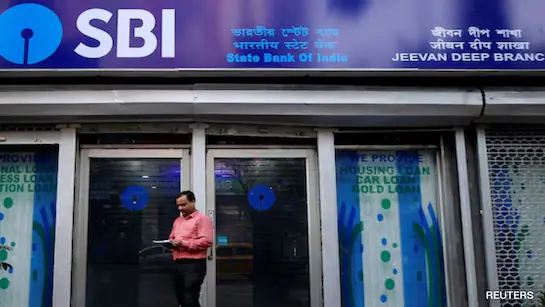

State Bank of India passes RBI rate cut to borrowers, directly affecting loan EMIs, credit demand, and cash flow conditions for SMEs and home buyers. This is a time sensitive financial development linked to recent monetary policy transmission and bank level lending rate adjustments.
The impact varies by loan type, reset cycle, and borrower profile, making it important to understand who benefits immediately and who sees delayed relief.
What the RBI Rate Cut Means in Simple Terms
When the RBI cuts policy rates, it lowers the cost at which banks borrow money. State Bank of India passing the RBI rate cut means it has reduced its external benchmark linked lending rate or marginal cost of funds based lending rate, depending on the loan category.
Most retail loans today are linked to an external benchmark, usually the repo rate. This ensures faster transmission of RBI policy changes. Once SBI revises its lending rate downward, eligible borrowers automatically see a reduction in interest rates without needing to submit requests.
The key factor is timing. The benefit reflects either immediately or at the next reset date depending on the loan agreement.
How SBI Has Passed the Rate Cut
SBI has adjusted its benchmark lending rates downward following the RBI decision. Home loans, SME loans, and select retail products linked to external benchmarks see interest rate reductions aligned with the policy cut.
For repo linked loans, the rate change is automatic. For older loans under marginal cost linked systems, the benefit applies at periodic reset intervals. Fixed rate loans remain unaffected unless converted to floating rates, usually at a fee.
This move reinforces RBI’s objective of policy transmission and supports credit growth during economic moderation phases.
Impact on Home Loan Borrowers
Home loan borrowers are among the biggest beneficiaries when SBI passes the RBI rate cut. A lower interest rate directly reduces EMIs or shortens loan tenure, depending on the borrower’s choice.
For new home loan applicants, reduced rates improve affordability and eligibility, especially in Tier 2 cities where property demand is price sensitive. Existing borrowers with floating rate loans benefit most if their loans are linked to the repo rate.
Borrowers nearing the end of tenure gain limited EMI reduction but benefit through faster principal repayment. Those early in the loan cycle see higher long term savings.
Impact on Small and Medium Enterprises
SMEs benefit from lower working capital and term loan interest rates when SBI passes the RBI rate cut. Reduced borrowing costs improve cash flow, ease inventory financing, and support expansion planning.
Businesses dependent on bank credit see immediate relief if loans are benchmark linked. For MSMEs operating on thin margins, even small rate reductions can improve profitability.
However, access to credit still depends on risk assessment, repayment history, and sector outlook. The rate cut supports demand but does not override credit discipline.
Tier 2 and Tier 3 enterprise clusters benefit more due to higher reliance on public sector banks like SBI.
Who Benefits Immediately and Who Does Not
Borrowers with repo linked loans benefit immediately from the rate cut. Those on marginal cost linked loans benefit at the next reset date, which could be quarterly or annual.
Fixed rate borrowers do not benefit unless they switch to floating rates. Overdraft and cash credit limits may reflect lower interest costs depending on review cycles.
New borrowers gain the most flexibility, as banks adjust pricing offers to attract fresh demand following rate cuts.
Understanding your loan linkage type is essential to track actual benefits.
What Borrowers Should Do Now
Borrowers should check their loan sanction letter or account statement to identify the benchmark linkage. Use SBI digital banking platforms to track revised rates and EMI changes.
Home loan borrowers can choose between lower EMI or reduced tenure if the option is available. SMEs should reassess borrowing needs and renegotiate terms if eligible.
Avoid frequent refinancing for marginal gains, as processing fees may offset benefits. Long term planning delivers better value.
Broader Economic Impact
Lower lending rates support housing demand, consumption, and business investment. SBI’s transmission of the RBI rate cut improves credit sentiment across sectors.
Increased loan demand may stimulate allied industries such as construction, manufacturing, and services. For policymakers, faster transmission validates monetary easing effectiveness.
However, sustained benefits depend on inflation control and stable economic conditions.
Takeaways
SBI passing the RBI rate cut lowers interest costs for eligible borrowers
Home loan borrowers and SMEs see the most direct benefits
Immediate impact depends on loan benchmark and reset cycle
Borrowers should review loan terms to maximize savings
FAQs
Will all SBI loan borrowers get lower EMIs
Only borrowers with floating rate loans linked to benchmarks affected by the rate cut will benefit.
Do I need to apply to get the reduced interest rate
No. Repo linked loans adjust automatically once the bank revises rates.
Can fixed rate borrowers switch to floating rates
Yes, but conversion usually involves a processing fee.
Does the rate cut improve loan eligibility for new borrowers
Yes. Lower rates can increase loan eligibility and affordability.