
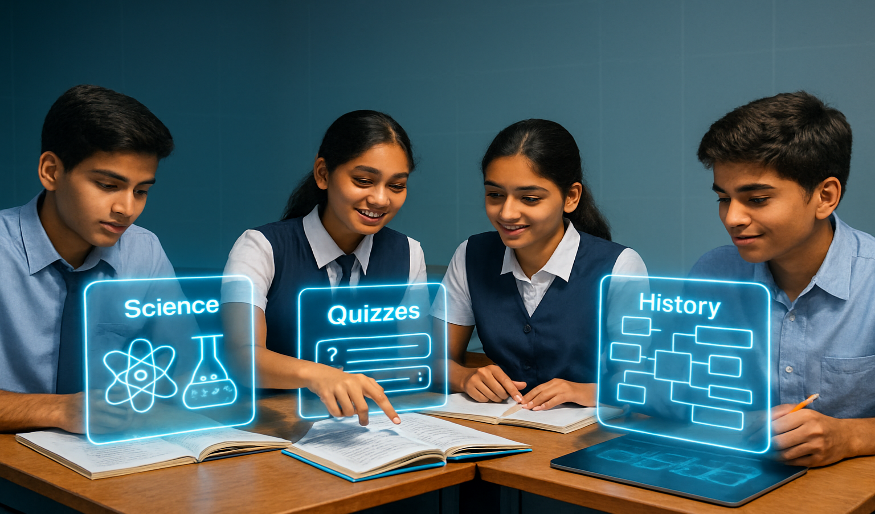

Odisha’s plan to introduce AI in the school curriculum marks a significant policy move that could reshape how students in Tier 2 cities learn, compete, and prepare for future jobs. The initiative is time sensitive and policy driven, with implementation phases expected to begin through structured curriculum integration rather than immediate full scale rollout.
For students outside metro cities, this development carries both promise and pressure. While artificial intelligence education can bridge skill gaps, it also exposes existing infrastructure and training challenges. Understanding what this plan really means on the ground is essential for parents, educators, and students.
This article explains the intent, opportunities, and limitations of Odisha’s AI curriculum push, with a focus on Tier 2 city impact.
Why Odisha Is Introducing AI at the School Level
Odisha’s decision to bring AI into schools aligns with national goals around digital skills, emerging technologies, and workforce readiness. As automation and data driven systems expand across industries, early exposure to AI concepts is seen as a long term investment in human capital.
The focus is not on coding alone. AI education typically includes logical thinking, data awareness, ethics, and real world problem solving. For a state with a growing emphasis on technology led governance and industry partnerships, preparing students early is a strategic move.
By targeting schools rather than waiting for higher education, policymakers aim to reduce the urban advantage that metro students currently hold in tech exposure.
What the AI Curriculum Is Likely to Include
At the school level, AI is expected to be introduced in an age appropriate manner. For middle school students, this may involve basic concepts such as pattern recognition, algorithms, and simple automation logic.
Senior classes are likely to explore applied AI use cases, including data analysis, machine learning fundamentals, and practical problem solving. Ethical considerations, bias awareness, and responsible use of technology are also expected components.
Importantly, AI will likely be integrated within existing subjects rather than treated as a standalone technical stream. This approach reduces pressure on students while encouraging interdisciplinary learning.
Opportunities for Students in Tier 2 Cities
For students in Tier 2 cities such as Rourkela, Sambalpur, Berhampur, and Balasore, this initiative can be transformative. Early exposure to AI concepts helps demystify technology that often feels inaccessible outside metros.
Students gain confidence to pursue careers in engineering, data science, design, and emerging tech fields. It also improves problem solving skills applicable beyond technology focused jobs.
AI education can open doors to national level competitions, innovation challenges, and skill based scholarships that were previously dominated by metro schools. Over time, this may improve college admissions outcomes for students from smaller cities.
Challenges Schools Are Likely to Face
Despite its promise, implementation challenges are significant. Many government and aided schools in Tier 2 cities face shortages of trained teachers, computer labs, and reliable internet access.
Teachers trained in traditional subjects may require extensive upskilling to deliver AI concepts effectively. Without proper training, there is a risk of AI becoming a theoretical topic rather than a practical learning experience.
Infrastructure gaps could widen inequality between well funded private schools and government institutions unless addressed through targeted investment.
Teacher Training and Capacity Building Concerns
Teacher readiness is the backbone of any curriculum reform. Introducing AI without sufficient teacher training could lead to superficial learning and student confusion.
Effective implementation requires structured teacher certification programs, ongoing mentoring, and access to updated teaching resources. Teachers must be comfortable explaining not just how technology works, but why it matters.
In Tier 2 cities, where access to professional development opportunities is limited, training delivery models must be local, practical, and continuous rather than one time workshops.
Parental Awareness and Student Pressure
Another challenge lies in parental expectations. AI as a term often creates pressure for performance and comparison, especially in competitive academic environments.
Parents may mistakenly view AI education as a shortcut to high paying jobs, pushing children into skill tracks without considering aptitude or interest. Clear communication from schools is essential to position AI as a foundational literacy rather than a career guarantee.
Students already dealing with exam pressure may also feel overwhelmed if AI is introduced without careful workload balancing.
Long Term Impact on Odisha’s Education Ecosystem
If implemented thoughtfully, AI education can strengthen Odisha’s talent pipeline and reduce migration pressure by creating local skill ecosystems. Students familiar with AI concepts are better prepared for future learning, regardless of career path.
Over time, this can attract industry partnerships, innovation labs, and startup activity to Tier 2 cities. However, success depends on consistency, funding, and accountability.
Without sustained support, the initiative risks becoming symbolic rather than transformative.
What Students and Parents Should Watch Going Forward
Families should track how AI is introduced, not just whether it is announced. Key indicators include teacher training quality, availability of hands on learning, and integration with existing subjects.
Students should focus on curiosity and understanding rather than marks. AI literacy is about thinking, not memorisation.
Parents can support learning by encouraging problem solving activities and balanced screen use at home.
Takeaways
- Odisha’s AI curriculum plan aims to prepare students for future skills early
- Tier 2 city students stand to gain from improved tech exposure
- Teacher training and infrastructure remain key challenges
- Balanced implementation is critical to avoid added academic pressure
FAQs
Will AI become a compulsory subject in Odisha schools?
AI is expected to be integrated within existing subjects rather than added as a heavy standalone course.
Does this benefit government school students equally?
Benefits depend on infrastructure upgrades and teacher training quality across schools.
Is coding mandatory under AI education?
No. AI education focuses on concepts, logic, and application, not just coding.
Can AI education improve college admission prospects?
Early exposure strengthens skills but does not replace academic performance requirements.