
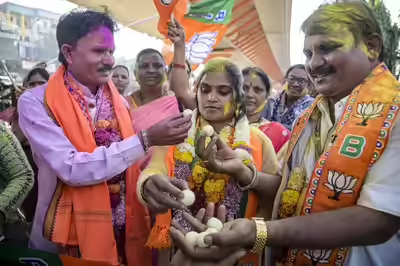

Maharashtra local body poll results have reshaped the political balance at the municipal and district level, directly affecting governance in cities, towns, and rural blocks. The outcomes highlight shifting voter priorities, changing party strengths, and the growing influence of local leadership over everyday civic issues.
This topic is time sensitive. The results are recent and have immediate implications for administration and political alignments. The tone here follows a news reporting style while explaining what the outcomes mean on the ground for residents and local institutions.
Maharashtra local body poll results matter because they determine control over municipal corporations, municipal councils, zilla parishads, and panchayat samitis. These bodies manage essential services such as roads, water supply, sanitation, property tax, and local development spending.
Overall Trends Emerging From the Results
The results show a fragmented mandate across many regions rather than a uniform statewide pattern. Major political parties have secured control in some urban bodies, while others have seen strong performances by independents and smaller regional groups.
In several municipalities, contests were closely fought, with narrow margins deciding control. This indicates voter focus on local candidates rather than party branding alone. Rural bodies, particularly zilla parishads, witnessed a higher presence of independent and alliance backed candidates.
Urban voters appeared more issue driven, reacting to concerns such as infrastructure delays, waste management, and water supply. In contrast, rural voters emphasized local leadership credibility and access to welfare delivery.
Winners: Parties and Groups Gaining Ground
The biggest winners in the Maharashtra local body polls are parties that managed to combine organizational strength with strong local candidates. In urban municipal corporations, established parties with booth level presence and visible local leadership performed better.
Independents emerged as significant winners in several councils and panchayat bodies. Many secured enough seats to influence leadership formation even without outright majorities. This strengthens their bargaining position during mayoral or chairperson selection.
Smaller regional parties also benefited in select pockets where local identity, language, or community representation played a decisive role. These wins highlight the importance of micro level campaigning in local elections.
Losers: Where Political Support Weakened
Some established parties faced setbacks in areas previously considered strongholds. Losses were most visible where internal factionalism affected candidate selection or where sitting local representatives faced anti incumbency.
Urban losses were often linked to civic service dissatisfaction rather than ideological shifts. Voters penalized administrations perceived as unresponsive to daily issues like potholes, drainage, and encroachments.
In rural areas, parties that relied heavily on centralized campaigning without empowering local faces struggled. Voters showed preference for candidates with visible grassroots engagement over distant leadership influence.
What the Results Mean for Local Governance
The immediate impact of the Maharashtra local body poll results will be seen in leadership formation within councils and corporations. Mayors, chairpersons, and standing committee heads will now shape development priorities for the next term.
Where no single party has a majority, coalition politics will dominate. This can slow decision making but also increase negotiation and compromise on development projects. In bodies controlled by independents, governance style may become more personalized and locally focused.
Budget allocation, contractor appointments, and civic project approvals will reflect the priorities of newly elected representatives. For residents, this directly affects how quickly local issues are addressed.
Impact on State Level Political Dynamics
Although local body elections are not legislative contests, their results influence state level political narratives. Parties interpret these outcomes as indicators of grassroots sentiment ahead of larger elections.
Strong performances boost morale and organizational confidence. Poor showings trigger internal reviews and leadership changes. Alliances tested at the local level may shape future state level partnerships.
For the state government, dealing with local bodies led by rival parties can complicate coordination on development schemes. Administrative cooperation becomes crucial to avoid delays in implementation.
What Voters Should Watch Next
Voters should track leadership appointments within their local bodies. The choice of mayor or chairperson often signals the direction of governance. Committee formation also matters, as key decisions flow through these groups.
Monitoring early decisions such as project approvals, budget revisions, and grievance redressal mechanisms helps assess whether election promises translate into action.
Citizen engagement remains important. Local bodies are more accessible than state institutions, and voter pressure can influence performance more directly.
Takeaways
- Maharashtra local body poll results show fragmented mandates across regions
- Independents and local leaders have emerged as key power holders
- Urban results reflect civic issue driven voting patterns
- Governance outcomes will depend on coalition stability and leadership choices
FAQs
Why are local body election results important for residents?
They determine who controls civic services such as roads, water supply, sanitation, and local development spending.
Do these results affect state government functioning?
Indirectly yes. Coordination between state and local bodies depends on political alignment and administrative cooperation.
Why did independents perform well in these polls?
Voters often prioritize local credibility and accessibility over party affiliation in municipal and rural elections.
What should citizens expect immediately after the results?
Leadership selection, committee formation, and early governance decisions that set priorities for the term.