
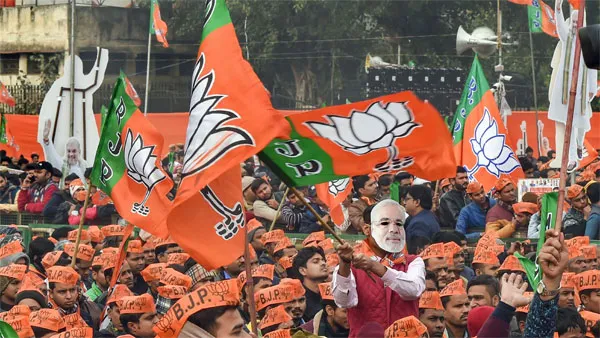

Goa Zilla Panchayat 2025 results have placed the BJP in a leading position while Congress and AAP delivered mixed performances across districts. The outcomes reflect local level political shifts, voter priorities, and emerging power equations that will shape rural governance in the state.
This topic is time sensitive. The results are recent and directly influence administrative control and political positioning in Goa. The tone of this article follows a news reporting style while explaining implications for local governance and future politics.
Goa Zilla Panchayat 2025 results are significant because zilla panchayats play a crucial role in rural development, infrastructure planning, and implementation of welfare schemes. Control at this level affects decision making in villages and blocks across North and South Goa.
Overall Picture From the Zilla Panchayat Results
The overall results show the BJP emerging as the single largest force across multiple zilla panchayat constituencies. While not sweeping all seats, the party has gained enough representation to influence leadership formation and policy direction in several districts.
The Congress retained pockets of traditional support but failed to convert them into a broad statewide resurgence. AAP, contesting with expansion ambitions, managed to register its presence but did not achieve a breakthrough performance.
Independent candidates also played a notable role. In several constituencies, they secured victories that could prove decisive in leadership formation, especially where margins between major parties remain narrow.
BJP Performance and Strategic Gains
The BJP’s lead in the Goa Zilla Panchayat 2025 results reflects its strong organizational presence and focused grassroots outreach. The party benefited from coordinated candidate selection and localized campaigning that emphasized development and welfare delivery.
In rural belts, BJP candidates leveraged visibility of government schemes and administrative access. This helped consolidate support among voters prioritizing continuity and access to resources.
The party’s ability to win across both North and South Goa indicates a widening base beyond traditional urban strongholds. However, in some areas, victories were by slim margins, highlighting the need for sustained engagement at the village level.
Congress Performance and Areas of Decline
Congress performance in the Goa Zilla Panchayat elections revealed both resilience and decline. The party retained influence in select constituencies where local leaders maintained strong personal connect with voters.
However, the inability to expand beyond these pockets limited its overall seat share. Internal coordination issues and inconsistent messaging weakened its campaign in several areas.
Congress faced challenges in mobilizing first time voters and converting dissatisfaction with local issues into electoral gains. The results underline the party’s struggle to rebuild a cohesive grassroots structure in Goa’s rural landscape.
AAP’s Entry and Limited Expansion
AAP entered the Goa Zilla Panchayat elections with the objective of expanding its rural footprint. The party managed to secure a modest number of seats, signaling limited but notable acceptance among certain voter segments.
Most AAP wins came from areas where candidates had strong local profiles rather than purely party driven support. This suggests that while the party brand has recognition, organizational depth remains a work in progress.
The results indicate that AAP is still in an early phase of rural expansion in Goa and will need sustained ground level engagement to compete consistently with established parties.
Role of Independents and Coalition Possibilities
Independent candidates emerged as important stakeholders in the Goa Zilla Panchayat 2025 results. Their victories have introduced coalition dynamics in districts where no single party holds a clear majority.
These independents often command strong local loyalty and can influence leadership selection and development priorities. Their alignment choices will shape governance outcomes over the next term.
Coalition negotiations are expected to focus on chairperson posts and committee control. Stability will depend on how effectively these alliances are managed.
What the Results Mean for Local Governance
The immediate impact of the results will be seen in the formation of zilla panchayat leadership and committees. Development priorities such as road connectivity, water management, and rural infrastructure will now be guided by the new leadership mix.
Where BJP holds a leading position, alignment with state level administration may streamline project execution. In mixed control areas, decision making could involve negotiation and compromise.
For residents, the focus will be on whether elected representatives address local issues efficiently and transparently, regardless of party affiliation.
Political Implications Going Forward
The Goa Zilla Panchayat results will influence political strategies ahead of future elections. For BJP, the results reinforce its rural expansion efforts. For Congress, they highlight the urgency of organizational revival. For AAP, the outcome offers learning ground for long term planning.
These local level signals often shape candidate selection, alliance decisions, and campaign narratives in upcoming contests.
Takeaways
- BJP emerged as the leading force in Goa Zilla Panchayat 2025 results
- Congress retained limited pockets but failed to expand statewide
- AAP registered presence but remains in early growth phase
- Independents will play a key role in coalition driven governance
FAQs
Why are zilla panchayat election results important in Goa?
They determine control over rural development planning, fund allocation, and implementation of local welfare schemes.
Did BJP win a complete majority across Goa?
BJP emerged as the leading party but in several districts leadership formation may involve alliances or independent support.
How did AAP perform compared to expectations?
AAP secured limited seats, showing presence but not a major breakthrough at the rural level.
What happens next after the results?
Leadership selection, committee formation, and coalition negotiations will determine governance direction.