
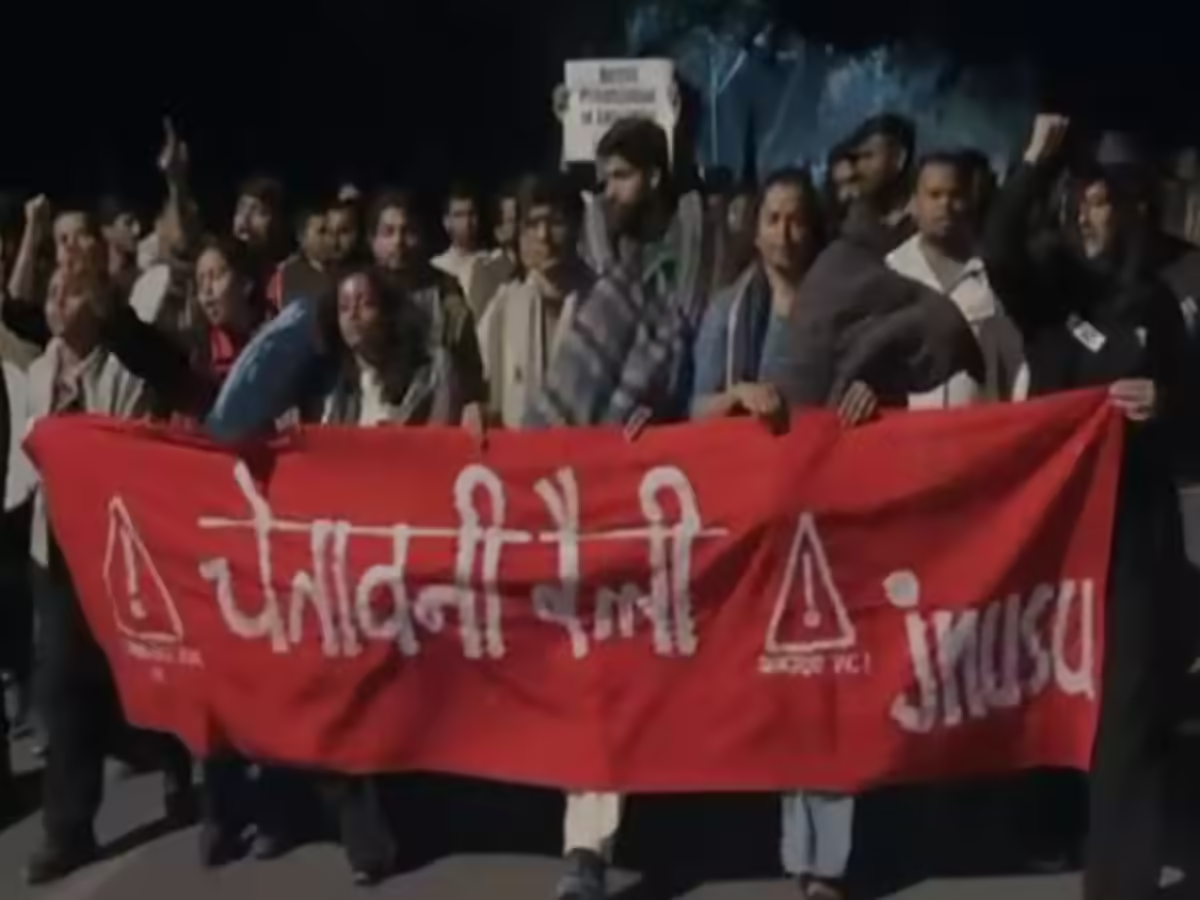

The ongoing debate around UGC norms and the JNU protest has drawn national attention, especially among students concerned about higher education policies. The implications go beyond Delhi, potentially affecting colleges and universities across Tier II and Tier III cities.
The UGC norms fight has intensified after student protests at Jawaharlal Nehru University raised concerns over regulatory changes in higher education. While the immediate flashpoint may be linked to specific campus level decisions, the broader issue revolves around University Grants Commission regulations, institutional autonomy and student rights. This is a time sensitive development because regulatory changes directly influence admissions, faculty appointments and academic structures nationwide.
Understanding the Role of UGC in Higher Education
The University Grants Commission is the statutory body responsible for coordination, standards and funding of higher education institutions in India. It frames regulations on faculty recruitment, academic credit systems, course structures and institutional governance.
Recent discussions around UGC norms have included changes in appointment criteria, credit frameworks under the National Education Policy and revised guidelines for autonomy and accreditation. When students at a central university protest such norms, the debate often extends to issues of transparency, consultation and implementation.
For students outside metro cities, understanding how UGC regulations function is essential because affiliated colleges and state universities must align with these standards.
Why the JNU Protest Matters Nationally
Jawaharlal Nehru University has historically been a prominent space for academic and political debate. Protests emerging from such institutions tend to amplify policy discussions across campuses.
If the protest concerns faculty hiring criteria, reservation policies or administrative autonomy, similar rules may apply to universities in cities such as Indore, Patna or Guwahati. Central universities follow uniform guidelines issued by the UGC and Ministry of Education.
Student organizations in Tier II cities often monitor developments at leading institutions to anticipate potential policy shifts in their own campuses. A regulation challenged at one university can influence discourse at others.
Impact on Admissions and Academic Credit System
One major area of concern in UGC related debates is the academic credit framework. The Academic Bank of Credits and multiple entry exit system were introduced under the National Education Policy 2020 to make higher education more flexible.
If protests question implementation challenges, smaller colleges may face similar issues. For example, credit transfer mechanisms require digital infrastructure and administrative readiness. Institutions in Tier II cities may need additional support to implement these systems smoothly.
Admissions processes may also be affected if eligibility criteria or entrance exam norms are revised. Students preparing for postgraduate programs should track official notifications carefully.
Faculty Recruitment and Autonomy Concerns
UGC regulations often define eligibility criteria for assistant professors and other academic positions, including qualifications such as NET or PhD requirements. Changes in these norms can influence faculty hiring patterns across India.
If protests highlight concerns over recruitment transparency or contractual appointments, students in non metro universities should assess how their institutions comply with regulatory guidelines.
Institutional autonomy is another sensitive issue. While autonomy can enhance academic innovation, it also raises questions about fee structures and governance accountability. Colleges outside metros must balance independence with affordability.
What Students in Tier II Cities Should Do
Students should rely on official university notifications rather than social media interpretations. Regulatory changes typically follow consultation drafts and final approvals. Reading the actual regulation text helps avoid misinformation.
Participating in campus discussions through academic forums can promote informed debate. However, students must ensure peaceful and lawful engagement.
Those preparing for competitive exams or higher studies should focus on eligibility criteria as specified for the current academic cycle. Regulatory transitions usually include transitional provisions to avoid sudden disruption.
Policy Stability and Long Term Outlook
Higher education reforms are part of an ongoing policy evolution. The National Education Policy 2020 envisions multidisciplinary learning, digital credit storage and institutional restructuring. Such large scale reforms inevitably generate debate.
For students beyond metro cities, the key issue is implementation quality. Infrastructure readiness, faculty training and administrative capacity determine whether policy changes translate into academic benefit.
The long term outlook depends on constructive dialogue between regulatory bodies, universities and student communities. Stable and transparent governance strengthens trust in the higher education system.
Takeaways
UGC norms apply nationwide and affect universities beyond Delhi
Protests at major institutions can influence national higher education debate
Students should track official notifications for admissions and credit policies
Implementation quality in Tier II cities will shape long term outcomes
FAQs
Q1. What is the role of the UGC?
The University Grants Commission sets standards, regulates higher education institutions and oversees funding and policy implementation.
Q2. How can UGC norm changes affect students?
Changes may influence admissions criteria, credit systems, faculty recruitment and institutional governance.
Q3. Should students in Tier II cities be concerned about metro protests?
They should stay informed because central regulations apply across many institutions, but decisions should be based on official updates.
Q4. Can policy reforms disrupt ongoing courses?
Typically, reforms include transitional measures to ensure students already enrolled are not adversely affected.