
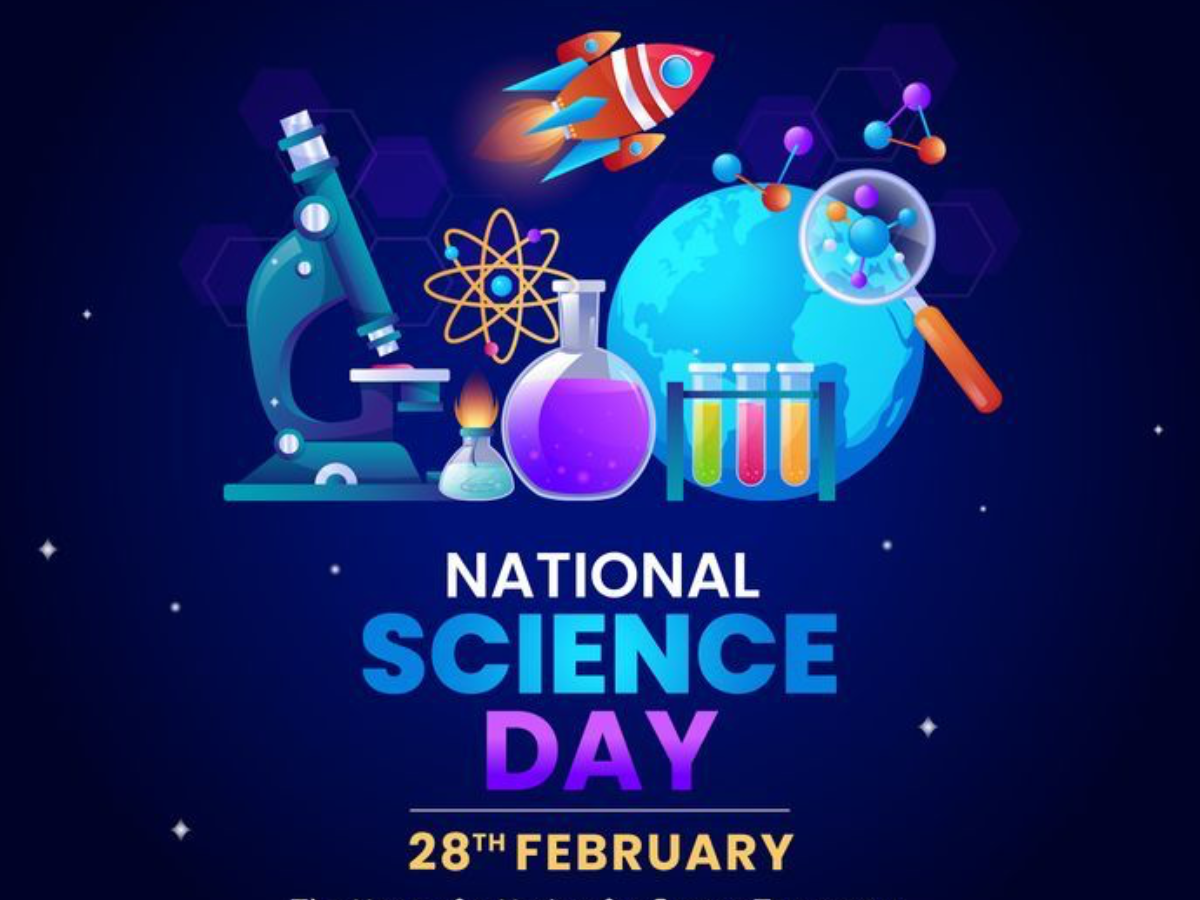

National Science Day 2026 is being celebrated across India with exhibitions, lectures, innovation challenges, and community outreach programs aimed at strengthening local science culture. Schools, universities, and research institutions are using this occasion to promote scientific thinking and grassroots innovation.
National Science Day 2026, observed on 28 February, marks the discovery of the Raman Effect by physicist C V Raman in 1928. The day is officially recognized across India and coordinated by scientific bodies, educational institutions, and state governments. Since it is observed annually on a fixed date, the topic is time sensitive around 28 February but remains relevant each year due to its recurring nature and evolving theme.
How National Science Day 2026 Is Being Observed Nationwide
Across India, National Science Day 2026 celebrations include science exhibitions, student competitions, public lectures, laboratory open days, and innovation showcases. Central research institutions often organize seminars highlighting recent scientific advancements and their societal impact.
In metropolitan cities such as Delhi, Mumbai, Bengaluru, and Chennai, major research institutes and universities conduct panel discussions on emerging technologies like artificial intelligence, clean energy, and biotechnology. Public science museums host interactive demonstrations to engage students.
State science councils and district level education departments also conduct events in Tier 2 and Tier 3 cities. These include model making competitions, quiz contests, and awareness drives focusing on practical science applications. The aim is to extend scientific curiosity beyond urban centers and ensure wider participation.
Role of State Governments in Promoting Local Science Culture
Many state governments use National Science Day as a platform to launch new initiatives or highlight existing schemes related to science education and innovation. Departments of science and technology often collaborate with schools and colleges to conduct district level science fairs.
In states such as Maharashtra, Tamil Nadu, Uttar Pradesh, and Karnataka, government schools participate in structured science exhibitions aligned with the annual theme. These exhibitions encourage students to design projects addressing local challenges such as water scarcity, waste management, and renewable energy.
Rural innovation is also a focus in several states. Agricultural universities and Krishi Vigyan Kendras organize demonstrations on improved farming techniques, soil testing methods, and sustainable irrigation. This connects scientific research with practical rural development.
Science Exhibitions and Student Participation in Tier 2 and Tier 3 Cities
National Science Day 2026 has seen increased engagement from smaller cities and towns. District education offices often conduct zonal level competitions where selected student projects advance to state level exhibitions.
In many semi urban areas, schools collaborate with nearby engineering colleges or polytechnic institutes to provide mentorship. Students gain access to laboratory equipment and expert guidance that may not be available in their own institutions.
Community participation is also visible. Parents, local entrepreneurs, and small industry owners attend exhibitions and interact with students. This helps bridge the gap between academic science and real world application. Projects related to low cost water filtration, solar powered devices, and waste segregation models are commonly showcased.
Focus on Emerging Technologies and Sustainable Development
The theme for National Science Day 2026 emphasizes sustainable development and innovation. Many institutions are highlighting renewable energy solutions, electric mobility, climate resilience, and digital technologies.
Engineering colleges are conducting workshops on robotics, coding, and artificial intelligence basics for school students. Biotechnology departments are organizing awareness sessions on public health and disease prevention.
Environmental awareness campaigns are another key component. Tree plantation drives, waste audit exercises, and climate change seminars are being conducted in multiple states. By integrating sustainability into celebrations, institutions aim to encourage long term scientific responsibility.
Industry and Startup Involvement in Science Outreach
Private companies and startups are increasingly participating in National Science Day activities. Technology firms conduct campus talks explaining career paths in data science, electronics, and research and development.
Incubation centers at universities host startup exhibitions where innovators display prototypes. These include affordable medical devices, smart irrigation systems, and energy efficient appliances. Such initiatives expose students to entrepreneurship in science and technology.
Corporate social responsibility programs also support rural science labs and digital learning tools. This expands access to quality science education in underserved regions.
Long Term Impact on Scientific Temper in India
National Science Day is not limited to one day of celebration. It reinforces the constitutional duty to develop scientific temper among citizens. By encouraging questioning, experimentation, and evidence based thinking, the event contributes to informed decision making.
Students who participate in exhibitions often develop interest in STEM careers. Exposure to laboratories, research institutions, and industry experts helps them visualize career opportunities in engineering, medicine, pure sciences, and technology.
Over time, consistent celebration across states strengthens local science ecosystems. Collaboration between schools, colleges, government bodies, and private organizations ensures that scientific culture grows beyond textbooks.
Takeaways
National Science Day 2026 is being celebrated across India with exhibitions and public outreach programs
State governments are using the event to promote innovation and grassroots science education
Tier 2 and Tier 3 cities are witnessing increased student participation and mentorship support
Focus on sustainability and emerging technologies aligns celebrations with national priorities
FAQs
Q1. Why is National Science Day celebrated on 28 February?
It commemorates the discovery of the Raman Effect by C V Raman in 1928.
Q2. Who organizes National Science Day events in India?
Schools, universities, research institutions, state governments, and scientific organizations coordinate celebrations.
Q3. How do smaller cities benefit from National Science Day?
District level exhibitions and outreach programs provide exposure and mentorship to students in Tier 2 and Tier 3 regions.
Q4. Does National Science Day influence career choices?
Participation in science events and exposure to experts can inspire students to pursue STEM careers.