
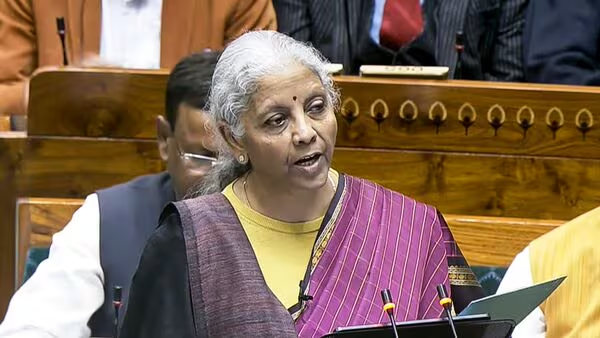

Budget 2026 places strong emphasis on infrastructure development in Tier 2 and Tier 3 cities across India. Increased funding for transport, urban infrastructure, and housing aims to boost regional economies, attract investment, and reduce pressure on major metropolitan areas.
Why Budget 2026 Focuses on Tier 2 and Tier 3 City Development
The Budget 2026 infrastructure push for Tier 2 and Tier 3 cities reflects the government’s long term strategy to promote balanced regional growth. For decades, India’s largest metropolitan areas have attracted the majority of investment, employment opportunities, and infrastructure projects. As a result, cities such as Mumbai, Delhi, Bengaluru, and Hyderabad have faced rising population pressure, traffic congestion, and high living costs.
In recent years, policymakers have begun shifting attention toward smaller cities to distribute economic activity more evenly. Budget 2026 continues this approach by allocating greater resources toward infrastructure development in emerging urban centers. These investments include improvements in transportation networks, urban housing, logistics corridors, and digital connectivity.
Strengthening infrastructure in smaller cities can encourage industries and service sector businesses to expand beyond metropolitan hubs. For residents, improved infrastructure often translates into better mobility, job opportunities, and quality of life.
Major Infrastructure Investments Announced in Budget 2026
One of the most important components of the Budget 2026 infrastructure plan involves continued capital expenditure on transport networks. The central government has maintained strong public investment in highways, railway modernization, and logistics corridors to improve connectivity across regions.
Road and highway expansion projects aim to connect industrial clusters, agricultural markets, and emerging urban centers more efficiently. Better road connectivity allows goods to move faster between production centers and consumer markets, reducing transportation costs for businesses.
Railway infrastructure is also receiving continued investment. Modernization projects include station redevelopment, improved freight corridors, and upgrades in passenger rail services connecting smaller cities.
Urban development programs are another major focus. Government initiatives aimed at improving urban housing, water supply systems, sewage infrastructure, and public transportation networks are being expanded in many growing cities.
Together, these projects aim to create stronger urban ecosystems that support long term economic growth.
Impact on Local Economies and Regional Job Creation
Infrastructure investments in Tier 2 and Tier 3 cities often produce significant economic benefits at the local level. Construction projects themselves generate employment opportunities across sectors such as engineering, construction, and logistics.
Once infrastructure is completed, the long term effects can be even more substantial. Improved transport connectivity allows businesses to expand operations in smaller cities where operational costs are often lower than in large metropolitan areas.
Manufacturing companies, logistics firms, and technology service providers have increasingly begun exploring locations outside major cities. This shift helps create local job opportunities and encourages migration toward emerging urban centers instead of already crowded metros.
Local businesses also benefit from improved infrastructure. Better roads, digital networks, and logistics facilities allow small enterprises to reach larger markets and operate more efficiently.
Over time, these improvements can contribute to stronger regional economic development and increased investment across sectors.
How Infrastructure Development Supports Startup Growth
The Budget 2026 focus on infrastructure also supports India’s growing startup ecosystem in smaller cities. Reliable transportation, stable electricity supply, and improved digital connectivity are essential for entrepreneurs building technology or service based companies.
Many startup founders are now choosing to operate from Tier 2 cities where operating costs such as office space and salaries are lower compared to major metros. With better infrastructure, these cities become more attractive for investors and business partners.
Improved connectivity also enables startups to access national markets more easily. Companies can recruit talent, ship products, and communicate with clients across different regions without relocating to expensive metropolitan centers.
Government initiatives aimed at improving digital infrastructure and supporting innovation hubs further strengthen this ecosystem. As a result, several smaller cities have begun emerging as startup and technology centers.
Challenges and Long Term Outlook for Regional Infrastructure
While the infrastructure push in Budget 2026 creates new opportunities, successful implementation remains critical. Large infrastructure projects require efficient planning, timely execution, and coordination between central, state, and local governments.
Land acquisition challenges, environmental clearances, and funding constraints can sometimes delay projects. Ensuring transparent project management and consistent policy support will be important for achieving long term development goals.
Another challenge is ensuring that infrastructure growth is balanced with environmental sustainability and urban planning. Rapid urban expansion without proper planning can create new challenges related to traffic congestion, pollution, and resource management.
Despite these challenges, continued infrastructure investment is expected to play a central role in shaping the future growth of India’s emerging cities.
Takeaways
• Budget 2026 increases focus on infrastructure development in Tier 2 and Tier 3 cities across India
• Investments include highways, railway modernization, logistics networks, and urban development programs
• Improved infrastructure can attract businesses, generate jobs, and support startup growth in smaller cities
• Effective implementation and planning will determine the long term economic impact of these investments
FAQ
Why is the government focusing on Tier 2 and Tier 3 cities
The government aims to promote balanced regional development and reduce pressure on major metropolitan areas by encouraging economic growth in smaller cities.
What types of infrastructure projects are included in Budget 2026
Key projects include highways, railway modernization, logistics corridors, urban housing, and improvements in water and sanitation systems.
How can infrastructure development benefit local businesses
Better connectivity and logistics reduce transportation costs and allow businesses to reach larger markets more efficiently.
Will smaller cities attract more startups in the future
Yes. Improved infrastructure and lower operating costs make Tier 2 and Tier 3 cities increasingly attractive locations for startups and entrepreneurs.