
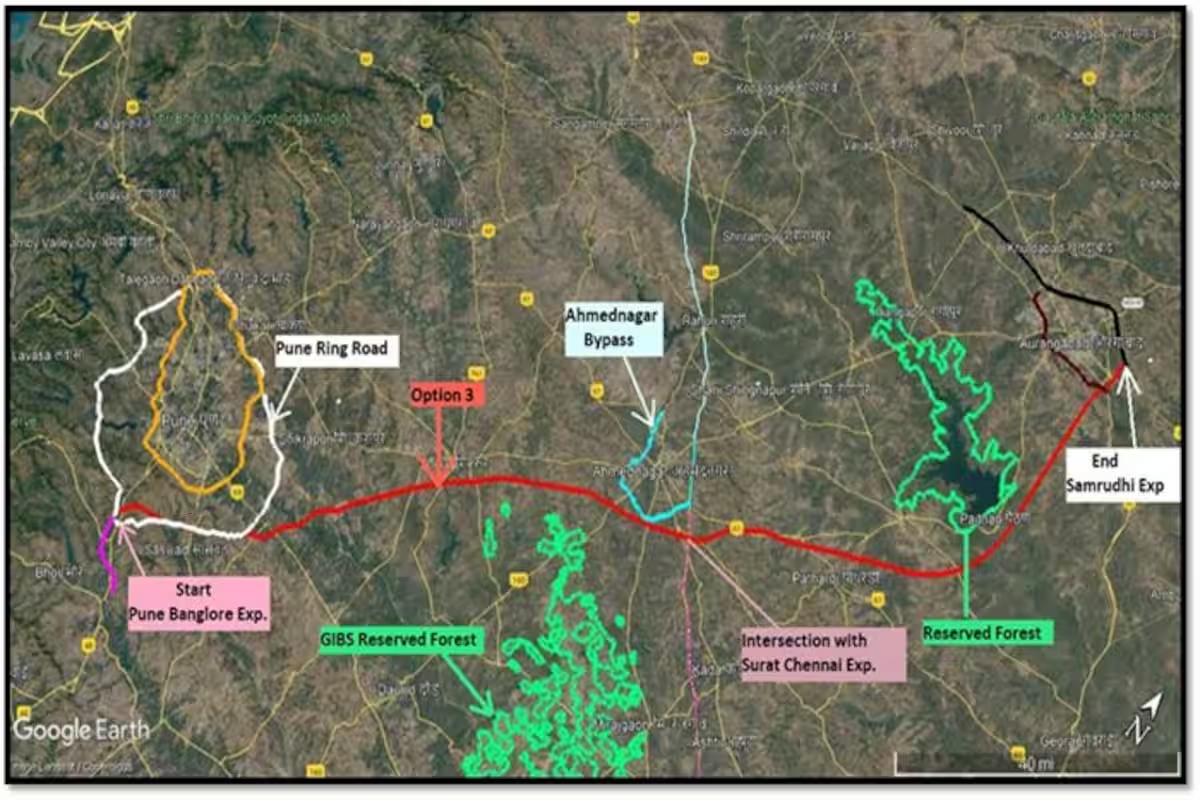

Maharashtra’s push for new industrial corridors near Nagpur and Aurangabad signals a major shift in regional development. The move is expected to attract investment, boost manufacturing, and create large-scale employment opportunities across Vidarbha and Marathwada regions.
The Maharashtra government’s focus on developing industrial corridors near Nagpur and Aurangabad aligns with its strategy to decentralize growth beyond Mumbai and Pune. These corridors are being integrated with existing logistics networks and national infrastructure programs to accelerate industrial expansion.
What Are Industrial Corridors and Why They Matter Now
Industrial corridors are planned zones that combine transport infrastructure, industrial clusters, and urban development. They are designed to reduce logistics costs, improve supply chains, and attract both domestic and global manufacturers.
In Maharashtra, these corridors are being linked with major national projects like the Delhi-Mumbai Industrial Corridor, which already passes through key parts of the state. The expansion near Nagpur and Aurangabad is aimed at leveraging land availability and improving connectivity to ports and highways.
This development comes at a time when companies are looking to diversify manufacturing bases within India. Rising costs in metro cities are pushing industries toward Tier-2 regions, making these corridors strategically important.
Key Locations and Infrastructure Developments
The corridor development near Nagpur is expected to benefit from its position as a logistics hub, supported by projects like the MIHAN. MIHAN has already attracted IT firms, cargo operators, and manufacturing units.
Aurangabad, on the other hand, has an established industrial base with automotive and pharmaceutical companies. The new corridor expansion is likely to strengthen its role as a manufacturing cluster in Marathwada.
Planned infrastructure includes improved highways, rail connectivity, industrial parks, and warehousing zones. These developments are expected to reduce transit time and make operations more efficient for businesses.
The government is also focusing on plug-and-play industrial spaces, which allow companies to start operations faster without heavy initial setup delays.
Impact on Local Jobs and Employment Trends
One of the biggest expected outcomes of these industrial corridors is job creation. The expansion is likely to generate employment across multiple sectors including manufacturing, logistics, construction, and services.
For local populations in Nagpur and Aurangabad, this means increased access to formal employment opportunities without migrating to metro cities. Skilled and semi-skilled workers are expected to benefit the most.
There will also be indirect job creation through ancillary industries such as transportation, food services, and small-scale suppliers. Local entrepreneurs can tap into this ecosystem by offering support services to larger companies.
However, the nature of jobs will increasingly demand technical skills. This may push demand for vocational training and skill development programs in these regions.
Opportunities for Small Businesses and Startups
The corridor development is not limited to large corporations. Small businesses and startups in Tier-2 cities stand to gain significantly.
With increased industrial activity, demand for local vendors, maintenance services, packaging, and logistics support will rise. This creates entry points for MSMEs to integrate into larger supply chains.
Government incentives and easier access to credit under MSME schemes can further support small entrepreneurs. Startups focusing on logistics tech, supply chain solutions, and workforce management may also find new opportunities.
The presence of industrial clusters often leads to the growth of surrounding residential and commercial areas, which further boosts local business activity.
Challenges and Execution Risks to Watch
While the plan is ambitious, execution will determine its success. Land acquisition remains one of the key challenges in infrastructure projects across India.
Delays in approvals, environmental clearances, and funding can slow down progress. Ensuring timely completion of supporting infrastructure like roads and power supply is critical.
Another concern is skill readiness. If local workers are not adequately trained, companies may still rely on talent from outside regions, limiting local employment benefits.
Monitoring policy consistency and ease of doing business will also be important to attract long-term investment.
What This Means for Regional Growth Strategy
The focus on Nagpur and Aurangabad reflects a broader shift in Maharashtra’s development strategy. Instead of concentrating industries in a few cities, the government is working to create multiple growth centers.
This approach can reduce regional inequality and improve economic balance within the state. It also aligns with national goals of boosting manufacturing and exports.
If implemented effectively, these corridors could transform Vidarbha and Marathwada into major industrial zones, reducing dependence on traditional economic hubs.
Takeaways
• Industrial corridors near Nagpur and Aurangabad aim to boost regional manufacturing
• Large-scale job creation is expected across multiple sectors
• MSMEs and local businesses can benefit from supply chain opportunities
• Execution challenges like land acquisition and skill gaps remain key risks
FAQs
Q1. What is the purpose of industrial corridors in Maharashtra?
They aim to improve infrastructure, attract investment, and create jobs in emerging regions.
Q2. How will these corridors impact local employment?
They are expected to generate both direct and indirect job opportunities across sectors.
Q3. Which areas will benefit the most from this development?
Regions around Nagpur and Aurangabad, along with nearby districts, will see the highest impact.
Q4. Can small businesses benefit from industrial corridors?
Yes, MSMEs can become suppliers and service providers within the industrial ecosystem.