
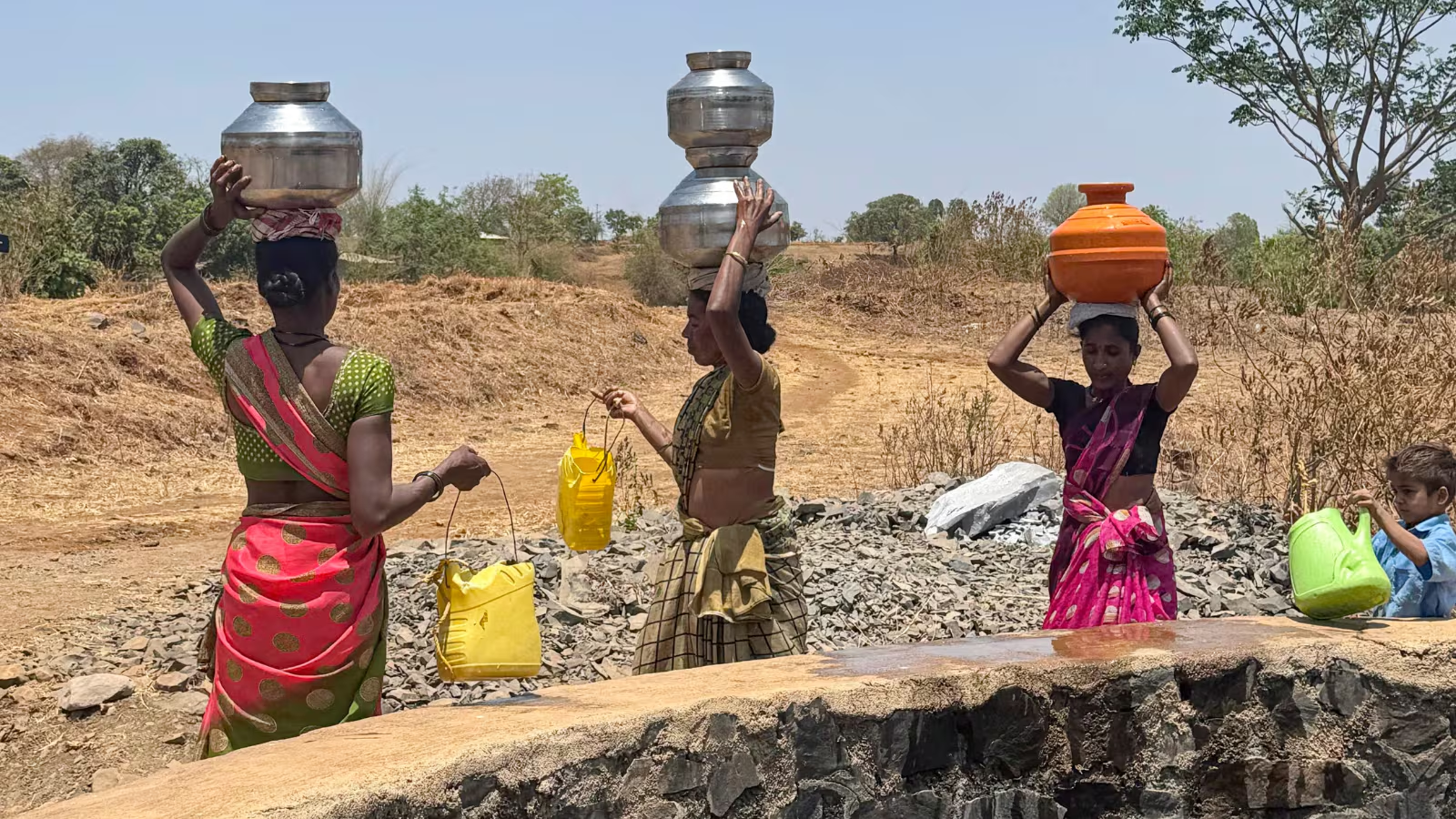

Water crisis alerts in Maharashtra towns have intensified as summer approaches, with several districts facing declining reservoir levels and supply shortages. Authorities have begun implementing emergency measures to manage demand and ensure equitable distribution across affected regions.
Rising Water Crisis in Maharashtra Towns This Summer
Water crisis alerts in Maharashtra towns are a time-sensitive development driven by seasonal factors and long-term water management challenges. Regions such as Marathwada and Vidarbha have reported falling groundwater levels and reduced storage in key reservoirs.
The situation is being monitored by the Maharashtra Water Resources Department, which tracks dam levels and issues advisories to local administrations. Many smaller towns depend heavily on monsoon recharge, making them vulnerable during extended dry periods.
Urban expansion in Tier-2 towns has also increased water demand, putting additional pressure on already strained resources. Early alerts aim to prevent severe shortages by triggering conservation measures.
प्रशासन Measures to Manage Water Supply and Demand
In response to the water crisis, district administrations have activated multiple strategies to manage supply. Tanker-based water distribution has been initiated in areas where regular supply has dropped significantly.
Authorities are enforcing restrictions on non-essential water usage, including vehicle washing and garden irrigation. Local bodies are also conducting leak detection drives to reduce water loss in supply systems.
The state government, through coordination with the Maharashtra Water Resources Department, is prioritizing drinking water allocation over industrial and agricultural use in critical zones.
In some districts, water supply schedules have been adjusted to ration available resources more effectively.
Impact on Daily Life in Tier-2 and Rural Areas
The water crisis alerts in Maharashtra towns are already affecting daily routines in several districts. Households are facing reduced supply frequency, leading to dependence on stored water or private tankers.
In Tier-2 cities like Nagpur and Aurangabad, some localities have reported intermittent supply, especially in outer areas. Rural regions face even greater challenges due to limited infrastructure.
Schools, small businesses, and local markets are also impacted, as water availability directly affects operations. In extreme cases, residents may need to travel to nearby sources to access water.
The situation highlights the vulnerability of smaller towns to seasonal water stress.
Agriculture and Local Economy Under Pressure
Water shortages are not limited to domestic use. Agriculture, a major economic activity in Maharashtra, is facing stress due to reduced water availability.
Farmers in affected regions are adjusting cropping patterns or delaying sowing cycles to cope with uncertain water supply. This can impact overall agricultural output and local income levels.
Small industries that rely on water for operations are also facing disruptions. Reduced supply can lead to lower productivity and increased operational costs.
The combined effect on agriculture and small businesses can slow down local economic activity during peak summer months.
Long-Term Water Management Challenges in Maharashtra
The recurring water crisis in Maharashtra points to structural issues in water management. Over-reliance on monsoon rainfall, inefficient irrigation practices, and groundwater depletion contribute to the problem.
Urban planning in rapidly growing towns has not always kept pace with water infrastructure development. This leads to supply-demand gaps during peak periods.
Efforts such as rainwater harvesting, watershed management, and improved irrigation techniques are being promoted, but implementation varies across regions.
Sustainable water management requires coordinated action between government agencies, local bodies, and communities.
What Residents Can Do During Water Shortages
Residents in affected towns can play a role in managing water usage. Simple steps such as fixing leaks, using water-efficient appliances, and avoiding wastage can make a difference.
Storing water safely and planning usage can help households cope with reduced supply schedules. Community-level initiatives, such as shared storage or local awareness campaigns, can also improve resilience.
Awareness about water conservation is increasing, but consistent practice is needed to address long-term challenges.
Individual efforts, combined with administrative measures, can help reduce the impact of water shortages.
Takeaways
- Water crisis alerts have been issued in several Maharashtra towns due to falling reservoir levels
- Authorities are using tanker supply, restrictions, and rationing to manage demand
- Daily life, agriculture, and small businesses are already seeing impact
- Long-term solutions require better water management and conservation practices
FAQs
1. Which areas in Maharashtra are most affected by water shortages?
Regions like Marathwada and parts of Vidarbha are among the most affected due to low rainfall and groundwater depletion.
2. What steps is the government taking to address the crisis?
Measures include tanker supply, water usage restrictions, and prioritizing drinking water allocation.
3. How can residents manage during water shortages?
By conserving water, fixing leaks, and planning usage based on supply schedules.
4. Is this a temporary or recurring issue?
While seasonal, water shortages in Maharashtra are a recurring challenge due to structural factors.