
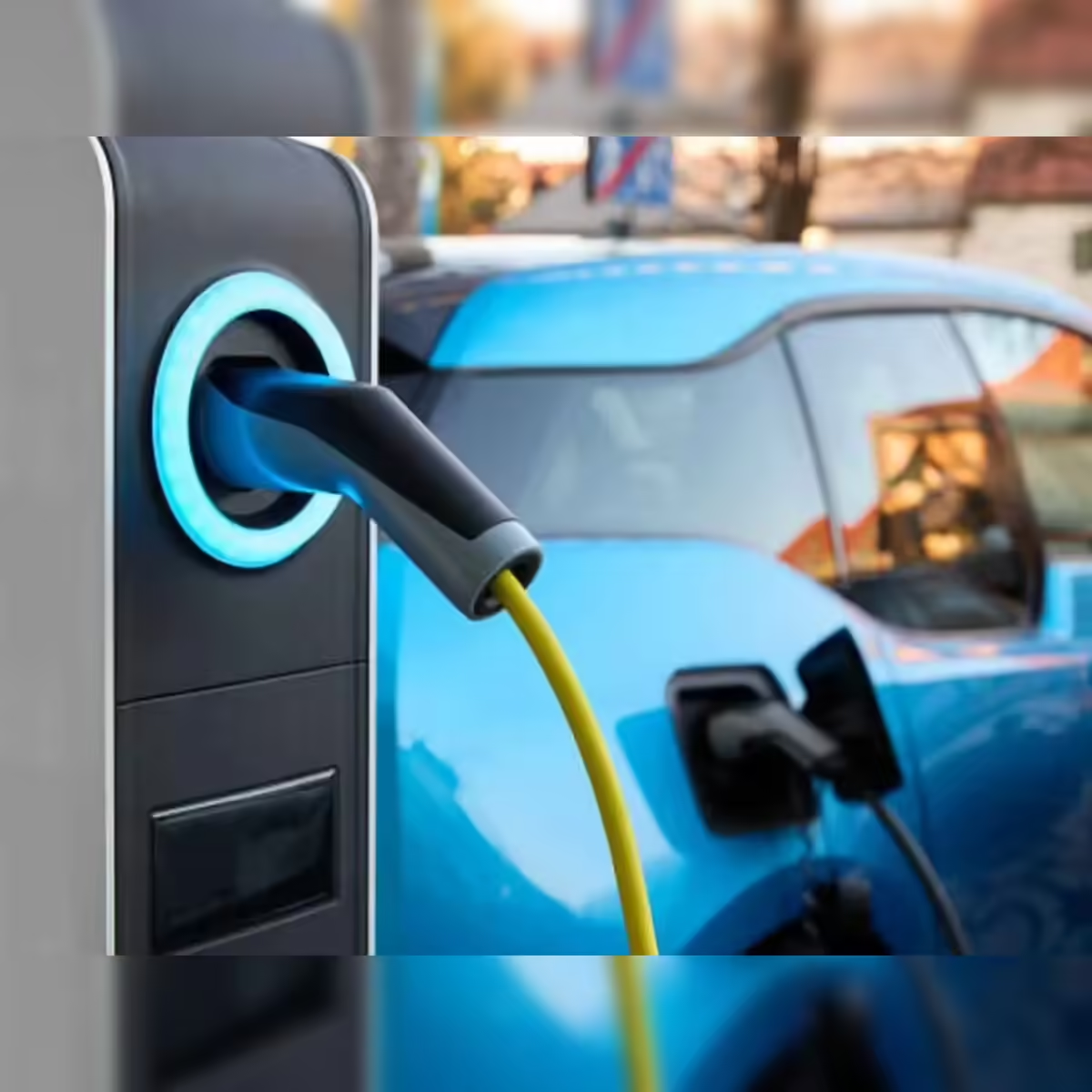

EV registrations surge in UP and Bihar is becoming a defining trend in 2026, especially across smaller cities. Rising fuel costs, government incentives, and improved charging access are pushing electric vehicle adoption beyond metros into Tier-2 and Tier-3 markets.
EV registrations surge in Uttar Pradesh and Bihar reflects a clear shift in mobility patterns, with smaller cities driving growth. Data trends from transport departments and industry estimates indicate that two-wheelers and e-rickshaws are leading this expansion due to affordability and daily utility.
What Is Driving EV Adoption in Tier-2 and Tier-3 Cities
The rapid increase in EV registrations in smaller cities is not accidental. Rising petrol and diesel prices have made electric alternatives more attractive for daily commuters and small business owners.
State-level incentives and central schemes such as FAME have reduced upfront costs. Subsidies on electric two-wheelers and e-rickshaws have played a major role in states like Uttar Pradesh and Bihar.
In addition, financing options have improved. Many local dealers now offer easy EMIs, making EVs accessible even in semi-urban areas.
Electric Two-Wheelers and E-Rickshaws Lead Growth
The EV growth trend in UP and Bihar is largely driven by electric two-wheelers and e-rickshaws rather than electric cars. These segments address daily commuting and last-mile connectivity needs.
E-rickshaws are widely used for passenger transport in cities like Varanasi, Patna, and Gorakhpur. They offer low running costs and quick returns for drivers.
Electric scooters are gaining popularity among students and office workers. Brands like Ola Electric and TVS Motor Company are expanding aggressively in these markets.
Role of Charging Infrastructure Expansion
Charging infrastructure has historically been a challenge in smaller cities, but the situation is improving. Public charging stations are being installed in key locations such as highways, markets, and residential areas.
Battery swapping models are also gaining traction, especially for commercial vehicles. This reduces downtime and increases efficiency for drivers.
Private home charging remains the most common method for two-wheeler users, making EV ownership practical even without dense public infrastructure.
Government Policies Supporting EV Growth in North India
Both Uttar Pradesh and Bihar governments have introduced EV policies to encourage adoption. These include purchase subsidies, road tax exemptions, and registration fee waivers.
The focus is on reducing pollution and promoting clean mobility. Urban areas with high pollution levels are prioritizing EV adoption as part of long-term sustainability goals.
Policy support combined with central incentives has created a favorable environment for both buyers and manufacturers.
Economic Impact on Small Cities and Local Businesses
The rise in EV adoption is creating new economic opportunities. Local dealerships, charging station operators, and maintenance services are seeing increased demand.
Small businesses are benefiting from lower transportation costs. Delivery services, in particular, are switching to electric vehicles to reduce operational expenses.
Employment opportunities are also emerging in EV servicing and battery management, especially in growing urban clusters.
Challenges Slowing Down EV Adoption
Despite strong growth, challenges remain. Limited charging infrastructure in rural areas still restricts expansion beyond city limits.
Battery replacement costs and lack of awareness about long-term savings can discourage some buyers. Quality concerns around low-cost EV models also affect consumer trust.
Addressing these issues will be key to sustaining the current growth trend.
Future Outlook for EV Market in UP and Bihar
The EV market in these states is expected to grow steadily over the next few years. Increased investment in infrastructure and rising consumer awareness will further accelerate adoption.
Manufacturers are likely to introduce more affordable models tailored for smaller cities. As technology improves and costs decrease, EVs could become the default choice for short-distance travel.
The shift seen in 2026 may mark the beginning of a long-term transformation in India’s mobility landscape.
Takeaways
- EV adoption is rising तेजी से in Tier-2 and Tier-3 cities of UP and Bihar
- Electric two-wheelers and e-rickshaws are driving the majority of growth
- Government subsidies and fuel cost savings are key factors
- Infrastructure and awareness challenges still need to be addressed
FAQs
1. Why are EV registrations increasing in UP and Bihar?
Rising fuel costs, government incentives, and improved financing options are driving adoption.
2. Which EV segment is growing the fastest?
Electric two-wheelers and e-rickshaws are leading the growth in these states.
3. Is charging infrastructure available in small cities?
It is improving, with more public stations and home charging options becoming available.
4. Are EVs cost-effective for daily use?
Yes, they offer lower running and maintenance costs compared to petrol or diesel vehicles.