
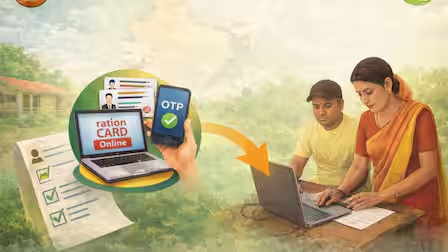

India’s digital ration card system is evolving in 2026 with improved online access, Aadhaar linking, and portability under One Nation One Ration Card. For residents in Tier-2 cities, the process is now simpler, faster, and largely online with minimal paperwork.
The process to apply for a digital ration card in 2026 has become more streamlined as states continue to digitize public distribution systems. Whether you are applying for a new card or updating an existing one, most states now offer online portals to reduce physical visits and delays.
Understanding Digital Ration Card System in 2026
The digital ration card is an upgraded version of the traditional ration card linked with Aadhaar and state databases. It enables beneficiaries to access subsidized food grains under the Public Distribution System from any fair price shop across India.
With the implementation of One Nation One Ration Card, portability has improved significantly. This means a resident from Nagpur or Indore can access their ration benefits even if they relocate temporarily to another state.
State governments have also introduced QR code-based cards and online verification systems. This reduces fraud and ensures only eligible households receive benefits.
Eligibility Criteria for New Applicants
To apply for a digital ration card in 2026, applicants must meet certain eligibility criteria based on income, family size, and category.
Most states classify beneficiaries under categories such as Priority Household and Antyodaya Anna Yojana. Families with lower income or those identified under government welfare schemes are prioritized.
Applicants must not already hold a ration card in another state. Duplicate entries are automatically flagged through Aadhaar integration.
Basic documents required include Aadhaar card, proof of residence, income certificate, and passport-sized photographs. Some states may also require bank account details for verification.
Step-by-Step Process to Apply Online
Applying for a digital ration card is now largely an online process. Here is how Tier-2 residents can complete the application.
First, visit your state’s official food and civil supplies department website. Each state has its own portal, such as Maharashtra’s MahaFood portal.
Register using your mobile number and Aadhaar details. An OTP verification step is mandatory for security.
Fill out the application form with accurate household details, including number of members, income, and address.
Upload scanned copies of required documents. Ensure clarity to avoid rejection during verification.
Submit the form and note down the application reference number. This is used to track the status.
After submission, local authorities verify the details through field checks or digital validation. Once approved, the digital ration card is issued and can be downloaded online.
Offline Support for Tier-2 and Semi-Urban Areas
While digital adoption has increased, offline support is still available for those who are not comfortable with online systems.
Residents can visit nearby Common Service Centres or ration offices for assisted applications. These centres help with document uploads and form submission for a nominal fee.
In cities like Nagpur, local e-governance centres have become key access points for such services, especially for elderly applicants.
Updating Existing Ration Cards
Existing ration card holders can also update their details online in 2026. Common updates include adding new family members, changing address, or linking Aadhaar.
The update process is similar to new applications. Users need to log in to the portal, select update request, and submit relevant documents.
Timely updates are important to avoid disruptions in ration benefits and ensure accurate records.
Common Mistakes to Avoid During Application
Many applications get delayed due to small errors. Incorrect Aadhaar details, mismatched names, or unclear documents are common reasons for rejection.
Applicants should ensure that all details match official records. Double-check spellings and upload only valid documents.
Using unofficial websites or agents can also lead to fraud or unnecessary charges. Always rely on government portals or authorized centres.
Takeaways
- Digital ration card applications in 2026 are mostly online and Aadhaar-linked
- Tier-2 residents can apply through state portals or assisted service centres
- Accurate documents and correct details are essential for approval
- One Nation One Ration Card allows portability across India
FAQ
Q1. Is it mandatory to link Aadhaar for a digital ration card?
Yes, Aadhaar linking is required in most states for identity verification and to prevent duplicate entries.
Q2. How long does it take to get a digital ration card approved?
Approval timelines vary by state but usually take between 7 to 30 days after verification.
Q3. Can I apply for a ration card without visiting any office?
Yes, most states allow fully online applications, though verification may involve local checks.
Q4. What should I do if my application gets rejected?
You can reapply after correcting errors or contact the local food department for clarification.