
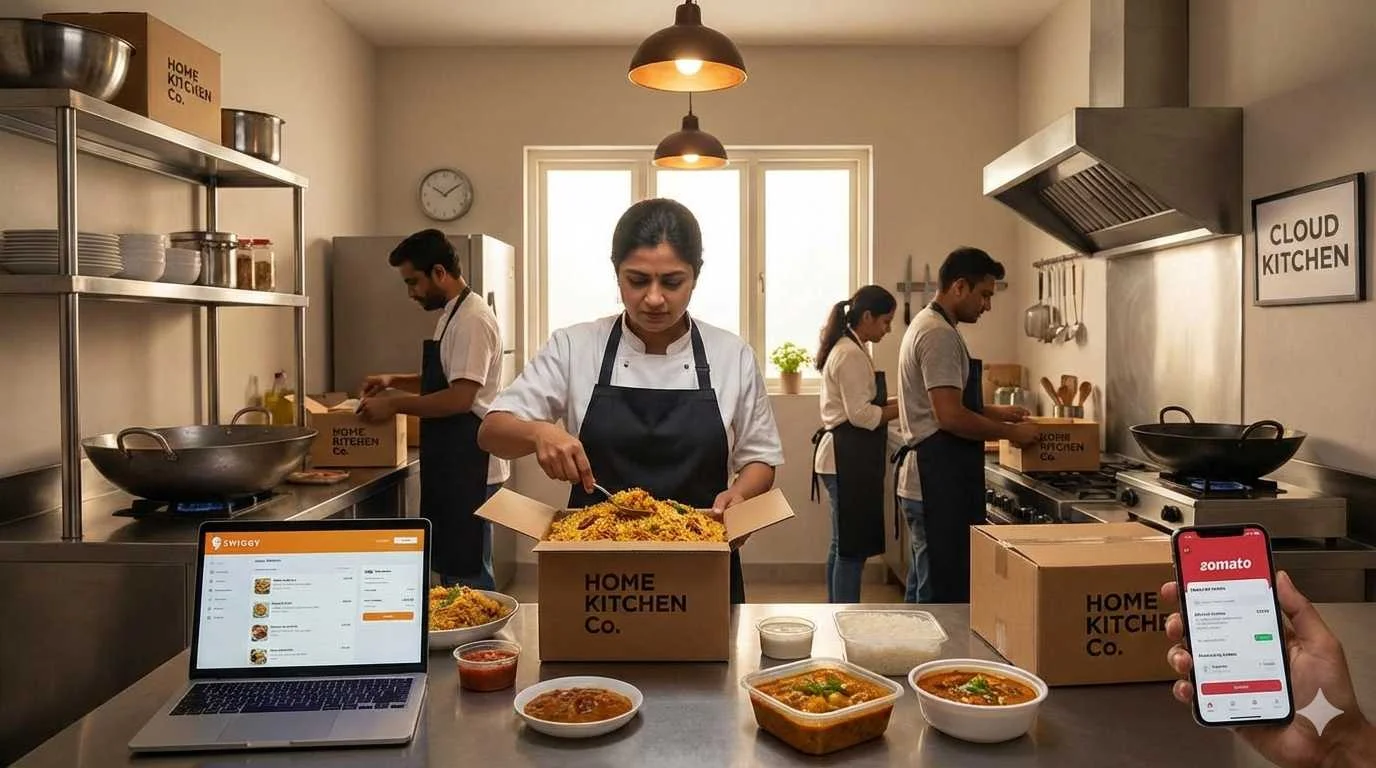

Starting a cloud kitchen in a small city has become one of the most accessible low-investment business ideas in 2026. With rising food delivery demand and minimal setup costs, even a ₹50,000 budget can be enough to launch a small but scalable operation.
Starting a cloud kitchen under ₹50,000 budget is now a realistic option for many aspiring entrepreneurs in Tier-2 and Tier-3 cities. The growth of food delivery platforms, changing eating habits, and lower rental pressures outside metros make this model both practical and profitable when planned carefully.
Understanding the Cloud Kitchen Business Model in Small Cities
A cloud kitchen operates without dine-in space and focuses only on delivery and takeaway orders. This eliminates the need for expensive interiors, prime location rents, and front-end staff.
In smaller cities, the demand for hygienic, home-style food is rising steadily. Many working professionals, students, and small families prefer ordering meals instead of cooking daily. This creates a strong base for new cloud kitchens.
Platforms like food delivery apps and local WhatsApp groups play a major role in order generation. In cities like Nagpur or Indore, local visibility often matters more than brand identity in the early stages.
Budget Breakdown for Starting Under ₹50,000
Launching a cloud kitchen within ₹50,000 requires disciplined spending and prioritizing essentials. The idea is to start lean and scale gradually.
Basic kitchen equipment such as gas stove, utensils, storage containers, and basic appliances can be arranged within ₹20,000 if you already have a home kitchen setup. Many starters use existing household equipment to reduce initial costs.
Licensing and registration form the next part. A basic FSSAI registration for small food businesses is affordable and mandatory. This typically costs under ₹2,000 for small-scale operators.
Raw materials and initial inventory may take ₹10,000 to ₹15,000 depending on your menu. Focus on limited items to control costs and reduce wastage.
Packaging is another important expense. Budget-friendly but hygienic packaging can be managed within ₹5,000 for initial orders.
The remaining budget can be used for basic marketing and delivery coordination.
Choosing the Right Menu for Profitability
Menu selection plays a crucial role in a low-budget cloud kitchen. The goal is to keep it simple, high-demand, and easy to execute.
Items like thalis, biryani, Chinese combos, and breakfast meals perform well in Tier-2 markets. These are familiar, affordable, and have repeat demand.
Avoid offering too many items in the beginning. A focused menu reduces inventory costs and improves consistency. For example, starting with 5 to 7 items is often more effective than offering 20 dishes.
Pricing should balance affordability and margin. Small cities are price-sensitive, so value-for-money meals tend to perform better than premium offerings.
Registration, Licenses, and Basic Compliance
Even small cloud kitchens must follow basic legal requirements. FSSAI registration is mandatory for any food business in India.
You may also need a local municipal trade license depending on your city. Some states require GST registration if turnover crosses the threshold.
Hygiene standards are critical. Clean kitchen space, proper storage, and safe food handling practices are essential not just for compliance but also for customer trust.
Ignoring these basics can lead to penalties or negative reviews that impact business growth.
Delivery and Order Management Setup
Managing delivery efficiently is key to success. In small cities, relying only on large food delivery apps may not always be enough.
Many cloud kitchens combine app-based orders with direct orders through WhatsApp and phone calls. This reduces commission costs and builds customer relationships.
You can initially manage delivery through local delivery partners or even self-delivery within a limited radius. As orders grow, you can expand delivery coverage.
Timely delivery and proper packaging directly impact customer satisfaction and repeat orders.
Low-Cost Marketing Strategies That Work Locally
Marketing a cloud kitchen in Tier-2 cities does not require heavy spending. Local visibility and word-of-mouth are powerful tools.
Start with WhatsApp groups, local Facebook communities, and Instagram pages. Sharing daily menus, offers, and customer feedback helps build trust.
Introductory discounts and combo offers can attract first-time customers. Once people try your food and like it, repeat orders become easier.
Collaborating with nearby offices, hostels, and coaching centers can also generate steady demand.
Common Mistakes to Avoid in Low-Budget Setup
Many beginners fail due to poor planning rather than lack of demand. Overspending on equipment or offering too many dishes can quickly exhaust the budget.
Ignoring food quality or consistency is another major mistake. Even with limited resources, maintaining taste and hygiene is non-negotiable.
Relying entirely on one platform for orders can also limit growth. Diversifying order channels helps stabilize income.
Starting small but focused is often the best strategy in this business.
Takeaways
- A cloud kitchen can be started under ₹50,000 with careful planning
- Simple menu and controlled costs are key to early success
- Tier-2 cities offer strong demand for affordable, home-style food
- Combining online platforms with local marketing improves profitability
FAQ
Q1. Is ₹50,000 really enough to start a cloud kitchen?
Yes, if you use an existing kitchen setup and keep the menu limited, ₹50,000 is sufficient for a small-scale start.
Q2. Do I need FSSAI registration for a home-based kitchen?
Yes, FSSAI registration is mandatory for all food businesses, including home-based cloud kitchens.
Q3. Which food items are best for small cities?
Affordable and familiar items like thalis, biryani, and combo meals tend to perform well in Tier-2 markets.
Q4. Can I run a cloud kitchen without food delivery apps?
Yes, many small operators rely on WhatsApp and direct orders, especially in smaller cities.