

Government startup schemes in India have become a major support system for entrepreneurs looking to build businesses with limited capital. In 2026, startup founders can access funding support, tax benefits, incubation programs, and credit assistance through multiple central and state government initiatives designed for early-stage companies.
Why Government Startup Schemes Matter in 2026
India’s startup ecosystem has expanded rapidly over the last decade, but funding challenges still remain for small founders, especially in Tier-2 and Tier-3 cities. Government startup schemes help bridge this gap by offering financial support, easier compliance systems, and business mentorship.
Programs launched under Startup India, MSME initiatives, and Digital India are now encouraging entrepreneurs across sectors including technology, agriculture, manufacturing, healthcare, retail, and clean energy.
For many first-time founders, government schemes are often more accessible than private investors because they focus on innovation potential rather than immediate profitability.
In 2026, several states are also introducing regional startup policies to attract businesses outside metro cities. This has increased opportunities for local entrepreneurs in cities like Indore, Nagpur, Jaipur, Surat, Kochi, and Bhubaneswar.
Step 1: Register Your Business Legally
Before applying for any government startup scheme, entrepreneurs must first register their business legally.
Most startup founders choose one of these structures:
- Private Limited Company
- Limited Liability Partnership (LLP)
- One Person Company (OPC)
- Partnership Firm
A Private Limited Company is usually preferred for startups seeking funding because it offers better investment flexibility.
After registration, businesses must obtain:
- PAN card
- GST registration if applicable
- Bank account in the business name
- Udyam Registration for MSME benefits
Many government schemes require these documents during the application process.
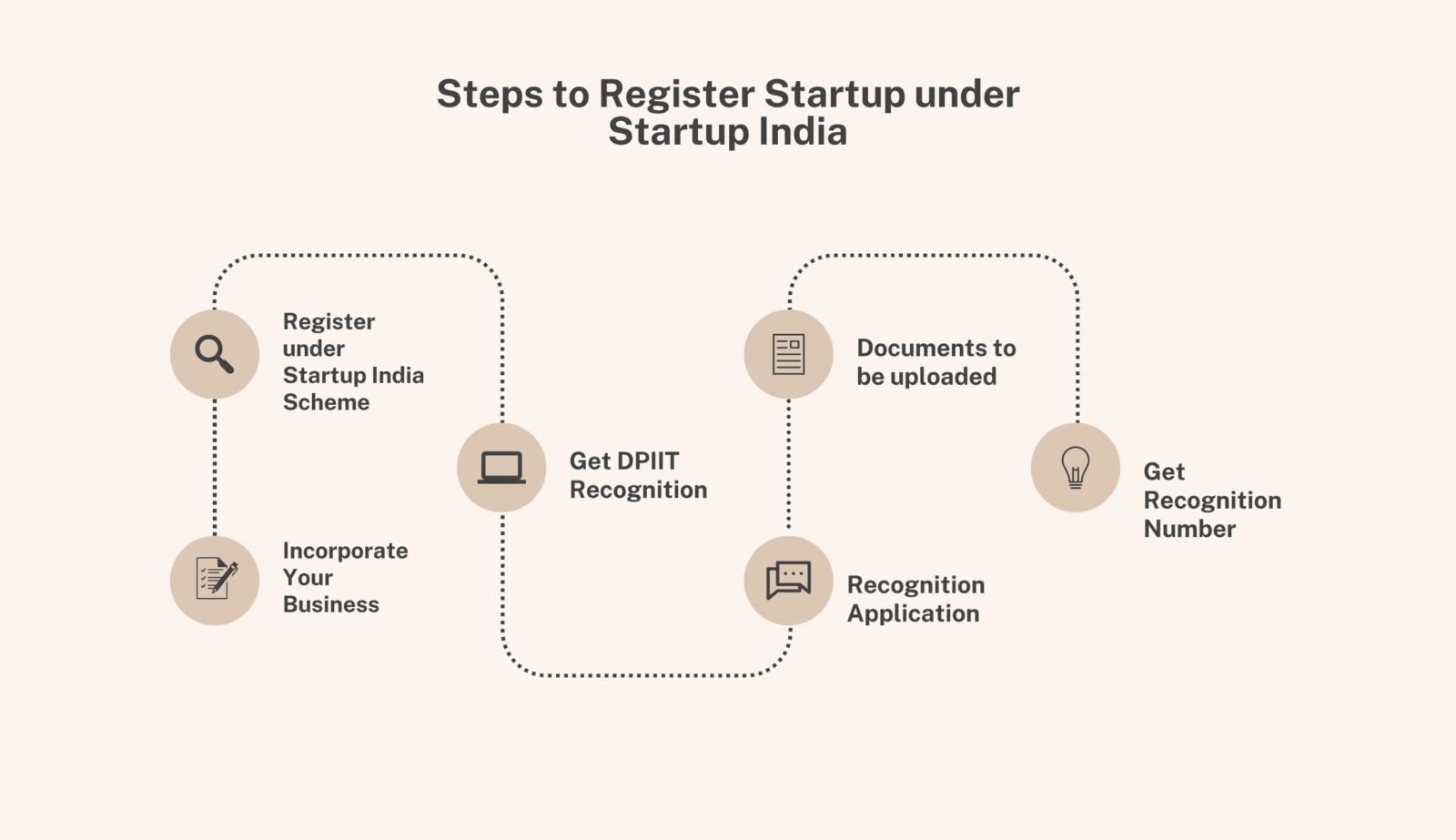
Step 2: Apply for Startup India Recognition
Startup India recognition is one of the most important steps for new founders. The Department for Promotion of Industry and Internal Trade (DPIIT) provides official startup recognition through the Startup India portal.
To qualify, businesses generally must:
- Be less than 10 years old
- Have annual turnover below the prescribed limit
- Focus on innovation, products, services, or scalable business models
Once approved, startups can access multiple benefits including tax exemptions, easier compliance rules, self-certification under labor laws, and government-backed funding opportunities.
The application process usually requires:
- Company incorporation certificate
- Business description
- Website or pitch deck details
- Founder information
Approval timelines can vary depending on document verification.
Step 3: Identify the Right Government Startup Scheme
Different schemes serve different industries and business stages. Entrepreneurs should select schemes based on their startup category and funding needs.
Some major startup support schemes in India in 2026 include:
Startup India Seed Fund Scheme
This scheme supports early-stage startups with prototype development, market entry, and product trials.
Credit Guarantee Scheme for Startups
Designed to help startups access loans without heavy collateral requirements.
MSME Champions Scheme
Supports manufacturing and service businesses through technology upgrades and business assistance.
Atal Innovation Mission
Focuses on innovation, incubation support, and entrepreneurship development.
State Startup Policies
States like Karnataka, Telangana, Maharashtra, Tamil Nadu, and Gujarat offer startup grants, subsidized office space, and incubation support.
Reading scheme eligibility carefully is important because some programs are sector-specific.
Step 4: Prepare a Strong Business Proposal
Government startup applications are highly competitive. A clear business proposal significantly improves approval chances.
A good startup proposal usually includes:
- Problem statement
- Product or service explanation
- Target market
- Revenue model
- Competitive advantage
- Financial projections
- Team details
Founders should avoid unrealistic growth claims or exaggerated market numbers.
Government evaluators typically focus on innovation potential, employment generation, scalability, and practical implementation.
Adding prototype details, customer feedback, or pilot results can strengthen applications further.
Step 5: Apply Through Official Portals
Most startup schemes now operate through digital application systems.
Applications are usually submitted through:
- Startup India portal
- MSME ministry portals
- State startup mission websites
- Incubator platforms
- SIDBI-linked systems
Applicants should regularly monitor deadlines, required documents, and scheme updates because eligibility criteria may change.
Many incubators and startup hubs also help entrepreneurs complete applications and prepare presentations for selection rounds.
Common Mistakes Startup Founders Make
One of the biggest mistakes is applying for multiple schemes without understanding eligibility conditions.
Some founders also submit incomplete financial documents or unclear business descriptions. Poor documentation often leads to rejection even if the idea itself is strong.
Another issue is lack of compliance. Startups that fail to maintain GST records, company filings, or tax documents may struggle during verification.
Experts advise entrepreneurs to focus on one suitable scheme first instead of applying randomly across every available program.
Government Startup Support Beyond Funding
Government schemes are no longer limited to financial grants alone.
Many programs now offer:
- Incubation support
- Investor networking
- Mentorship access
- Patent filing assistance
- Export guidance
- Skill development training
This broader support system is helping smaller startups compete in larger national markets.
As India continues pushing digital entrepreneurship and local innovation, government startup schemes are expected to remain a key growth driver for emerging businesses in 2026.
Key Takeaways
- Startup India recognition is important for accessing multiple government benefits
- Business registration and compliance documents are mandatory before applying
- Different startup schemes target different industries and growth stages
- Strong business proposals improve approval chances significantly
FAQ
Who can apply for government startup schemes in India?
Registered startups, MSMEs, innovators, and early-stage businesses meeting eligibility criteria can apply.
Is Startup India recognition mandatory?
It is not mandatory for every scheme, but many government benefits and tax exemptions require DPIIT recognition.
Can startups from Tier-2 cities apply for these schemes?
Yes. Many schemes actively encourage applications from smaller cities and regional entrepreneurs.
Do government startup schemes provide free funding?
Some schemes offer grants and seed funding, while others provide subsidized loans, incubation support, or credit guarantees.