
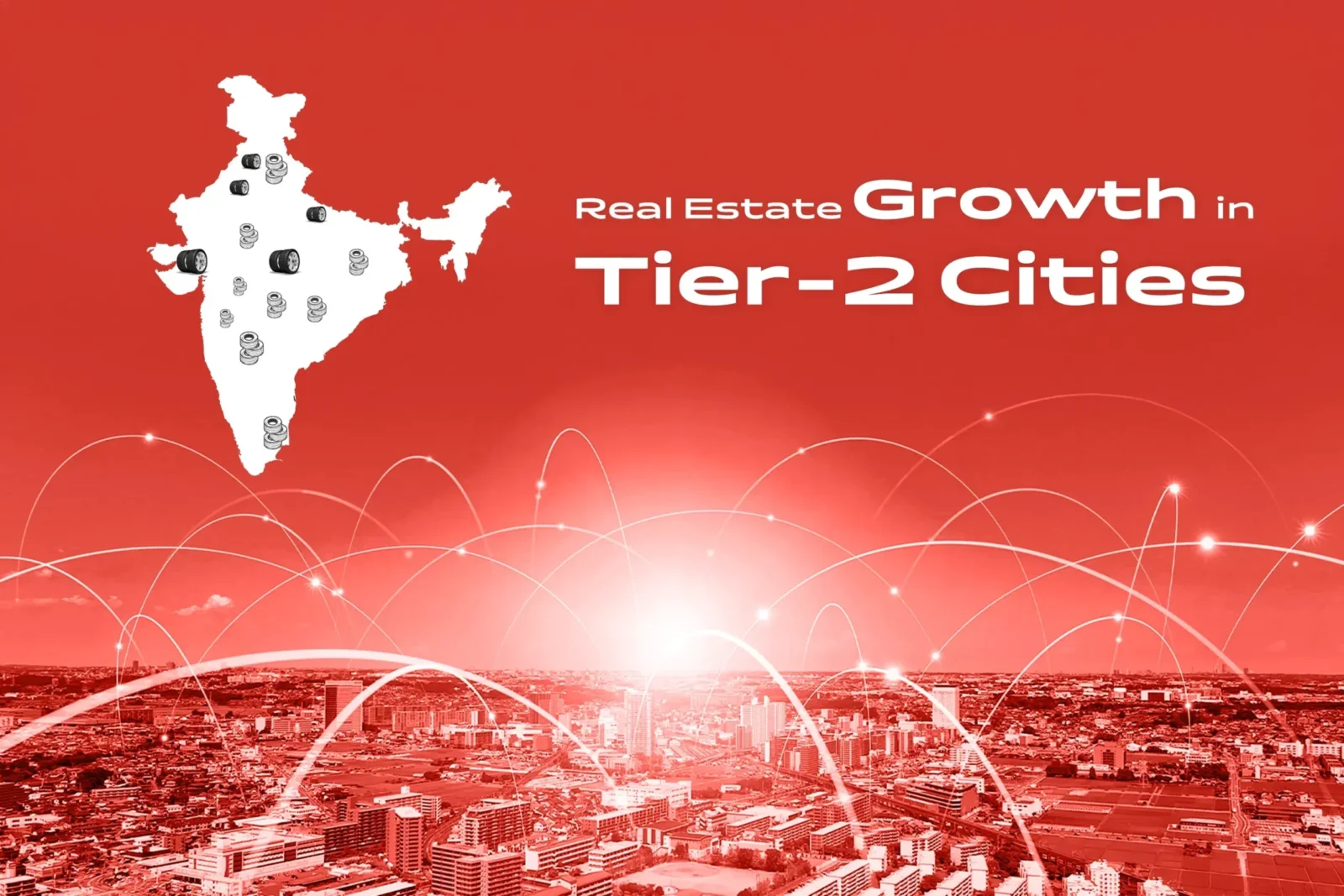

Tier-2 cities like Indore and Jaipur are emerging as major real estate hotspots in India due to rapid infrastructure growth, rising employment opportunities, and comparatively affordable property prices. Developers, investors, and homebuyers are increasingly shifting focus away from overcrowded metro cities toward smaller urban centers with long-term growth potential.
India’s real estate market has traditionally been dominated by metropolitan regions such as Mumbai, Delhi NCR, Bengaluru, Hyderabad, and Pune. However, rising living costs, traffic congestion, expensive housing, and changing work patterns are now pushing many families and businesses toward Tier-2 cities.
Cities like Indore, Jaipur, Lucknow, Coimbatore, Surat, Nagpur, Chandigarh, Bhubaneswar, and Kochi are witnessing stronger demand for residential apartments, plotted developments, office spaces, and commercial projects.
This transition is not happening suddenly. It is the result of several economic, infrastructure, and lifestyle changes that have accelerated after the pandemic and the expansion of digital work culture.
Infrastructure Projects Are Driving Real Estate Expansion
One of the biggest reasons behind the growth of Tier-2 real estate markets is infrastructure development.
Governments are investing heavily in highways, metro rail projects, smart city programs, airports, industrial corridors, and urban transport systems in smaller cities. Improved connectivity makes these locations more attractive for businesses and residents alike.
In Indore, road expansion, industrial investments, and improved public infrastructure have increased interest from both developers and middle-class homebuyers. The city’s reputation for cleanliness and urban planning has also strengthened its residential appeal.
Jaipur has benefited from tourism growth, IT sector expansion, better highway connectivity, and increasing demand for premium residential communities.
Many Tier-2 cities now offer facilities that were once available mainly in metro cities, including malls, coworking spaces, private healthcare, international schools, and modern entertainment hubs.
As connectivity improves between smaller cities and larger business centers, property demand is rising steadily across residential and commercial segments.
Affordable Housing Is Attracting Middle-Class Buyers
Housing affordability remains one of the strongest advantages of Tier-2 cities compared to metro regions.
In cities like Mumbai or Bengaluru, property prices have become unaffordable for many middle-income families. Smaller cities provide larger homes, lower maintenance costs, and better lifestyle value at comparatively reasonable prices.
Young professionals working remotely or in hybrid jobs are increasingly choosing cities where living costs are lower and quality of life is relatively balanced.
For example, buyers in Tier-2 cities can often purchase spacious apartments or independent homes at prices significantly lower than metro city properties.
This affordability is attracting first-time homebuyers, salaried professionals, retired individuals, and even small investors looking for rental income opportunities.
Real estate developers are also launching integrated townships, gated communities, and affordable luxury projects specifically targeting middle-class buyers in emerging urban centers.
Lower land acquisition costs allow builders to offer more competitive pricing while still expanding residential infrastructure.
IT Growth and Remote Work Changed Buyer Preferences
Remote work culture has played a major role in reshaping India’s property market after the pandemic years.
Earlier, many professionals relocated to metro cities primarily because of office requirements. In 2026, hybrid work models and remote-friendly jobs allow more people to live outside traditional corporate hubs.
This shift has increased housing demand in cities that offer lower pollution, less congestion, and improved work-life balance.
Indore, Jaipur, and similar cities are also attracting startups, IT service firms, educational institutions, and digital businesses. This creates local employment opportunities while increasing demand for rental housing and commercial office spaces.
Coworking spaces and flexible office infrastructure are expanding rapidly in these regions as companies adopt distributed workforce models.
Many families also prefer smaller cities because of safety concerns, shorter travel times, and lower daily living expenses compared to large metros.
As digital connectivity improves across India, physical location is becoming less important for many white-collar jobs.
Investors Are Looking Beyond Metro Property Markets
Real estate investors are increasingly exploring Tier-2 markets because property appreciation potential remains comparatively higher in developing urban regions.
In mature metro markets, extremely high property rates often limit future growth margins. Smaller cities, on the other hand, still have expanding urban boundaries and ongoing infrastructure upgrades.
Investors are particularly interested in areas near industrial corridors, educational institutions, IT parks, logistics hubs, and new transportation projects.
Rental demand is also growing in several Tier-2 cities due to student populations, working professionals, tourism activity, and startup ecosystems.
Commercial real estate is seeing gradual expansion as retail brands, hotels, and office operators enter emerging urban markets.
However, experts caution that buyers should still conduct proper due diligence before investing. Land disputes, delayed projects, and speculative pricing can remain risks in fast-growing markets.
Checking RERA registration, developer credibility, legal documentation, and infrastructure timelines is considered essential before making property decisions.
Challenges Tier-2 Real Estate Markets Still Face
Despite strong growth potential, Tier-2 real estate markets continue facing several challenges.
Urban planning inconsistencies remain a concern in some cities. Rapid expansion without proper drainage systems, traffic planning, or waste management can create future infrastructure pressure.
Public transport quality also varies significantly across regions. While some cities are modernizing quickly, others still struggle with uneven civic development.
Healthcare and educational infrastructure in certain areas may not yet match metro-level standards despite ongoing improvement.
Another challenge is speculative investment activity. In some rapidly growing locations, land prices rise faster than actual end-user demand, increasing the risk of unsold inventory.
Experts believe sustainable urban planning and controlled development will determine whether Tier-2 cities can maintain long-term real estate momentum.
Key Takeaways
- Tier-2 cities are attracting homebuyers due to affordability and infrastructure growth
- Remote work and IT expansion are increasing residential demand in smaller cities
- Investors see strong long-term appreciation potential in emerging urban markets
- Buyers should still verify RERA registration and legal documentation carefully
FAQ
Why are Tier-2 cities becoming real estate hotspots?
Improved infrastructure, lower property prices, and better work-life balance are attracting buyers and investors.
Which Indian Tier-2 cities are seeing strong property growth?
Cities such as Indore, Jaipur, Surat, Lucknow, Nagpur, and Coimbatore are witnessing rising real estate demand.
Is property investment safer in Tier-2 cities now?
Many markets show growth potential, but buyers should still verify project legality, developer history, and infrastructure plans.
How has remote work affected real estate demand?
Hybrid and remote work models allow professionals to live outside expensive metro cities, increasing housing demand in smaller urban centers.