
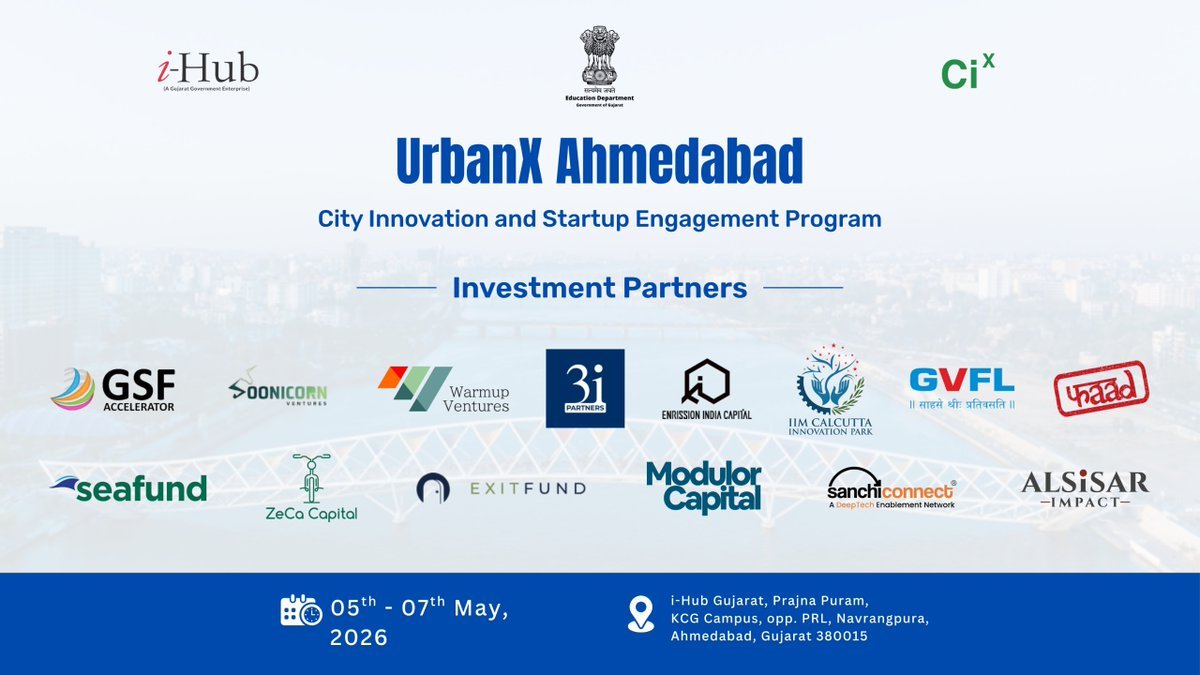

Ahmedabad’s UrbanX startup initiative is drawing attention to India’s growing innovation push beyond traditional metro cities. The program reflects how Tier-2 urban centers are increasingly becoming active startup ecosystems with support for entrepreneurs, technology development, and urban innovation projects.
India’s startup economy has historically been concentrated in Bengaluru, Mumbai, Delhi NCR, and Hyderabad. However, cities like Ahmedabad, Indore, Jaipur, Kochi, Surat, and Bhubaneswar are now building their own innovation ecosystems through incubators, government-backed programs, and private investment support.
UrbanX is part of this broader shift. The initiative focuses on encouraging startups that solve urban challenges through technology, sustainability, mobility solutions, infrastructure planning, digital governance, and smart city innovations.
The program also reflects how state governments and local institutions are trying to position smaller urban centers as long-term innovation destinations instead of depending entirely on metro-driven startup growth.
Why Ahmedabad Is Emerging as a Startup-Friendly City
Ahmedabad has steadily developed into one of western India’s strongest business and innovation hubs over the past decade.
The city already has a strong industrial base across manufacturing, pharmaceuticals, textiles, chemicals, and engineering sectors. This economic foundation creates opportunities for startups working in logistics, industrial technology, clean energy, fintech, and urban infrastructure.
Educational institutions and entrepreneurship-focused organizations have also contributed to the city’s startup growth. Access to skilled graduates, lower operational costs, and relatively affordable office spaces make Ahmedabad attractive for early-stage companies.
Compared to Bengaluru or Mumbai, startup founders in Ahmedabad often face lower rental expenses and reduced business overhead costs. This becomes important for bootstrapped startups trying to survive their initial growth phase.
The expansion of digital infrastructure, coworking spaces, and investor networks has further strengthened the city’s entrepreneurial ecosystem.
UrbanX adds to this momentum by encouraging innovation focused specifically on city-level problems and public infrastructure challenges.
What UrbanX Means for India’s Smart City and Urban Innovation Goals
Urban innovation programs are becoming increasingly important as Indian cities deal with population growth, traffic congestion, waste management challenges, pollution, water shortages, and housing pressure.
Startup initiatives like UrbanX aim to encourage practical solutions using technology, data systems, and scalable urban planning models.
Areas such as public transport optimization, smart parking systems, waste recycling technology, energy efficiency, digital governance, and urban mobility are receiving growing startup attention across India.
Ahmedabad’s participation in these innovation efforts aligns with the broader Smart Cities Mission and digital urban transformation initiatives promoted nationally over the past several years.
Programs supporting civic technology startups may also help local governments test new digital systems faster than traditional administrative approaches.
Many urban-focused startups now work directly with municipal bodies, infrastructure operators, and public service agencies to improve operational efficiency and citizen access.
The rise of such programs indicates that India’s innovation economy is expanding beyond consumer apps into infrastructure and governance technology solutions.
Tier-2 Cities Are Becoming Serious Startup Competitors
One major reason for the rise of startup ecosystems outside metro cities is the changing economics of entrepreneurship.
In major metropolitan regions, startups often struggle with high office rents, expensive talent acquisition, traffic-related inefficiencies, and intense market competition.
Tier-2 cities provide lower operational costs while still offering access to internet infrastructure, skilled graduates, and improving business ecosystems.
Ahmedabad, for example, benefits from strong road connectivity, airport infrastructure, industrial investment, and educational institutions. Similar advantages are now visible in cities like Indore, Chandigarh, Surat, and Coimbatore.
Remote work culture has also reduced the need for startups to operate exclusively from metro cities. Many founders now build distributed teams while maintaining headquarters in smaller urban centers.
State governments are further supporting this trend through startup policies, incubation grants, tax incentives, and innovation partnerships.
This shift may gradually decentralize India’s startup landscape over the next decade.
Challenges Startup Ecosystems Beyond Metros Still Face
Despite rapid growth, Tier-2 startup ecosystems still face several structural limitations.
Access to large-scale venture capital funding remains more concentrated in metro cities. Many startups outside Bengaluru or Mumbai still struggle to secure investor visibility during early growth stages.
Mentorship networks, experienced startup talent, and global business exposure are also comparatively limited in some smaller cities.
Infrastructure gaps can create operational hurdles as well. Public transport quality, airport connectivity, and advanced digital infrastructure vary significantly across regions.
Another challenge involves retaining skilled professionals. Many graduates from Tier-2 cities still relocate to metro cities for higher salaries or larger career opportunities.
However, the growing success of regional startup ecosystems is gradually changing investor attitudes. As more successful companies emerge from non-metro cities, confidence in decentralized innovation hubs continues increasing.
Programs like UrbanX could help strengthen long-term startup infrastructure by encouraging collaboration between entrepreneurs, government bodies, educational institutions, and local industries.
Why India’s Innovation Future May Depend on Smaller Cities
India’s startup economy is too large to remain concentrated in only a few metropolitan regions.
As digital access improves and local business ecosystems mature, smaller cities are expected to play a larger role in innovation, employment generation, and technology development.
Urban innovation programs are especially important because India’s cities will face increasing pressure from migration, climate challenges, infrastructure demand, and public service expansion in the coming years.
Cities like Ahmedabad are positioning themselves not only as industrial centers but also as innovation-driven urban economies.
The success of initiatives such as UrbanX may encourage other Tier-2 cities to launch similar programs focused on solving local governance and infrastructure problems through entrepreneurship.
For India’s startup ecosystem, this could mark the beginning of a more geographically distributed innovation model rather than one dominated solely by traditional tech metros.
Key Takeaways
- Ahmedabad’s UrbanX initiative reflects growing startup activity beyond metro cities
- Tier-2 cities offer lower operational costs and improving business infrastructure
- Urban innovation startups are focusing on mobility, sustainability, and civic technology
- Funding access and talent retention remain challenges for smaller startup ecosystems
FAQ
What is Ahmedabad’s UrbanX initiative?
UrbanX is a startup-focused initiative encouraging innovation in urban infrastructure, sustainability, mobility, and civic technology solutions.
Why are startups moving toward Tier-2 cities?
Lower costs, better work-life balance, improving infrastructure, and government support are attracting startups beyond metro regions.
Which sectors are growing in non-metro startup ecosystems?
Urban technology, fintech, clean energy, logistics, digital governance, and infrastructure-focused startups are expanding rapidly.
Do Tier-2 cities still face startup challenges?
Yes, funding access, mentorship availability, and talent retention remain ongoing challenges in many smaller cities.