
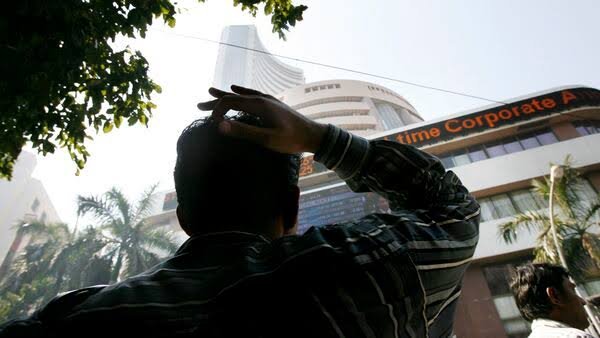

Global geopolitical tensions continue to influence financial markets, affecting investor sentiment, commodity prices, and capital flows. While India’s economy remains relatively resilient, retail investors are witnessing increased market volatility, making informed investment decisions more important than ever.
How Global Tensions Are Impacting Indian Stock Markets and Retail Investors has become a key concern for millions of investors across India. Events such as geopolitical conflicts, trade disputes, changes in global interest rates, and disruptions in energy supplies often create uncertainty in financial markets. Although India’s domestic economy is driven by strong internal demand and government spending, global developments still influence stock prices, foreign investment, and market confidence. Understanding these connections helps retail investors make more informed decisions during periods of volatility.
Why Global Events Influence Indian Stock Markets
Financial markets are closely connected across countries. A major geopolitical conflict, economic sanctions, or uncertainty involving large economies can trigger sharp reactions in stock exchanges worldwide.
When uncertainty rises, many global investors reduce exposure to emerging markets and move money into traditionally safer assets such as government bonds, gold, or the US dollar. This shift can lead to temporary selling pressure in Indian equities, especially by Foreign Portfolio Investors (FPIs).
India also imports a significant portion of its crude oil requirements. Any disruption in global oil supplies or a sharp increase in crude prices can raise import costs, affect inflation, and increase concerns about corporate profitability. These developments often influence investor sentiment even when domestic business fundamentals remain stable.
Impact on Retail Investors and Investment Portfolios
Retail participation in Indian stock markets has grown significantly over the past few years. Millions of first-time investors now invest through Systematic Investment Plans (SIPs), direct equities, exchange-traded funds, and online trading platforms.
During periods of global uncertainty, stock prices may fluctuate sharply over short periods. Such volatility can create anxiety among inexperienced investors, leading some to exit investments prematurely.
However, market corrections do not necessarily indicate weakness in the broader economy. Share prices often react immediately to news, while company earnings and economic growth evolve over a longer period.
Financial experts generally encourage retail investors to focus on long-term financial goals rather than reacting to every international headline. Investors with diversified portfolios are typically better positioned to manage temporary market swings.
Foreign Investment, Currency Movements and Market Volatility
One of the most visible effects of global tensions is changing foreign investment flows.
When overseas institutional investors reduce exposure to equities, Indian stock indices may experience short-term declines. At the same time, domestic institutional investors and retail participants often provide stability by continuing investments through mutual funds and pension-related instruments.
Global uncertainty can also affect currency markets. If the US dollar strengthens significantly during periods of international stress, emerging market currencies, including the Indian rupee, may experience depreciation. A weaker rupee can increase import costs for businesses that rely on foreign goods or raw materials.
Sectors such as information technology, pharmaceuticals, export-oriented manufacturing, and energy may respond differently depending on currency movements and international demand.
Which Sectors Are More Sensitive to Global Developments?
Not all industries react equally to international events.
Oil and gas companies closely monitor crude oil prices because higher energy costs directly affect operations and consumer prices. Aviation companies may also experience increased operating expenses when aviation fuel becomes more expensive.
Export-oriented sectors such as information technology and pharmaceuticals often benefit when the rupee weakens, as overseas earnings become more valuable in domestic currency terms.
Banking, consumer goods, infrastructure, and domestic manufacturing businesses are generally influenced more by India’s internal economic conditions than by international events, although global developments can still affect investor sentiment.
Diversification across different sectors helps reduce concentration risk during uncertain market conditions.
How Retail Investors Can Navigate Market Uncertainty
Periods of market volatility require discipline rather than emotional decision-making.
Investors should regularly review their financial goals, investment horizon, and risk tolerance before making portfolio changes. Continuing disciplined investments through SIPs allows investors to benefit from rupee cost averaging during market fluctuations.
Maintaining diversification across equity, debt, and other suitable asset classes can reduce the impact of sudden declines in any one segment.
It is also important to rely on verified financial information rather than reacting to rumours or unverified social media posts. Long-term wealth creation depends more on consistent investing and sound asset allocation than on attempting to predict short-term market movements.
India’s Economic Strength Remains an Important Factor
Despite global uncertainties, India’s economy continues to be supported by domestic consumption, infrastructure investment, expanding manufacturing, digital adoption, and a growing formal workforce.
While international events can create temporary volatility, long-term market performance is also influenced by corporate earnings, government policies, productivity growth, and consumer demand within the country.
Retail investors who remain focused on long-term objectives, maintain diversified portfolios, and avoid impulsive decisions are generally better equipped to navigate periods of global uncertainty.
Understanding the relationship between international developments and domestic markets enables investors to make balanced financial decisions instead of reacting solely to short-term headlines.
Key Takeaways
- Global geopolitical tensions can influence Indian stock markets through investor sentiment, oil prices, and foreign investment flows.
- Retail investors should avoid making emotional decisions during periods of market volatility.
- Diversification and disciplined investing remain effective strategies for managing uncertainty.
- India’s long-term economic fundamentals continue to play an important role in overall market performance.
Frequently Asked Questions
Q1. Why do international conflicts affect Indian stock markets?
Global conflicts can influence oil prices, foreign investment, trade, inflation, and overall investor confidence, all of which may impact Indian financial markets.
Q2. Should retail investors stop SIPs during market volatility?
Financial planners generally recommend continuing SIPs according to long-term financial goals, as regular investing helps average purchase costs over time.
Q3. Which sectors are most affected by global tensions?
Oil and gas, aviation, export-oriented industries, information technology, and companies dependent on imported raw materials are often more sensitive to international developments.
Q4. Can Indian markets recover after global uncertainty?
Historically, financial markets have experienced periods of volatility during global events, but long-term performance depends on economic growth, corporate earnings, and investor confidence.
(Internal Keyword Suggestions: global tensions impact on Indian stock market, Indian stock market today, retail investors India, stock market volatility, foreign portfolio investors, geopolitical impact on markets, crude oil prices and stock market, SIP investing during market correction, Indian equity market analysis, investment strategies during volatility)