
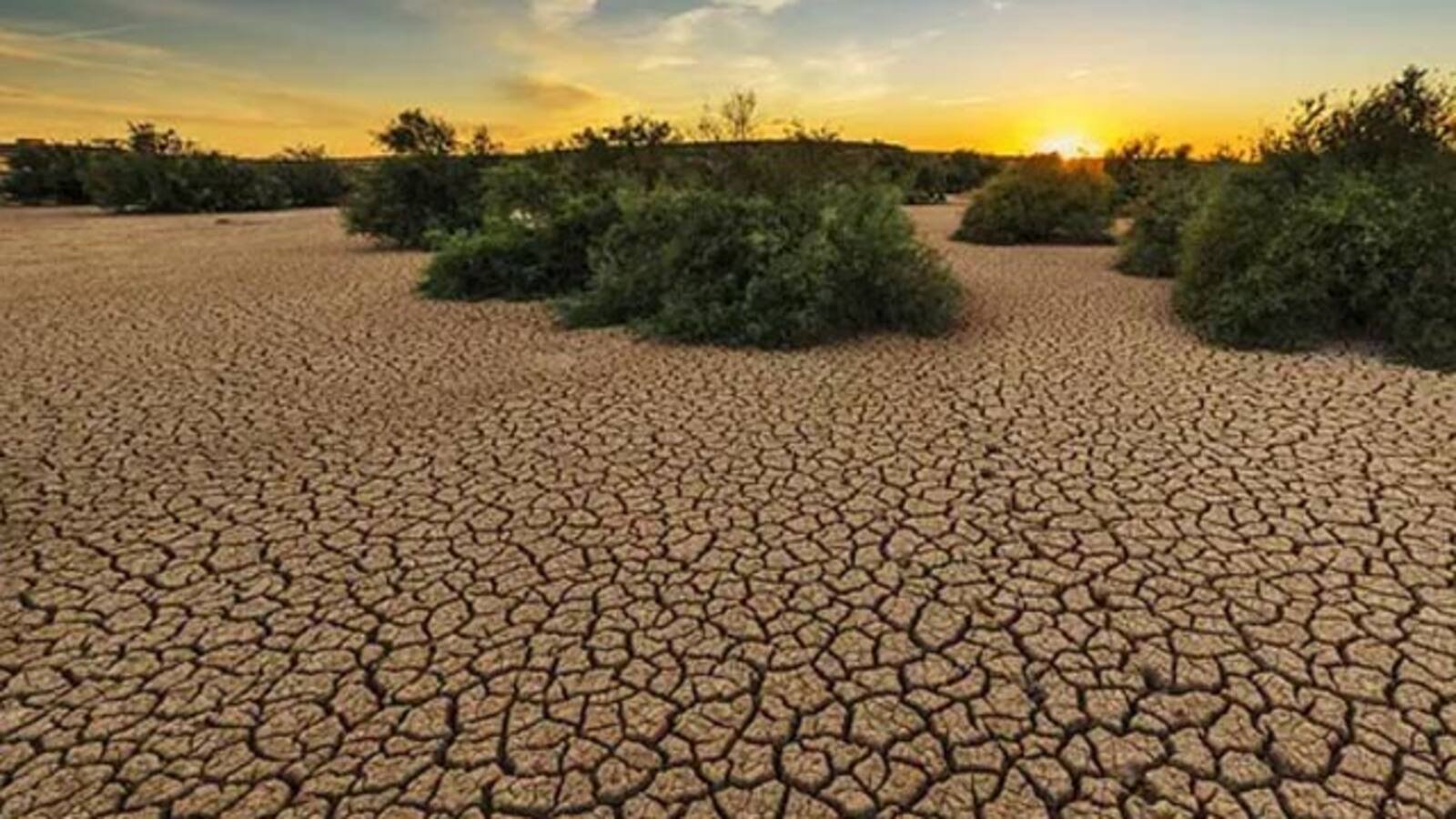

Maharashtra is facing growing drought-like conditions after prolonged gaps in rainfall across several regions. The situation is putting kharif crops, drinking-water supplies, reservoirs and rural incomes under pressure, particularly in Marathwada and parts of Vidarbha, North Maharashtra and Western Maharashtra.
Maharashtra Rainfall Deficit Raises Drought Concerns
The rainfall situation in Maharashtra has worsened as the monsoon enters its final phase. According to data reported on September 16, the state had received 749.2 mm of rainfall against an average of 908.4 mm up to September 14, representing a 17.5% deficit. The Chhatrapati Sambhajinagar division, covering much of Marathwada, was the worst affected with a 31.4% shortfall. Nineteen of the state’s 36 districts had rainfall deficits of 20% or more.
The shortage is not uniform across Maharashtra. Konkan has recorded a much smaller deficit, while central Marathwada and parts of eastern Vidarbha have faced substantially weaker rainfall.
The distinction matters because drought conditions are assessed using several indicators, including rainfall, soil moisture, crop conditions and water availability. A rainfall deficit alone does not automatically mean that every affected district or taluka has been officially declared drought-hit.
83 Taluks Report Long Dry Spells
The immediate concern is the length of the dry spell in individual taluks.
Reports published earlier in September said 83 taluks across 19 districts had experienced more than 20 consecutive days without sufficient rainfall under the technical criterion being monitored. Such extended breaks are particularly damaging when kharif crops are at stages requiring adequate soil moisture.
For farmers, the impact of a rainfall gap can be more serious than the seasonal rainfall figure suggests. A district may receive substantial rain during a few intense spells but still experience crop stress if there is a long dry period during critical growth stages.
This is one reason conditions can vary sharply between neighbouring villages and taluks.
Marathwada Faces the Sharpest Rural Pressure
Marathwada has emerged as one of the main areas of concern.
The Chhatrapati Sambhajinagar division recorded a 31.4% rainfall deficit by September 14, according to reported data. Recent reports from the region have highlighted crop stress, water shortages and concerns about the coming months.
Reports have also pointed to severe conditions in parts of Dharashiv, Latur, Beed, Parbhani and other districts. In some locations, farmers have struggled to maintain soybean and other kharif crops following prolonged breaks in rainfall.
The problem extends beyond this year’s harvest. Weak rainfall can reduce the amount of water available for the rabi season, particularly where reservoirs, farm ponds and groundwater recharge have not recovered sufficiently.
That creates a second challenge after the kharif crop season ends.
Soybean and Other Kharif Crops Under Stress
The rainfall deficit is already affecting crop prospects in several parts of Maharashtra.
Soybean is particularly important in Marathwada and Vidarbha, where it is a major kharif crop for many farming households. Recent reporting from Maharashtra described farmers in parts of Solapur and other regions ploughing under damaged soybean crops because prolonged moisture stress had reduced the possibility of a viable harvest.
Other crops affected by rainfall gaps can include cotton, maize, jowar and bajra, depending on the local cropping pattern and soil conditions.
Crop damage does not automatically translate into a specific compensation amount. The extent of loss needs to be assessed through the government’s prescribed survey and damage-assessment process.
The Maharashtra agriculture and revenue departments were directed earlier in September to conduct surveys to assess crop damage caused by deficient rainfall.
Water Storage Is Another Major Concern
The rainfall shortage is also reflected in reservoir levels.
A September 11 report based on Water Resources Department data said Maharashtra’s dams held around 76% of their combined 1,441 TMC capacity, about 10 percentage points lower than the corresponding period a year earlier. Marathwada’s reservoirs were particularly stressed, with storage reported at around 48% of capacity.
The regional differences are significant. Reservoirs in Konkan were reported at about 91% capacity, while Marathwada was considerably lower.
This matters for both drinking water and agriculture.
Water stored in major reservoirs supports cities and villages, irrigation networks and industrial requirements. When the monsoon ends with lower storage, authorities have less flexibility if the following months remain dry.
Tankers Already Supplying Some Villages
The effects of water scarcity are already visible in some rural areas.
Water Resources Department data cited on September 11 indicated that 307 tankers were supplying drinking water to 286 villages and 1,182 hamlets across 10 districts. Ahilyanagar accounted for the largest reported deployment, while Nashik and Chhatrapati Sambhajinagar divisions also required significant tanker support.
The Maharashtra Water Supply and Sanitation Department has also continued publishing tanker reports, including a report dated September 7, 2026.
Tankers are generally a response to immediate drinking-water shortages rather than a long-term solution.
The state government has now asked officials to prepare action plans for possible drinking-water shortages from October 2026 through June 2027. The Groundwater Survey and Development Agency has been tasked with identifying villages that may face shortages.
What the Drought Situation Means for Rural Families
For rural households, a poor monsoon can affect several income sources at the same time.
Farmers may lose crop income, while agricultural labourers can see fewer work opportunities if crop activity declines. Livestock owners face additional pressure when fodder and water become harder to obtain.
Lower farm output can also affect local businesses. Shops, transport operators, agricultural input dealers and small service providers in farming-dependent villages can all feel the impact when household incomes decline.
The effects are particularly significant in Tier-2 and Tier-3 districts where agriculture remains closely connected to the local economy.
However, the severity differs from one area to another. A rainfall deficit in a district does not mean every farmer has suffered the same level of crop loss.
Government Preparing Crop Loss Assessments
The Maharashtra government has begun preparations for crop-loss assessments.
Chief Minister Devendra Fadnavis said on September 17 that crop-loss surveys would begin after October 5 under the applicable rules. He also said the state would provide financial assistance from its own resources while awaiting support from the National Disaster Response Fund.
The timing is important because the government needs field-level information before determining the scale and nature of assistance.
Agriculture and revenue officials are expected to assess damaged crops and affected farming areas. The results can then inform decisions on compensation and other relief measures.
At the same time, the state has started preparing for possible water scarcity rather than waiting for the situation to become more severe.
What Happens If Rainfall Does Not Recover?
The next few weeks remain important for Maharashtra’s rural economy.
Even late-season rainfall can provide some relief to crops and improve water availability in certain locations. But the benefit depends on the amount, timing and distribution of rainfall.
Recent rainfall has already provided some relief in parts of Marathwada, but reports indicate that the broader deficit remains significant.
If adequate rainfall does not return, the concerns could shift from immediate crop stress to drinking-water availability, fodder requirements and rabi-season irrigation.
The government is therefore planning ahead for possible shortages through village-level water assessments and conservation measures.
Why the Official Drought Declaration Matters
A formal drought declaration can have important administrative consequences because it determines which relief measures can be activated under applicable government rules.
As of September 18, 2026, the state had not formally declared a statewide drought. Agriculture Minister Dattatraya Bharne said on September 18 that a formal declaration was imminent as the government assessed rainfall deficiency and crop failures.
Until such a declaration and the related assessments are completed, terms such as drought-like conditions and drought-affected areas should not be treated as equivalent to an official drought declaration for every taluka.
For farmers and rural residents, however, the practical concerns are already clear: crop losses, drinking water, fodder, reservoir storage and household income.
What Rural Maharashtra Needs to Watch Next
The immediate indicators to watch are rainfall during the remaining monsoon period, reservoir storage, groundwater levels, crop assessments and the government’s decisions on relief.
The government has already directed departments to prepare for possible water shortages from October onward.
For farmers, the crop-loss survey after October 5 will be particularly important because it is expected to provide the official assessment needed for determining financial assistance.
The situation is therefore moving from a rainfall problem into a broader rural management challenge.
Whether it becomes a full-scale drought crisis will depend on rainfall, water availability and the results of official assessments over the coming weeks.
Key Takeaways
- Maharashtra recorded a 17.5% rainfall deficit by September 14, with the Chhatrapati Sambhajinagar division facing a 31.4% shortfall.
- Reports identified 83 taluks across 19 districts with dry spells lasting more than 20 days earlier in September.
- The state is preparing for possible drinking-water shortages and has ordered crop-loss assessments, with surveys scheduled to begin after October 5.
- Maharashtra had not formally declared a statewide drought as of September 18, although the agriculture minister said a declaration was imminent.
FAQ
Which parts of Maharashtra are most affected by the current rainfall deficit?
Marathwada, particularly the Chhatrapati Sambhajinagar division, is among the worst affected. Parts of Vidarbha, North Maharashtra and Western Maharashtra have also reported below-average rainfall.
Has Maharashtra officially declared a drought in 2026?
As of September 18, 2026, a formal statewide drought declaration had not yet been made. Agriculture Minister Dattatraya Bharne said the declaration was imminent while assessments continued.
When will Maharashtra conduct crop-loss surveys?
Chief Minister Devendra Fadnavis said the crop-loss surveys would begin after October 5 under the applicable assessment rules.
What could happen if the rainfall deficit continues?
Continued rainfall shortages could increase pressure on kharif crop yields, drinking-water supplies, fodder availability, groundwater and rabi-season irrigation. The government has already begun preparing water-scarcity action plans for the period from October 2026 to June 2027.
(Internal keywords: Maharashtra drought 2026, drought-like conditions Maharashtra, Maharashtra rainfall deficit, drought-hit talukas Maharashtra, rural Maharashtra water shortage, Marathwada drought 2026, Maharashtra crop loss, Maharashtra farmer relief, Maharashtra monsoon deficit, Maharashtra drought declaration, 83 talukas drought, Maharashtra water scarcity, kharif crop loss Maharashtra)