
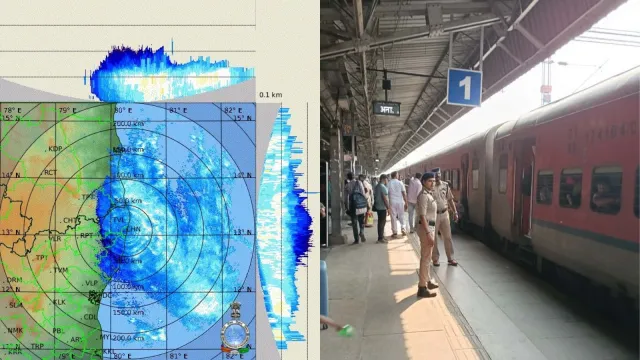

Cyclone alerts and train cancellations can disrupt travel plans across India, particularly during periods of severe weather along coastal regions. Travellers can reduce uncertainty by checking official India Meteorological Department (IMD) warnings, monitoring Indian Railways updates through the National Train Enquiry System (NTES), and confirming ticket status before leaving home. A few simple checks can help passengers make safer and better-informed travel decisions.
Why Checking Cyclone Alerts Before Travelling Matters
Cyclones can bring strong winds, heavy rainfall, rough seas and flooding, affecting road connectivity, railway operations and airport services. The impact depends on the storm’s location, intensity, movement and the vulnerability of the affected area.
For travellers, checking the weather forecast is particularly important when a journey involves coastal Andhra Pradesh, Odisha, West Bengal, Tamil Nadu or other regions exposed to cyclonic weather. However, the effects of a cyclone can extend inland through heavy rain and transport disruptions.
As of 27 October 2026, the India Meteorological Department has published a cyclone warning for the Andhra Pradesh and adjoining south Odisha coasts concerning Cyclonic Storm Arnab, which intensified into a severe cyclonic storm over the west-central Bay of Bengal, according to its bulletin dated 26 October. Travellers planning journeys through potentially affected areas should check the latest official forecast rather than rely on an earlier update.
A weather warning does not automatically mean every train or road service will be cancelled. Transport decisions depend on local conditions, safety assessments and instructions issued by the relevant authorities. Checking both weather alerts and transport updates is therefore essential.
How to Check Official Cyclone Alerts in India
The India Meteorological Department is the primary official source for weather forecasts and cyclone warnings in India. Travellers can use its website and mobile services to check conditions before departure.
1. Visit the IMD Mausam Website
Open the official IMD website at https://mausam.imd.gov.in/.
The website provides district-wise and subdivision-wise warnings, current weather information, forecasts and specialised cyclone services. Travellers should select the district or region relevant to their journey and review the latest warning.
Pay attention to the following details:
- Expected rainfall and wind conditions.
- The districts and coastal areas covered by the warning.
- The forecast period and the time the bulletin was issued.
- Advisories concerning severe weather and possible hazards.
Always check the issue date and validity period. A warning issued earlier may have been updated as the cyclone changes direction or intensity.
2. Use the Official Mausam Mobile App
The IMD’s Mausam app provides weather forecasts and alerts, including cyclone warnings. It also offers location-based weather information and supports multiple Indian languages.
Travellers can use it to review forecasts for their destination and locations along their route. Those travelling between cities should check both their starting point and destination, as weather conditions can differ significantly.
Download the app through an official app store listing and verify that the publisher is associated with the India Meteorological Department. Avoid unfamiliar applications that claim to provide government alerts without identifying their source.
India Meteorological Department+1
3. Check the NDMA SACHET Disaster Alert Portal
The National Disaster Management Authority’s SACHET portal provides disaster-related alerts through a Common Alerting Protocol-based system. It supports geographically targeted warnings and offers information through its website, mobile application and other notification channels.
Visit https://sachet.ndma.gov.in/ to check available alerts. The platform can help travellers identify warnings relevant to particular locations, including areas outside the immediate cyclone landfall zone.
Passengers should also pay attention to official emergency messages received on their phones. If an alert advises people to avoid a particular area or follow evacuation instructions, safety should take priority over travel plans.
How to Check Train Cancellations Before Leaving Home
Indian Railways may regulate, divert, delay or cancel trains when severe weather threatens passenger safety or railway infrastructure. Passengers should verify their specific train rather than assume that all services on a route are affected.
4. Check the National Train Enquiry System
The National Train Enquiry System, commonly known as NTES, is an official Indian Railways service for checking train-running information.
Visit https://enquiry.indianrail.gov.in/ntes/ or use the official NTES mobile application.
Follow these steps:
- Open the NTES website or application.
- Find the train enquiry or train status option.
- Enter your train number or select the relevant enquiry.
- Check the running status, scheduled timings and available exception information.
- Recheck the information close to your departure time.
NTES provides features such as Spot Your Train, Live Station, train schedules and train-related exception information. These services help passengers check operational changes without depending entirely on social media posts or forwarded messages.
Apps on Google Play+1
5. Check the Official RailOne App and Railway Enquiry Number
Passengers can also use RailOne, the official Indian Railways application that brings together several passenger services, including train information and ticketing facilities.
Another option is the railway enquiry helpline, 139. It provides train-running and reservation-related information, including arrival and departure enquiries. This can be useful for passengers who have limited internet access or prefer telephone assistance.
Press Information Bureau+1
Before calling, keep your train number, journey date and boarding station ready. These details can help you obtain relevant information more efficiently.
6. Check Your Ticket and Booking Status
Passengers with reserved tickets should also check their booking details through official railway enquiry services.
The Indian Railways passenger enquiry portal allows travellers to check their Passenger Name Record (PNR) status. Visit https://www.indianrail.gov.in/ and select the PNR enquiry option.
Remember that a confirmed reservation does not guarantee that a train will operate as originally scheduled during severe weather. Booking status and operational status are different things, so both must be checked.
If an e-ticketed train is cancelled, Indian Railways states that the applicable refund process is initiated automatically for eligible online bookings. Counter-ticket passengers may need to follow the applicable railway refund procedure instead. Check the latest rules and instructions before taking action.
Indian Railway+1
What to Do If Your Train Is Delayed, Diverted or Cancelled
Once a disruption is confirmed, passengers should avoid making rushed decisions based on unofficial reports. The next step depends on whether the train is running late, operating on a different route or cancelled entirely.
If your train is delayed, check its latest running position and estimated arrival or departure information. Allow extra time to reach the station, particularly when heavy rain could affect road traffic.
If your train is diverted, confirm whether it will stop at your boarding station. A diverted train may follow a different route, and its regular stopping pattern may change.
If your train is cancelled, check the applicable refund process and available alternative travel options. Do not purchase a replacement ticket until you have assessed the cost, availability and feasibility of your new journey.
Passengers travelling with children, older family members or people requiring medical assistance should prepare additional time and essential supplies in case they become stranded or face long delays.
Most importantly, do not enter a flooded railway underpass, cross railway tracks to avoid a delay or attempt to travel through an area under an official evacuation advisory.
Essential Travel Checklist During Cyclone Season
Before starting a journey, passengers should complete a quick checklist to avoid preventable problems.
- Check the latest IMD cyclone and district weather warnings.
- Review NDMA SACHET alerts for the places you plan to visit.
- Verify your train’s running status on NTES or RailOne.
- Check your PNR and keep your ticket details accessible.
- Save important railway enquiry information, including 139.
- Keep your phone charged and carry a power bank, drinking water and essential medicines.
- Inform family members about your itinerary and any changes.
- Follow instructions issued by railway staff and local disaster management authorities.
For travellers from Tier-2 and Tier-3 cities, these precautions are particularly useful when journeys involve connecting trains, long-distance routes or transfers through coastal districts. A short check before leaving home can prevent unnecessary travel to a station during a disruption.
Key Takeaways
- The IMD Mausam website and app provide official cyclone forecasts and weather warnings.
- The NDMA SACHET portal helps users access geographically targeted disaster alerts.
- NTES, RailOne and railway enquiry number 139 help passengers verify train-running information.
- Always check the latest weather warning and train status before departure, and follow official safety instructions.
Frequently Asked Questions
1. How can I check cyclone alerts in India?
Visit the official IMD Mausam website at https://mausam.imd.gov.in/ or use its mobile app. You can also check the NDMA SACHET portal for disaster alerts relevant to your location.
2. How do I check whether my train is cancelled?
Use the official NTES website or app to check train-running information and operational updates. You can also contact railway enquiry number 139 for assistance.
3. Will Indian Railways automatically refund a cancelled train ticket?
For eligible online e-tickets, the applicable refund process is generally initiated automatically when the booked train is cancelled. Different procedures may apply to counter tickets and other circumstances, so verify the current railway rules.
4. Should I travel if my train is running but a cyclone warning is active?
Check the latest official weather warnings, railway updates and local administration advisories. If authorities advise against travel or issue evacuation instructions, prioritise safety and follow their directions.