
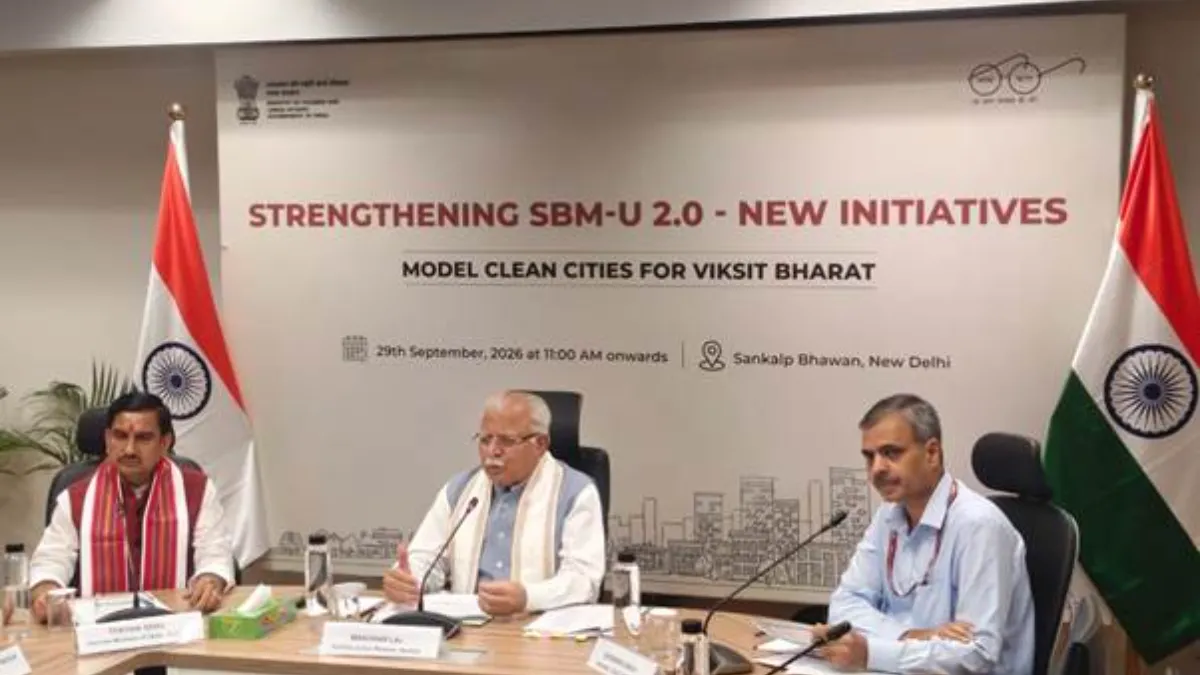

Lucknow Municipal Corporation has been selected under the Centre’s PRAGATI 50 initiative, bringing the city into a focused programme for improving sanitation, solid waste management, used-water management and citizen participation under Swachh Bharat Mission-Urban 2.0.
Lucknow selected among six Uttar Pradesh cities
Lucknow Municipal Corporation is among six urban local bodies in Uttar Pradesh selected under the Centre’s PRAGATI 50 initiative. The other selected cities are Agra, Ayodhya, Mathura-Vrindavan, Prayagraj and Varanasi.
The initiative was launched by the Ministry of Housing and Urban Affairs on September 29, 2026, with 50 cities across 24 states identified to demonstrate higher standards of urban cleanliness. The programme operates within the framework of Swachh Bharat Mission-Urban 2.0 and uses key performance indicators and technology-enabled monitoring to track progress.
For Lucknow, the selection means that several aspects of everyday civic administration will receive focused monitoring. These include waste collection and processing, sanitation, used-water management and citizen participation.
The development is particularly relevant for residents because these services directly affect neighbourhood cleanliness, public spaces and the overall functioning of the city.
What PRAGATI 50 means for urban services
PRAGATI 50 is designed around the idea of developing model cities that can demonstrate measurable improvements in sanitation and urban management.
According to the Ministry of Housing and Urban Affairs, the 50 selected cities will work toward higher benchmarks of Swachhata through targeted, key performance indicator-based action and intensive, technology-enabled monitoring.
The programme is not limited to conventional street cleaning. Its framework covers visible cleanliness as well as systems that support long-term urban sanitation.
This includes better solid waste management, used-water management, sanitation infrastructure and citizen participation. The government has also described a city-wide approach in which urban local bodies and other stakeholders are involved in planning and implementation.
For residents, the significance will ultimately depend on how these systems translate into regular services at the ward and neighbourhood level.
Solid waste management gets greater attention
Solid waste management is one of the key areas being emphasised under the initiative.
Lucknow has been asked to focus on areas such as source segregation, waste management and scientific disposal. Lucknow Municipal Corporation officials have said regular monitoring and timely achievement of targets will be among the priorities under the programme.
Source segregation is important because separating waste at the point where it is generated can make collection, processing and recycling more effective. It also reduces the amount of mixed waste that ultimately needs to be disposed of.
The wider PRAGATI 50 programme also includes guidelines related to source segregation of municipal solid waste and secondary collection centres for construction and demolition waste. These measures are part of the broader effort to improve waste-management systems in selected cities.
For Lucknow residents, the practical impact could be seen in areas such as household waste collection, segregation practices, public cleanliness and the management of waste generated by commercial activity.
Used-water management and sanitation under focus
The programme also places emphasis on used-water management and public sanitation.
These areas can become increasingly important as cities expand and face pressure on existing infrastructure. Effective management of wastewater requires functioning collection, treatment and disposal systems rather than relying only on visible cleanliness measures.
At the state level, Uttar Pradesh officials have directed the selected urban local bodies to regularly review solid waste management, wastewater management, public sanitation and citizen engagement.
Officials have also stressed the implementation of standard operating procedures and key performance indicators under Swachh Bharat Mission-Urban 2.0.
This approach shifts attention toward measurable outcomes. Instead of focusing only on whether a cleanliness drive has taken place, authorities can examine whether defined service standards and targets are actually being met.
Citizen participation is part of the plan
Citizen participation is another important component of PRAGATI 50.
Lucknow Mayor Sushma Kharkwal said the initiative would help strengthen source segregation, waste management, sanitation monitoring and citizen participation in the city. Municipal Commissioner Gaurav Kumar said the civic body would focus on regular monitoring, scientific waste disposal and achieving targets within stipulated timelines.
Citizen involvement matters because municipal sanitation systems depend partly on public behaviour. Household-level waste segregation, responsible disposal and reporting of local problems can influence how effectively municipal systems operate.
The programme therefore combines administrative monitoring with public participation rather than treating cleanliness as the responsibility of the municipal body alone.
Technical support and monitoring for selected cities
The selected urban local bodies are expected to receive technical support and focused monitoring as they work toward the programme’s targets.
The Ministry has established a digital review mechanism on the Swachhatam Portal to support monitoring of the selected cities. Officers from the ministry will be assigned cities for regular supervision and handholding.
This technology-enabled approach is intended to make monitoring more structured. Performance can be reviewed against defined indicators instead of depending entirely on periodic physical inspections.
For Lucknow, the effectiveness of this system will depend on how consistently municipal departments collect information, review performance and respond to gaps.
The selection itself does not mean that all civic problems have already been resolved. Rather, it places the city within a framework where sanitation and urban-service performance will receive additional attention and monitoring.
What Lucknow residents can expect from the initiative
The immediate focus is on improving the systems behind everyday urban cleanliness rather than announcing a single new infrastructure project.
Residents can expect greater emphasis on waste segregation, scientific waste disposal, sanitation monitoring, used-water management and citizen participation as the programme moves forward.
The Lucknow Municipal Corporation has also recently revised its budget with increased allocations toward roads, street lighting and civic repairs, according to a Times of India report published on October 1. While this is a separate municipal budget development, it adds to the broader focus on basic civic infrastructure and service delivery in the city.
The key measure of PRAGATI 50 will ultimately be whether residents see sustained improvements in everyday services, rather than short-term cleanliness campaigns.
Takeaways
- Lucknow Municipal Corporation is among six Uttar Pradesh urban local bodies selected under PRAGATI 50.
- The initiative covers sanitation, solid waste management, used-water management and citizen participation.
- Lucknow will receive focused monitoring and technical support under the programme.
- The impact will depend on consistent implementation, measurable targets and participation from residents and civic authorities.
FAQs
What is the PRAGATI 50 initiative?
PRAGATI 50 is a Ministry of Housing and Urban Affairs initiative under Swachh Bharat Mission-Urban 2.0 that identifies 50 model cities across 24 states to demonstrate higher standards of urban cleanliness through targeted action, key performance indicators and technology-enabled monitoring.
Which Uttar Pradesh cities have been selected under PRAGATI 50?
Six urban local bodies in Uttar Pradesh have been selected: Lucknow, Agra, Ayodhya, Mathura-Vrindavan, Prayagraj and Varanasi.
What areas will Lucknow focus on under PRAGATI 50?
The focus includes source segregation, solid waste management, scientific waste disposal, wastewater or used-water management, public sanitation, sanitation monitoring and citizen participation.
Will residents have a role in PRAGATI 50?
Yes. Citizen participation is one of the areas included in the initiative. The programme’s broader approach involves urban local bodies, stakeholders and citizens in efforts to improve sanitation and urban service delivery.