
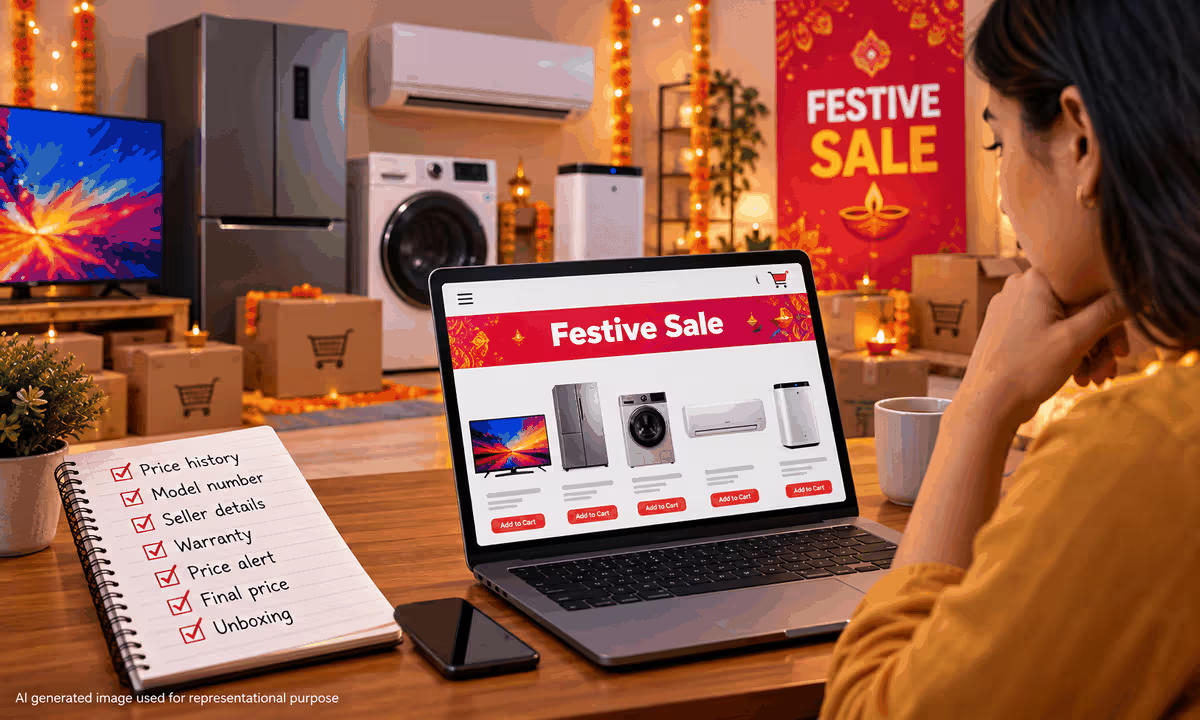

Festive sales in India can make smartphones, laptops, televisions and home appliances appear more affordable, but the biggest advertised discount does not always mean the best deal. Before buying electronics online, shoppers should compare the final payable price, check the product specifications, verify bank offers and review seller policies. A few simple checks can help households avoid unnecessary spending and make better purchasing decisions during the festive shopping season.
Why Comparing Festive Sale Prices Matters
October is an important shopping period in India, with e-commerce platforms and electronics retailers offering deals ahead of major festivals. The Amazon Great Indian Festival 2026 and Flipkart Big Billion Days 2026 are among the ongoing sale events, with offers across smartphones, laptops, televisions and household appliances.
However, a product advertised with a large percentage discount may not necessarily be the cheapest option available. The displayed discount can depend on the listed price, selected payment method, exchange eligibility or membership benefits.
A recent market trend also makes comparison shopping important. Rising input costs have put pressure on electronics pricing, and industry reporting suggests that some festive discounts may be available for shorter periods this year.
For consumers, the practical approach is to focus on the amount they will actually pay rather than the discount percentage displayed on a product page.
Compare the Same Product Across Shopping Platforms
The first step is to identify the exact model you want to purchase. Comparing products with similar names but different specifications can lead to misleading conclusions.
For example, two smartphones may look identical but have different RAM, storage capacities, processors or camera configurations. Similarly, a television’s price can vary according to screen size, display technology, refresh rate and warranty coverage.
Search for the exact model number on multiple platforms, including Amazon, Flipkart and authorised brand retailers. Check whether the product is new, refurbished or an older version.
Create a shortlist of two or three sellers and record the current selling price. Also note the delivery charges, available payment offers and expected delivery date.
This approach is particularly useful for shoppers in Tier-2 and Tier-3 cities, where delivery availability and access to nearby service centres can influence the overall value of a purchase.
Check the Actual Price Before and During the Sale
A festive discount is more meaningful when you know the product’s previous selling price. Before making a purchase, look at the price history, where available, and compare the current offer with prices seen before the sale began.
Some shopping assistants and price-tracking services provide historical price information or alerts when a product becomes cheaper. Amazon has also introduced shopping tools that help customers compare products and examine price history.
Do not rely on the maximum retail price alone. A product may show a substantial reduction from its MRP while being available at a lower regular selling price elsewhere.
For example, suppose a television has an MRP of ₹60,000 but is regularly sold for ₹42,000. During a festive sale, one website lists it for ₹39,000. The reduction from MRP looks substantial, but the actual saving compared with its regular selling price is ₹3,000.
This distinction helps shoppers judge whether a deal offers genuine value.
Calculate the Final Payable Price
The listed selling price is only one part of the purchase decision. Bank discounts, exchange bonuses, cashback and EMI offers can change the final cost, but their conditions must be checked carefully.
Consider a hypothetical smartphone with the following offer:
- Listed festive price: ₹30,000
- Eligible instant bank discount: ₹3,000
- Delivery charge: ₹0
- Final payable price before any later cashback: ₹27,000
In this example, the immediate saving is ₹3,000 against the festive price. However, the discount applies only if the customer meets the bank offer’s conditions.
Cashback should be treated separately because it may be credited later and may have eligibility restrictions. An exchange offer also depends on the old device’s model, condition and valuation.
Before paying, check whether the offer applies to your specific card, whether a minimum transaction value is required and whether the discount is available on EMI transactions. Read the terms instead of assuming that every advertised benefit can be combined.
Compare Bank Discounts, Cashback and EMI Offers
Payment offers can make a difference, particularly when purchasing expensive electronics. During the Amazon Great Indian Festival 2026, the platform has advertised eligible SBI card discounts alongside other benefits. Flipkart also lists changing promotional offers during its Big Billion Days sale.
These offers should be evaluated individually because their conditions can differ.
An instant discount reduces the amount payable at checkout. Cashback may arrive later, while reward points can have separate redemption rules. No-cost EMI arrangements may also include conditions relating to processing fees, eligible cards and the structure of the repayment offer.
For example, a product priced at ₹35,000 with a ₹2,000 instant discount may be more economical than another listing at ₹34,000 without an applicable discount. But if the first offer requires a card you do not have, the lower advertised effective price may not be available to you.
Compare the amount you can actually pay, not the maximum savings promoted on the website.
Check Specifications, Warranty and Seller Ratings
A lower price should not come at the cost of buying an unsuitable product. Before ordering a smartphone, check its RAM, storage, battery capacity, software support and network compatibility. For laptops, examine the processor, memory, storage, display and intended workload.
For televisions and appliances, compare energy efficiency, dimensions, installation requirements and after-sales service.
Check the seller’s rating, customer reviews and return policy. Pay attention to repeated complaints about damaged products, missing accessories or warranty disputes rather than relying only on the overall star rating.
Confirm whether the product comes with a manufacturer warranty and whether the seller is authorised, especially when buying expensive electronics or accessories.
Also read the replacement and return conditions before placing the order. Some products have different rules for damaged deliveries, manufacturing defects and change-of-mind requests.
A small difference in price may not justify choosing a seller with unclear warranty support or unreliable fulfilment.
Watch Out for Fake Discounts and Misleading Offers
Festive shopping campaigns can create urgency through countdown timers, limited-stock messages and claims of exceptionally high savings. These messages should not replace basic price checks.
India’s consumer protection framework includes the Central Consumer Protection Authority’s Guidelines for Prevention and Regulation of Dark Patterns, 2023. These guidelines identify practices such as false urgency, bait-and-switch tactics and drip pricing that can mislead online consumers.
Before buying, examine the full checkout amount. Check whether delivery charges, handling fees, optional add-ons or other costs appear only after you proceed through the shopping process.
Avoid clicking unfamiliar coupon links shared through unsolicited messages. Fake offer pages may imitate legitimate shopping websites or attempt to collect payment details and personal information.
Use the official retailer’s app or website, verify the web address and never share an OTP or banking password with someone claiming to help you claim a discount.
If a price appears unusually low, check the seller, product condition and warranty before proceeding.
Set a Budget and Decide When to Buy
A sale can encourage shoppers to purchase products they did not originally need. Preparing a list before browsing helps prevent unnecessary spending.
Start by identifying the product you need, the specifications that matter and the maximum amount you are willing to pay. Compare prices for several days when practical, and set alerts if the platform provides them.
Some festive offers are time-limited, while others may return during later sale periods. Waiting can be useful if the product is not urgent, but there is no guarantee that the same price or stock will remain available.
Avoid taking on expensive credit simply because a product is discounted. Calculate the total repayment amount and assess whether the monthly instalments fit your budget.
For households planning to buy multiple items, prioritise essential purchases such as a replacement appliance or a laptop needed for work or education. Optional upgrades can wait if they exceed the budget.
The goal is not to buy at the lowest advertised price at any cost. It is to choose a suitable product at a price that makes financial sense.
Key Takeaways
- Compare the exact model and specifications across multiple retailers before buying.
- Check price history and calculate savings against realistic selling prices, not just MRP.
- Read bank discount, cashback, exchange and EMI conditions to determine the final cost.
- Verify seller credibility, warranty, return policies and checkout charges before payment.
Frequently Asked Questions
1. How can I find the best festive sale price for electronics?
Compare the exact model on multiple shopping platforms and authorised retailer websites. Check price history where available, apply only the offers for which you qualify and compare the final payable amount.
2. Are festive sale discounts always genuine?
Not necessarily. A large discount against MRP does not automatically mean a product is cheaper than its usual selling price. Check historical prices and compare current offers across sellers.
3. Is it better to buy electronics with a bank discount or cashback?
An eligible instant discount generally reduces the checkout amount immediately. Cashback may be credited later and can have additional conditions. Compare the effective cost and confirm the terms before purchasing.
4. How can I avoid online shopping scams during festive sales?
Shop through official websites or apps, verify seller details, avoid unfamiliar coupon links and review the complete checkout amount. Never share OTPs or banking passwords with anyone offering to help you claim a deal.