
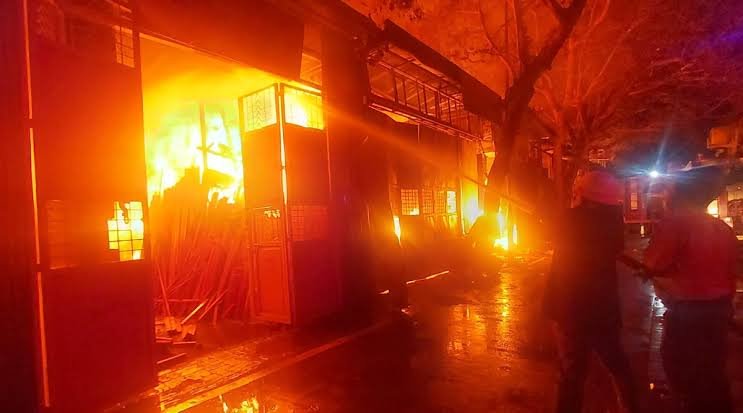

A major fire at Pune’s Timber Market on November 18 damaged dozens of shops and required an extensive firefighting operation. Although no injuries were reported, the incident has brought attention to fire prevention, emergency access and safety preparedness in commercial markets across Indian cities.
Pune Timber Market Fire: What Happened on November 18?
A major fire broke out in Pune’s Timber Market area near Jai Vallabh School at approximately 2:05 am on Wednesday, November 18, 2026. The affected area houses several shops dealing in timber, wood and related products. According to officials, around 50 to 60 shops were damaged in the incident.
The Pune Fire Brigade responded with 27 fire tenders, including vehicles from the Pune Cantonment Fire Brigade and the Pune Metropolitan Region Development Authority (PMRDA). Around 10 fire department officers and approximately 150 firefighters participated in the operation.
Firefighters approached the blaze from multiple sides to prevent it from spreading towards nearby residential buildings. The fire was brought under control after nearly two hours, although cooling operations continued to prevent any possibility of the flames restarting.
No injuries or casualties were reported. Officials stated that the exact cause of the fire had not yet been determined. The extent of the damage was also being assessed.
The incident highlights the challenges involved in controlling fires in commercial areas where combustible materials are stored in large quantities. (Source: PTI and The Indian Express)
Why Timber Markets Face Higher Fire Risks
Timber markets have particular fire-safety challenges because wood and other combustible materials are commonly stored in shops, warehouses and storage spaces.
Wood is a combustible material, and when large quantities are stored close together, a fire can spread from one section to another if it is not detected and controlled quickly. Wooden furniture, packaging materials, sawdust and other workshop waste can add to the fire load.
Electrical equipment is another important consideration. Commercial establishments use lighting, fans, machinery, power tools and other electrical installations. Faulty wiring, overloaded circuits, damaged cables and poorly maintained equipment can create potential ignition risks.
Storage arrangements also matter. Narrow passages, overcrowded shops and materials kept near electrical panels or equipment can make emergency response more difficult.
However, these are general risk factors associated with timber markets. There is no confirmed finding that any particular factor caused the November 18 Pune fire. The cause remains subject to investigation.
Fire Safety Challenges in India’s Commercial Markets
The Pune incident raises a wider question about fire preparedness in traditional commercial markets across India.
Many established markets in cities such as Nagpur, Pune, Nashik, Indore, Jaipur and Lucknow have developed over several decades. Some operate in densely populated neighbourhoods where shops, warehouses, residential buildings and workshops exist close to one another.
Such locations can present challenges during emergencies. Streets may be narrow, goods may extend beyond shop premises, and vehicles parked along roads can restrict the movement of emergency services.
Fire engines require sufficient road width and access to reach affected buildings. If entry routes are blocked, firefighters may lose valuable time while attempting to approach the fire from alternative directions.
The presence of residential buildings near commercial establishments creates an additional concern. A fire that begins inside a shop or warehouse can threaten neighbouring properties if flames or smoke spread beyond the original premises.
For Tier-2 and Tier-3 cities, where traditional markets remain important centres of local employment and trade, improving fire safety is an important part of urban infrastructure planning.
Electrical Safety and Fire Prevention in Shops
Electrical faults are among the potential sources of fires in commercial establishments. Regular inspection and maintenance can help reduce these risks.
Shop owners should ensure that electrical wiring, switches, distribution boards and other installations are maintained by qualified professionals. Damaged cables, loose connections and overloaded sockets should be addressed promptly.
Using multiple high-power appliances through a single extension board can increase electrical risks. Commercial establishments using cutting machines, woodworking equipment and other heavy machinery should pay particular attention to electrical load requirements.
Electrical distribution boards should remain accessible and should not be covered by stored goods. Shops should also avoid keeping combustible materials close to electrical equipment.
Periodic electrical inspections are useful for identifying problems before they become serious. Owners and property managers should maintain records of repairs and safety checks.
These precautions are particularly relevant for markets where several businesses operate within closely connected buildings.
Fire Extinguishers and Emergency Preparedness
Having fire extinguishers inside commercial premises is an important part of basic fire preparedness. However, simply purchasing firefighting equipment is not enough.
The equipment must be suitable for the type of fire risk present, properly maintained and accessible during an emergency.
For example, electrical fires require extinguishing agents suitable for electrical equipment. Water should not be used on live electrical installations because it can create an additional risk of electric shock.
Employees and shop workers should know where firefighting equipment is located and how to use it safely. Regular training can help people respond more effectively during the initial stages of a fire.
Commercial establishments should also maintain clear emergency exits and evacuation routes. Exit doors should not be blocked by stock, furniture or packaging materials.
A basic emergency plan should identify evacuation routes, assembly points and emergency contact numbers. Workers should understand when to attempt to use an extinguisher and when immediate evacuation is the safer option.
Why Fire Engine Access Matters in Crowded Markets
One of the important aspects of the Pune operation was the deployment of multiple fire tenders and firefighting teams from different agencies.
In densely populated markets, the availability of accessible roads can influence how quickly emergency services reach a fire. Even well-equipped fire departments can face difficulties if vehicles cannot approach the affected location.
Municipal authorities can address this challenge through regular inspections of emergency access routes, removal of obstructions and better management of roadside parking.
Markets should also have clearly identified access points for emergency vehicles. Where possible, local authorities and market associations can coordinate emergency response exercises to identify access-related problems.
Water availability is another important factor. Firefighting operations require a reliable water supply, particularly when a fire involves multiple shops or buildings.
Local administrations should periodically review the location and condition of fire hydrants, water sources and other firefighting infrastructure.
What Shop Owners and Market Associations Should Do
Fire prevention requires cooperation between individual businesses, market associations, building owners and local authorities.
Shop owners should avoid excessive storage, maintain electrical installations and ensure that emergency exits remain accessible. They should also arrange periodic checks of firefighting equipment.
Market associations can play a coordinating role by organising fire-safety awareness programmes, maintaining emergency contact lists and helping members understand evacuation procedures.
They can also work with municipal authorities to identify blocked roads, inadequate water access and areas that require improved emergency infrastructure.
Local fire departments can conduct awareness sessions and provide guidance on appropriate firefighting equipment and emergency response procedures.
Authorities should also assess whether commercial premises meet applicable fire-safety requirements and take appropriate action wherever violations are identified.
For businesses dealing in wood, chemicals, textiles, packaging or other combustible materials, these measures deserve particular attention.
Fire Safety Needs Greater Attention Beyond Major Cities
Commercial fire incidents are not limited to large metropolitan areas. Smaller cities also have traditional markets, industrial clusters, warehouses and wholesale trading centres where businesses operate in closely packed spaces.
These establishments support local economies and provide employment to thousands of people. A major fire can damage business inventory, disrupt supply chains and affect the livelihoods of shop owners and workers.
Small businesses may also face financial difficulties after losing their stock and equipment. Adequate insurance, accurate inventory records and emergency business continuity plans can help reduce some of the financial impact.
The Pune Timber Market fire is a reminder that fire safety should not be treated as a formality or an occasional inspection requirement. It needs regular attention through preventive maintenance, proper storage, accessible emergency routes and worker awareness.
As investigations continue into the cause of the Pune incident, the focus should also remain on identifying practical improvements that can make commercial markets safer.
Key Takeaways
- A major fire broke out at Pune’s Timber Market near Jai Vallabh School on November 18, 2026, damaging approximately 50 to 60 shops.
- Around 27 fire tenders and 150 firefighting personnel were deployed, and no injuries were reported.
- The exact cause of the fire has not yet been established by authorities.
- Regular electrical inspections, suitable fire extinguishers, clear evacuation routes and accessible roads are essential for commercial fire safety.
Frequently Asked Questions (FAQs)
1. When did the Pune Timber Market fire take place?
The fire broke out at approximately 2:05 am on November 18, 2026, near Jai Vallabh School in Pune’s Timber Market area.
2. How many shops were affected by the Pune Timber Market fire?
According to officials cited in PTI reports, approximately 50 to 60 shops were damaged in the incident.
3. Were there any casualties in the Pune Timber Market fire?
No injuries or casualties were reported in the initial official information available on November 18, 2026.
4. What caused the Pune Timber Market fire?
The exact cause had not been determined when the initial reports were published. Authorities had not confirmed whether the fire resulted from an electrical fault or another source.