
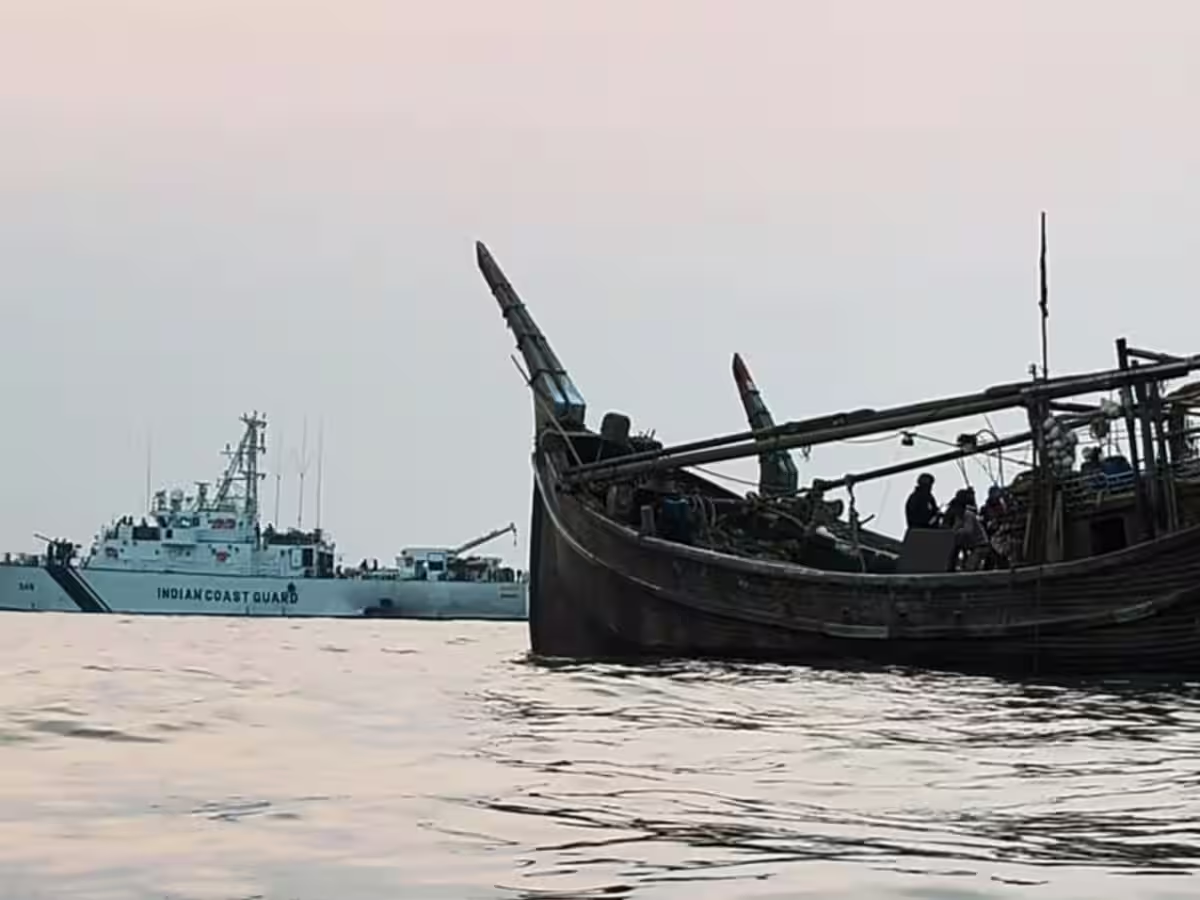

Bangladesh India maritime tension has begun affecting fishing communities along the Bengal coast, creating uncertainty for livelihoods that depend on daily access to shared waters. Recent incidents at sea and heightened coastal monitoring have disrupted routine fishing activity, especially for small scale operators working close to maritime boundaries.
For coastal districts of West Bengal, fishing is not only an occupation but a generational survival system. Any restriction, detention, or confusion over maritime limits immediately impacts income, food security, and local economies. As tensions rise, the burden is falling disproportionately on fisherfolk with limited safety nets.
This situation is time sensitive and continues to evolve, making it critical to understand the ground level fallout and official response.
What Triggered the Recent Maritime Tension
The current tension stems from repeated incidents involving fishing boats straying across perceived maritime boundaries in the Bay of Bengal. Fisherfolk from both sides often rely on traditional fishing routes that predate modern demarcations.
Stronger coastal surveillance, stricter patrols, and security concerns have reduced tolerance for boundary crossings. In several recent cases, boats were intercepted, and fishermen were detained for questioning before being released through diplomatic channels.
While such incidents are not new, their frequency has increased during peak fishing season, intensifying anxiety among coastal communities.
How Bengal Coast Fisherfolk Are Being Affected
Fishing operations along the Bengal coast have slowed significantly. Many fishermen now avoid deeper waters even when fish availability is higher, fearing interception.
Reduced fishing zones mean lower catch volumes. Daily earnings have dropped, affecting household expenses, loan repayments, and fuel costs. Ice suppliers, transporters, and fish markets are also experiencing reduced activity.
Small boats without navigation equipment are the most affected. These operators often rely on experience rather than technology, making it difficult to identify invisible maritime boundaries at sea.
Families report that uncertainty has replaced routine, with each fishing trip carrying financial and emotional risk.
Detention Incidents and Their Local Impact
Detention of fishermen, even for short periods, creates ripple effects in coastal villages. Families lose income during detention, face legal costs, and experience psychological stress.
Delayed communication worsens the situation, as families often receive no immediate confirmation about the safety of detained fishermen. In some cases, boats and nets are confiscated temporarily, increasing losses.
Local leaders say that even brief detentions discourage others from venturing out, leading to community wide income reduction during crucial fishing months.
These incidents have reinforced fear rather than clarity about safe fishing zones.
Role of Local Administration and Authorities
State authorities in West Bengal are coordinating with central agencies to manage the situation. District administrations are collecting data on affected fishermen and offering basic support in some areas.
Coastal security agencies have increased awareness drives, advising fishermen to remain within designated zones. However, communication gaps persist, especially among older fishermen and seasonal workers.
Officials acknowledge the livelihood impact but emphasise national security and maritime regulation enforcement. Balancing security with humanitarian considerations remains a challenge.
Local administrations are also working with fishing cooperatives to disseminate advisories more effectively.
Economic Ripple Effect on Coastal Communities
Fishing supports a wider coastal economy. Reduced activity affects fish processing units, cold storage operators, transport workers, and local traders.
Women involved in fish sorting, drying, and selling experience income loss as supply drops. Daily wage workers connected to fishing harbours face irregular employment.
Small coastal towns depend heavily on fishing related commerce. Prolonged disruption risks pushing vulnerable families into debt cycles, especially during lean months.
Community elders warn that sustained uncertainty could force younger generations to migrate in search of alternative work.
What Fisherfolk Are Demanding
Fisherfolk associations are seeking clearer communication of maritime boundaries and safer fishing corridors. They want navigational support, affordable tracking equipment, and better awareness training.
There is also demand for faster diplomatic resolution mechanisms to ensure detained fishermen are released quickly. Compensation for seized equipment and lost fishing days is another key demand.
Most importantly, communities want assurance that traditional livelihoods will not be sacrificed to prolonged uncertainty.
Long Term Implications If Tensions Persist
If maritime tension continues, fishing patterns along the Bengal coast may permanently shift. Smaller operators may exit the sector, leaving fishing concentrated among larger, better equipped players.
This would alter the social fabric of coastal villages, where fishing is deeply tied to identity and culture. Reduced local production could also affect fish prices inland.
Long term solutions require coordinated maritime management, fisher focused communication, and livelihood protection measures alongside security enforcement.
What Lies Ahead for Coastal Bengal
Short term stability depends on de escalation and clearer advisories. Fisherfolk remain cautious but hopeful that fishing can resume safely with guidance.
Authorities face pressure to prevent humanitarian fallout while maintaining border integrity. How this balance is achieved will shape trust between coastal communities and the administration.
For now, uncertainty remains the defining feature of life along the Bengal coast.
Takeaways
- Maritime tension has directly reduced fishing activity along the Bengal coast
- Small scale fishermen face income loss and detention related stress
- Local economies dependent on fishing are experiencing ripple effects
- Clear communication and coordinated action are critical to reduce fallout
FAQs
Why are fishermen being detained at sea?
Detentions occur when boats are perceived to cross maritime boundaries during patrols.
Are all fishing activities stopped along the Bengal coast?
No, but many fishermen are limiting operations due to fear and uncertainty.
What support is available to affected fisherfolk?
Local administrations provide limited assistance, while long term relief depends on policy decisions.
Can the situation impact fish supply and prices?
Yes, reduced catch can affect availability and prices in connected markets.