
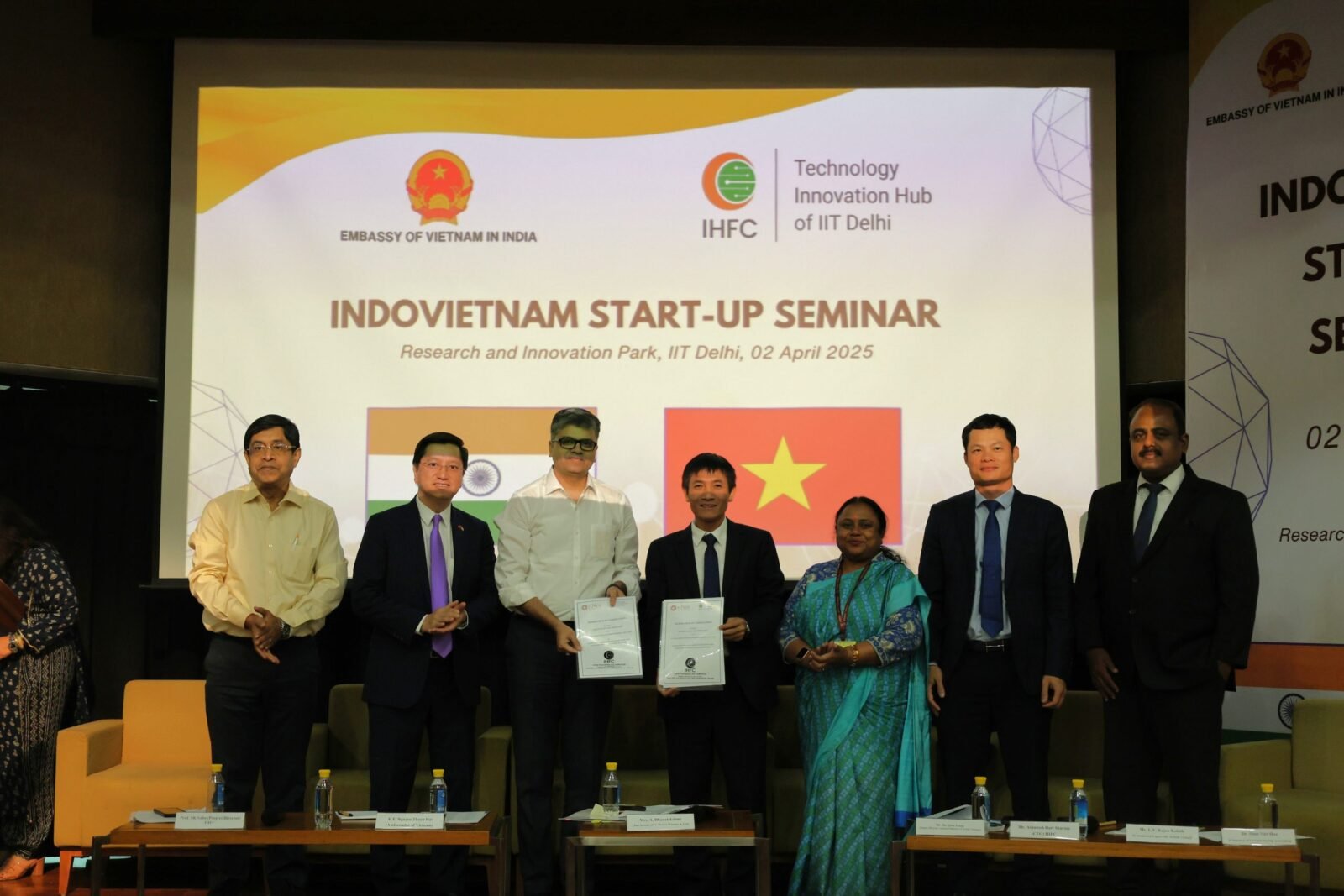

India’s expanding startup diplomacy is creating new bridges for entrepreneurs outside major metros. The India-Vietnam “Startup Flight 2025” initiative, launched to connect emerging founders, investors, and incubators from both countries, is more than just a policy partnership—it is a signal of how cross-border collaboration can empower Tier 2 founders with access to international capital, markets, and mentorship that were once concentrated in metros like Bengaluru or Ho Chi Minh City.
Why India-Vietnam startup cooperation matters now
India and Vietnam share complementary strengths that make this partnership strategically significant. Vietnam has positioned itself as a global manufacturing and supply chain hub, while India has built world-class digital and fintech capabilities. Together, they can create value chains for startups that go beyond national boundaries. Startup Flight 2025, organized under the India-Vietnam Innovation Network and supported by both governments, aims to promote investment exchange, technology partnerships, and joint accelerator programs. For entrepreneurs from India’s Tier 2 cities such as Indore, Jaipur, and Coimbatore, this collaboration opens access to Southeast Asia’s fast-growing digital economy.
Tier 2 founders emerging as India’s new startup force
India’s Tier 2 startup ecosystem has matured in the last five years. Cities like Ahmedabad, Bhubaneswar, and Surat are producing high-quality startups in manufacturing tech, logistics, and sustainable agriculture. These founders often face one bottleneck—limited exposure to global markets and investors. The India-Vietnam cooperation helps bridge that gap by linking them with Vietnam’s manufacturing supply chains and ASEAN trade routes. Vietnam, which recorded over 3,800 registered startups in 2024, is seeking partners who can bring India’s fintech, AI, and SaaS expertise to local markets. This creates a two-way exchange where smaller Indian startups can scale internationally without having to relocate to metros.
Startup Flight 2025: a platform for regional innovation
The Startup Flight 2025 program is designed as an accelerator-style platform connecting 50 startups from each country through curated bootcamps, mentorship exchanges, and investment meets. The initiative focuses on three sectors—fintech, agritech, and renewable energy. Startups from India’s smaller cities like Kochi, Lucknow, and Nagpur are being shortlisted for pilot projects in Vietnam’s emerging industrial zones. Conversely, Vietnamese startups in logistics and manufacturing automation are exploring partnerships with Indian engineering hubs such as Pune and Coimbatore. The program is backed by India’s Ministry of Commerce and Industry, the Vietnam National Innovation Center, and private partners including FICCI and NASSCOM.
How cross-border partnerships are changing Tier 2 startup playbooks
Traditionally, international startup collaborations were limited to metro-based ecosystems. Startup Flight 2025 is breaking that pattern by decentralizing participation. Regional incubation centers, such as IIM Udaipur’s Incubation Centre and Kerala Startup Mission, are working to identify investible ideas from Tier 2 towns and align them with Vietnamese accelerators. For instance, an agritech startup from Nashik focusing on precision irrigation technology is collaborating with a Vietnamese agri-sensor company to create export-ready hardware solutions. These cross-country pilots are not only validating products faster but also exposing founders to regulatory, cultural, and market nuances that are critical for scaling globally.
Vietnam as India’s ASEAN gateway for small-town innovators
Vietnam’s growing influence in ASEAN trade gives Indian startups a strong foothold in Southeast Asia. For smaller Indian entrepreneurs, partnering with Vietnamese manufacturing networks offers a cost-efficient path to build prototypes, outsource hardware production, and access neighboring markets such as Thailand, Cambodia, and Malaysia. Vietnam’s startup policy incentives, including corporate tax holidays and foreign ownership flexibility, align well with India’s own Startup India and Make in India frameworks. This synergy allows Tier 2 founders to integrate supply chains, attract foreign funding, and diversify revenue streams.
Government-to-government collaboration accelerating momentum
The governments of India and Vietnam are expanding this partnership through bilateral innovation councils and funding pools. The Department for Promotion of Industry and Internal Trade (DPIIT) has proposed a co-funding mechanism for startups entering joint accelerator programs. Vietnamese ministries are opening their national incubation hubs to Indian entrepreneurs through short-term residencies. The India-Vietnam Business Forum is also working to create a startup visa mechanism for seamless founder mobility. These steps are aimed at removing administrative barriers that often slow cross-border startup scaling.
Funding and investor perspectives on Tier 2 potential
Venture capital firms from both nations are now eyeing Tier 2 and Tier 3 ecosystems as high-yield, low-cost growth zones. Vietnamese investors, impressed by India’s fintech and AI startups, are partnering with regional angel networks in Jaipur, Kochi, and Chandigarh. Indian investors, in turn, are exploring Vietnamese deep-tech startups to diversify their portfolios beyond domestic markets. According to industry insiders, nearly $50 million in bilateral startup funding commitments are expected through 2025 under the Startup Flight initiative. For Tier 2 founders, this translates into realistic funding opportunities without having to compete directly with saturated metro ecosystems.
Building global exposure through collaboration, not migration
Perhaps the most significant outcome of this partnership is that small-city founders can now access global mentorship without relocating. Remote collaboration programs, digital demo days, and investor roundtables are connecting startups across borders virtually. IIM Udaipur and the Ho Chi Minh Innovation Center are co-hosting a virtual accelerator that allows Indian and Vietnamese startups to co-develop market entry strategies. This hybrid model ensures that Tier 2 founders retain their local operational base while expanding internationally.
Takeaways
• India-Vietnam Startup Flight 2025 is enabling cross-border collaboration in fintech, agritech, and renewable energy.
• Tier 2 city founders gain direct access to ASEAN markets, mentors, and investors.
• Regional incubation hubs are facilitating joint pilots and technology exchange.
• Government-backed co-funding and visa policies are accelerating startup globalisation.
FAQs
Q1. What is the India-Vietnam Startup Flight 2025 program?
It is a cross-border accelerator initiative connecting startups from both countries for investment, mentorship, and pilot collaborations in key sectors like fintech and agritech.
Q2. Why is this significant for Tier 2 Indian entrepreneurs?
It gives small-city founders international exposure, access to manufacturing networks, and funding opportunities without relocating to metro hubs.
Q3. Which sectors are seeing the most collaboration?
Fintech, agritech, renewable energy, and logistics automation are leading the partnership agenda between Indian and Vietnamese startups.
Q4. How can Indian startups apply to the initiative?
Interested startups can register through IIM Udaipur’s incubation portal or via Startup India’s international collaboration wing, depending on sector eligibility.