
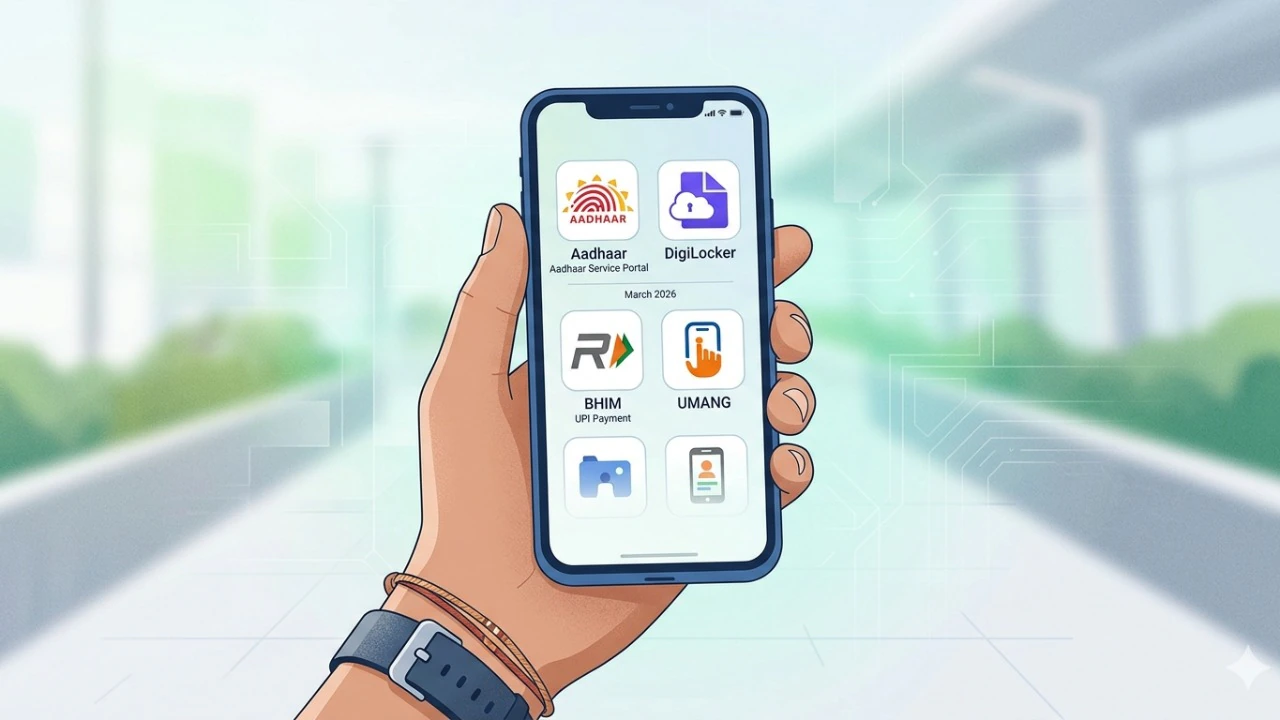

DigiLocker and Aadhaar have become central to India’s digital governance system in 2026. Citizens are increasingly using these platforms to access government services online, submit verified documents, apply for certificates, and complete digital verification processes without visiting physical offices repeatedly.
Why DigiLocker and Aadhaar Are Important in 2026
India’s digital public infrastructure has expanded rapidly over the last few years. Government departments across education, transport, healthcare, taxation, banking, and welfare schemes are now integrated with Aadhaar authentication and DigiLocker document access.
DigiLocker allows users to store and access digital copies of official documents such as Aadhaar cards, PAN cards, driving licenses, vehicle registration certificates, marksheets, and insurance documents. These documents are considered legally valid under Indian IT regulations when issued directly by authorized institutions.
Aadhaar, managed by the Unique Identification Authority of India, is widely used for identity verification and authentication. Together, DigiLocker and Aadhaar reduce paperwork, speed up application processes, and improve online access to government services.
In 2026, many state governments and central agencies are encouraging paperless applications to reduce manual processing delays. This shift is especially useful for people in Tier-2 and Tier-3 cities where visiting government offices may require significant travel and waiting time.
How to Create and Set Up a DigiLocker Account
Creating a DigiLocker account is a simple process that can be completed through the mobile app or official website. Users need an active mobile number linked with their Aadhaar card for OTP verification.
After registration, users can connect Aadhaar details and begin fetching official documents digitally. Educational certificates from boards and universities, driving licenses from transport departments, and other government-issued records can often be downloaded directly inside the app.
Once documents are added, they remain available anytime through the cloud-based platform. This helps users avoid carrying physical copies during applications or verification procedures.
Many institutions now accept DigiLocker documents during admissions, job applications, and KYC verification processes. Since the documents are digitally verified, departments can cross-check authenticity more quickly compared to manual paperwork.
Users are advised to keep their Aadhaar-linked mobile number active because OTP authentication is commonly required for login and document access.
Government Services That Use Aadhaar and DigiLocker
A growing number of digital government services depend on Aadhaar-based authentication and DigiLocker integration. Citizens can apply for services such as income certificates, caste certificates, scholarships, pensions, voter-related updates, and driving license renewals online.
Passport services and certain banking procedures also use Aadhaar eKYC systems for faster identity verification. In education, universities and recruitment agencies increasingly ask applicants to submit DigiLocker-issued marksheets and certificates.
Healthcare platforms linked to India’s Ayushman Bharat Digital Mission are also adopting digital identity systems for patient records and verification purposes.
Transport departments in several states allow citizens to show digital driving licenses and vehicle registration certificates stored in DigiLocker during traffic checks. This has reduced dependency on physical copies.
Experts note that these systems improve efficiency because government departments can retrieve verified information directly instead of manually checking multiple documents.
Benefits of Using Digital Government Services
One major benefit of DigiLocker and Aadhaar integration is convenience. Citizens can complete many applications from home using smartphones without depending on photocopies, document attestation, or repeated office visits.
The system also reduces the risk of losing important documents. Since records are stored digitally, users can access them anytime through secure login credentials.
Another advantage is faster processing. Online verification systems reduce delays caused by manual document checking and physical file movement.
For students and job seekers, digital certificates simplify application processes. Many recruiters and educational institutions now prefer digitally verifiable records because they reduce fake document risks.
Small business owners also benefit from Aadhaar-enabled eKYC processes during banking, GST registration, and financial applications. Digital identity verification has improved access to online financial services across India.
Safety Tips and Common Mistakes to Avoid
Although digital government platforms are useful, users should follow basic cybersecurity precautions. Aadhaar OTPs should never be shared with unknown callers or websites.
Citizens should only use official government websites and verified mobile applications while accessing services. Fake portals and scam messages pretending to offer government benefits continue to circulate online.
Users should also regularly update mobile numbers linked with Aadhaar because authentication issues may occur if old numbers are inactive.
Another common mistake is uploading unclear or mismatched documents. Even with digital systems, incorrect information can delay applications or verification approvals.
Experts recommend enabling app security features like PIN protection and avoiding public WiFi while accessing sensitive documents.
Future of India’s Digital Public Infrastructure
India’s digital governance ecosystem is expected to expand further in the coming years. More departments are likely to adopt paperless systems, digital signatures, and AI-assisted verification processes.
As internet access improves in smaller cities and rural regions, online public services may become the default mode for many government-related tasks. DigiLocker and Aadhaar are expected to remain key components of this transformation.
The overall goal is to make services faster, transparent, and more accessible for citizens while reducing administrative inefficiencies.
Takeaways
- DigiLocker and Aadhaar are widely used for online government services in 2026.
- Digital documents from DigiLocker are legally valid for many applications.
- Aadhaar-based authentication helps speed up verification processes.
- Users should follow cybersecurity precautions while accessing digital services.
FAQ
Is DigiLocker legally valid in India?
Yes, digitally issued documents available through DigiLocker are legally valid under Indian regulations when issued by authorized institutions.
Can Aadhaar be used for online verification?
Yes, Aadhaar is commonly used for eKYC and identity verification across government and financial services.
Which documents can be stored in DigiLocker?
Users can store Aadhaar cards, PAN cards, driving licenses, vehicle RCs, educational certificates, and other official records.
Is DigiLocker free to use?
Yes, DigiLocker is a government-supported digital document platform available free of cost for Indian citizens.