

Maharashtra’s rural belt is experiencing steady shifts as rising AI workforce demands reshape local skill priorities, training patterns and employment pathways. This informational article explains how district level institutions, small businesses and young workers are adapting to India’s expanding AI driven economy.
AI driven adoption is no longer restricted to metros. Rural Maharashtra is witnessing a gradual but clear shift in workforce preparation, with agriculture, local services, logistics and small enterprises integrating digital tools. This transition requires new skills, practical training and better access to learning infrastructure.
Rural Maharashtra sees early signs of AI linked employment shifts
The rising demand for AI related skills is influencing how rural districts prepare their workforce. Students and young workers in regions like Marathwada, Vidarbha and parts of Western Maharashtra are enrolling in digital upskilling programmes that cover data literacy, automation basics and AI assisted productivity tools. Panchayat schools and junior colleges are introducing foundational modules focused on coding, logical reasoning and AI awareness. This ensures that rural students are not completely dependent on skill centres in major cities.
Local businesses are also responding to AI integrated workflows. Agri-input distributors, warehousing operators and small manufacturing units are adopting basic automation and digital record keeping tools. These changes create new roles such as data entry operators, machine monitoring assistants and local tech support personnel. The emerging trend shows that AI adoption is not eliminating jobs in rural regions but changing the type of tasks workers perform.
District skill centres and colleges expand entry level AI training
Skill development centres run by district authorities and private institutes have begun offering short term programmes covering AI fundamentals. These are simplified courses designed for rural learners and focus on practical usage rather than complex theory. Topics include basic machine learning concepts, digital tools used in agriculture, automation in logistics and AI powered content creation.
Polytechnic colleges across districts such as Latur, Jalgaon and Satara are updating their technical curricula to include AI toolkits, sensor based systems and introductory robotics. Students receive exposure to simple real world applications like crop monitoring systems, automated water scheduling or warehouse inventory scanning. These applied examples help learners understand how AI connects to local industry needs and improves acceptance among rural families.
Agriculture and allied sectors adopt AI assisted tools gradually
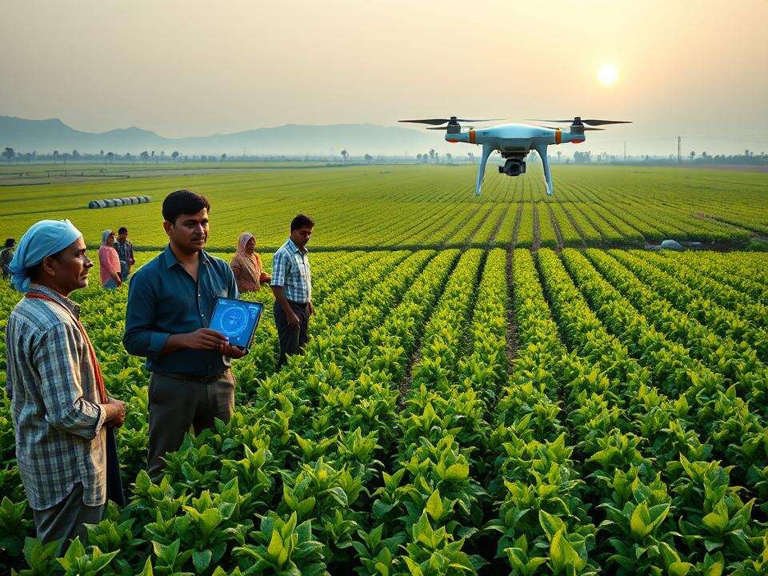
Agriculture is one of the most significant sectors where rural AI adaptation is becoming visible. Farmers in parts of Maharashtra are using AI based advisory apps, weather prediction dashboards and soil analysis tools provided by agri-tech startups. These tools help optimise pesticide use, irrigation cycles and crop selection.
Cooperative societies and local mandis have started digitalising procurement records and tracking inventory using simple dashboards. Warehouse operators use AI supported systems to predict storage needs and reduce crop spoilage. These changes do not require advanced technical knowledge but demand familiarity with digital interfaces. Young workers who can operate these systems gain an advantage in local employment.
Micro and small enterprises create new digital support roles
Small enterprises in textile clusters, dairy units and food processing units are integrating AI enabled tools for quality checks, billing automation and supply tracking. These micro-industries depend on rural youth who can handle basic digital workflows. As a result, demand for roles such as digital machine operators, AI tool assistants and production data coordinators has increased.
Local entrepreneurs who run small shops or service centres are using AI driven marketing tools, automated customer messaging and inventory management apps. This creates opportunities for digitally skilled workers who can manage these systems on behalf of business owners. The shift is subtle but growing steadily across rural markets.
The role of government and local administration in workforce transition
State skill missions and rural development departments have been promoting digital literacy programmes targeted at rural youth. Several districts are implementing blended training models that combine online sessions with offline workshops to reach students who have limited connectivity.
Local administrations also partner with NGOs and private training companies to conduct bootcamps on emerging technologies. These bootcamps introduce AI and automation concepts using simplified examples relevant to agriculture, micro manufacturing and local services. The focus remains on employability rather than deep technical mastery, ensuring the training is practical for rural environments.
Challenges that rural Maharashtra must overcome to meet AI workforce demands
Despite progress, rural regions face challenges in fully adapting to AI driven workforce needs. Connectivity gaps affect access to quality online training. Many rural households still lack computers or reliable smartphones. Teachers require additional training to confidently teach AI related concepts. There is also limited awareness about the specific job roles emerging from AI adoption outside metro cities.
To overcome these challenges, districts must invest in better digital infrastructure, training for educators, community learning hubs and partnerships with industry that connect rural learners to internships or apprenticeships. Without these interventions, the benefits of AI driven economic change may remain unevenly distributed.
Takeaways
AI related jobs in rural Maharashtra are growing through practical, entry level roles
District skill centres and colleges are expanding training programmes to match demand
Agriculture and small enterprises are adopting AI assisted tools at a steady pace
Better infrastructure and teacher training are essential for scaling rural AI readiness
FAQs
Are rural students expected to learn advanced AI skills
Not initially. Most rural programmes focus on basics, digital tools and applied AI usage rather than complex algorithmic training.
Which sectors in rural Maharashtra will benefit most from AI adoption
Agriculture, logistics, small manufacturing, retail services and local administration will see the earliest benefits from AI assisted systems.
How can rural youth begin preparing for AI linked jobs
They can start with digital literacy courses, basic coding, data tools and short skill programmes offered by district centres.
Will AI reduce jobs in rural regions
Current trends indicate that AI is creating new support roles rather than eliminating existing rural jobs. It changes job requirements rather than removing opportunities.