
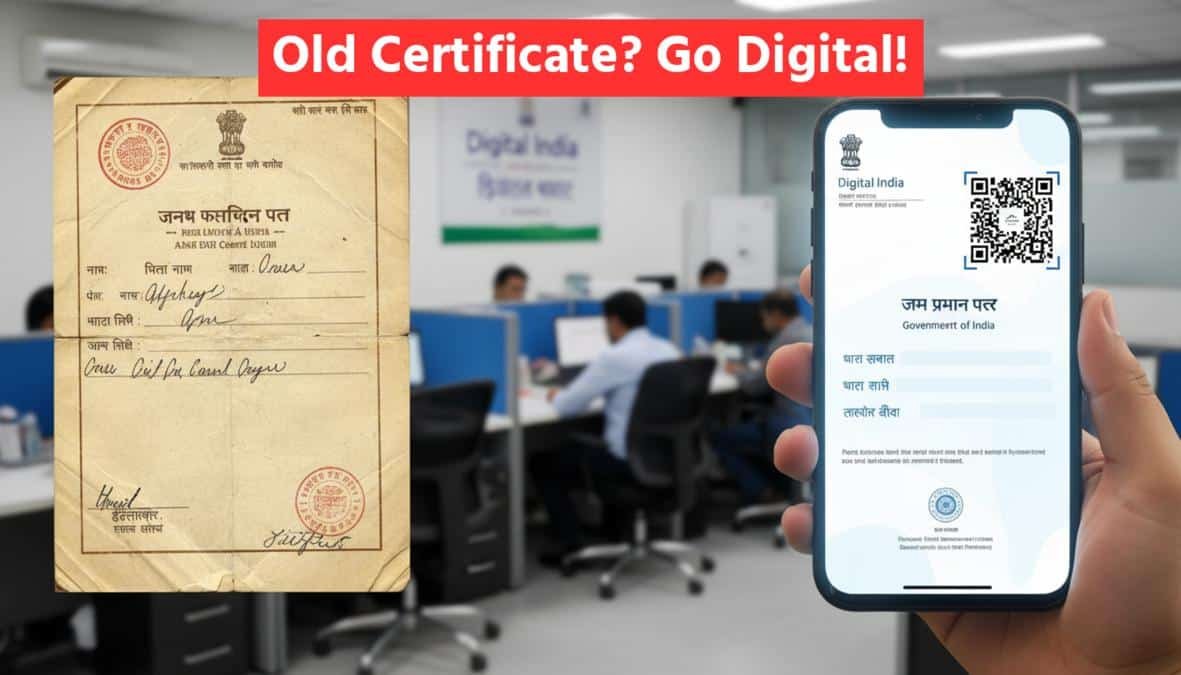

Applying for a digital birth certificate has become easier across India as most states now offer online registration and certificate download services. This guide explains the application process, required documents, eligibility, and important points applicants should know before applying.
This topic is evergreen with periodic updates based on state government portals. The article is written in an educational style using current procedures followed by municipal corporations, panchayats, state civil registration systems, and the Civil Registration System (CRS) under the Registration of Births and Deaths Act.
A digital birth certificate online is now accepted for most official purposes in India, including school admissions, passport applications, Aadhaar enrolment, voter registration, government schemes, and employment verification. With many state governments digitising civil registration services, citizens no longer need to visit government offices for every request. In most states, birth registration, application tracking, and certificate downloads can be completed online through official government portals.
Although the process varies slightly from one state to another, the overall procedure remains similar across India. Understanding the correct steps can help applicants avoid delays and ensure that the certificate is issued without errors.
What Is a Digital Birth Certificate and Why Is It Important?
A birth certificate is the first legal identity document issued to an individual after birth. It records essential information such as the child’s name, date of birth, place of birth, parents’ names, and registration details maintained by the local Registrar of Births and Deaths.
A digitally issued birth certificate carries the same legal validity as a printed certificate when downloaded from an authorised government portal. Many certificates now include a QR code or digital verification feature that allows institutions to verify authenticity.
This document is required for several purposes, including obtaining an Aadhaar card, applying for a passport, enrolling in educational institutions, claiming inheritance, applying for government welfare schemes, and verifying age for employment or competitive examinations.
Who Can Apply and Where Should the Application Be Submitted?
Birth registration is generally carried out by hospitals, municipal corporations, municipal councils, nagar panchayats, gram panchayats, or local registrars, depending on where the child is born.
Parents, legal guardians, or authorised family members can apply for the birth certificate. If the birth occurred in a hospital, the hospital usually submits the birth information to the local registration authority. Parents may then download the certificate online once it becomes available.
For births that were not registered immediately, delayed registration may be permitted according to the applicable legal provisions and state government rules. Additional verification or supporting documents may be required in such cases.
Most states provide dedicated Civil Registration System portals, municipal corporation websites, or integrated citizen service portals for online applications.
Documents Required for Online Birth Certificate Application
The required documents may differ slightly between states, but applicants are generally asked to provide basic supporting information.
Common documents include proof of birth issued by the hospital, identity proof of one or both parents, address proof, and details of the place of birth. If the child’s name was not recorded at the time of birth registration, some states allow name inclusion through a separate application process.
For delayed registrations, applicants may also need supporting affidavits, school records, hospital documents, or orders issued by the competent authority depending on the registration delay.
Applicants should ensure that all spellings, dates, and personal details match official identity documents to prevent future correction requests.
Step-by-Step Process to Apply for a Digital Birth Certificate
The first step is to visit the official birth registration portal of the respective state government or local municipal authority. Several states have integrated these services with citizen service platforms, making the process more convenient.
Create an account if registration is required, or log in using the available credentials. Select the birth certificate service and enter the required details, including registration number, date of birth, parents’ names, or place of birth if requested.
Upload the necessary documents in the prescribed format wherever applicable. Some authorities may require online payment of a nominal fee for duplicate certificates or delayed registrations, while first-time certificates are often issued free of cost if registration is completed within the prescribed period.
After submitting the application, applicants receive an acknowledgement or reference number that can be used to track the application status online.
Once approved, the digitally signed birth certificate can usually be downloaded directly from the portal.
Common Reasons for Application Delays
Most birth certificate applications are processed smoothly when the information submitted matches government records. However, delays may occur due to incomplete documentation, spelling mismatches, incorrect registration numbers, or missing hospital records.
Applications involving delayed registration generally require additional scrutiny. Authorities may request clarification or supporting documents before approving the certificate.
Parents should verify all information carefully before submission, especially names, dates, addresses, and identification details.
If the application remains pending beyond the expected processing period, applicants can contact the concerned municipal authority or registrar for assistance.
Tips for Keeping Your Birth Certificate Safe
Once the digital certificate is issued, download multiple copies and store them securely on your computer, cloud storage, or secure digital locker.
Many government services also allow citizens to store important documents digitally for easy access whenever required.
Avoid sharing the certificate unnecessarily with unknown individuals or unauthorised websites. Since the document contains sensitive personal information, it should only be submitted to trusted institutions whenever legally required.
Maintaining accurate digital records helps simplify future applications for passports, educational admissions, banking services, and government documentation.
Takeaways
- Most Indian states now allow online application and download of digital birth certificates.
- Keep all personal details accurate to avoid processing delays or future corrections.
- Use only official government portals for birth registration and certificate downloads.
- Save multiple digital copies after the certificate is issued for future official use.
Frequently Asked Questions
1. Can I apply for a birth certificate online in every Indian state?
Most states and Union Territories provide online birth certificate services through their municipal or civil registration portals, although the exact process may differ.
2. Is a digital birth certificate legally valid?
Yes. A digitally issued birth certificate downloaded from an authorised government portal is legally valid for official purposes.
3. What if the birth was never registered?
Delayed registration is generally permitted under applicable legal provisions, but additional documents, verification, and approval from the competent authority may be required.
4. How long does it take to receive a digital birth certificate?
Processing time varies by state and local authority. In many cases, certificates are available within a few days after successful registration, while delayed registration cases may take longer.