
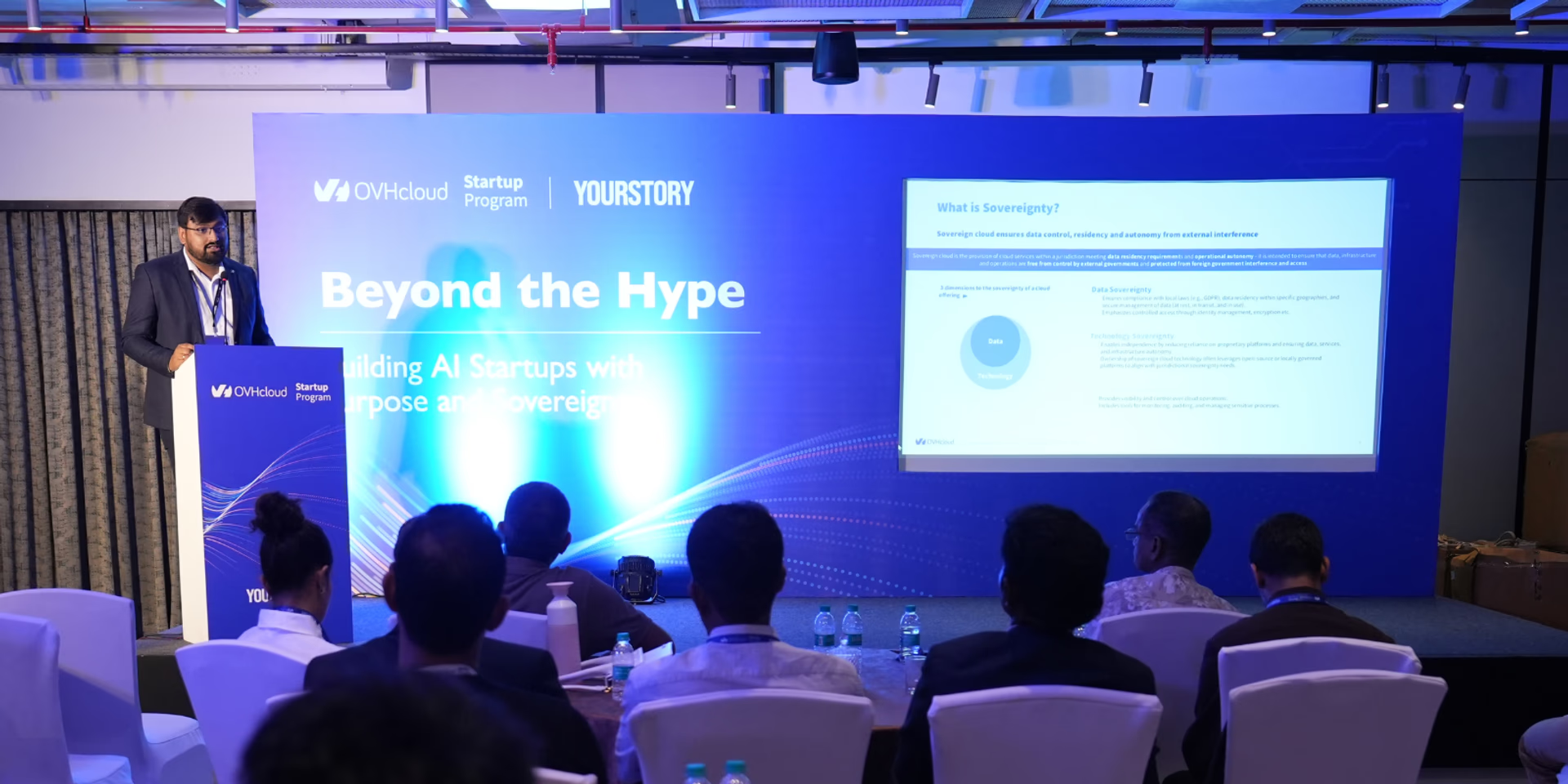

Government startup programs and initiatives like Google’s AI Accelerator are becoming key opportunities for Indian founders in 2026. This guide explains eligibility, application steps, and practical tips to improve your chances of selection.
Understanding Startup Programs and AI Accelerator Opportunities
The topic is largely evergreen with a strong current relevance due to ongoing AI-focused initiatives. Government startup programs in India, along with private accelerators like Google’s AI Startup Accelerator, aim to support early-stage companies with funding, mentorship, and market access.
The main keyword government startup programs fits naturally here because these schemes are structured to promote innovation across sectors. In India, initiatives such as Startup India, Digital India, and state-level incubation schemes offer financial support, tax benefits, and networking opportunities.
Google’s AI Accelerator, on the other hand, focuses specifically on startups building AI-first solutions. It provides mentorship from experts, technical resources, and access to global networks. These programs are competitive but accessible with the right preparation.
Eligibility Criteria for Startup India and AI Programs
Startup eligibility is one of the most important factors before applying. For government startup programs in India, a company must usually be registered as a private limited company, LLP, or partnership firm.
Under Startup India guidelines, the business should be less than 10 years old and have an annual turnover below a defined threshold. The startup must also demonstrate innovation, scalability, or a potential for employment generation.
For AI-focused accelerators like Google’s, eligibility often includes having a working product or prototype. Startups using machine learning, data science, or AI-driven solutions are prioritized.
Founders should also ensure proper documentation, including incorporation certificates, pitch decks, and product details before starting the application process.
Step by Step Application Process for Startup Programs
Applying to government startup programs requires a structured approach. The first step is registering on the official Startup India portal. Once registered, startups can apply for recognition and access various schemes.
Next comes preparing a strong application. This includes a clear business model, problem statement, and solution. A well-designed pitch deck is critical here, as it communicates your idea to evaluators.
For programs like Google’s AI Accelerator, applications are typically submitted online through official websites. These require detailed information about the product, technology stack, and market potential.
Shortlisted startups may be invited for interviews or demo presentations. Founders should be ready to explain their product clearly and answer questions about scalability and revenue models.
Documents and Requirements You Should Prepare
Having the right documents ready can significantly improve your chances of success. Most government startup programs require basic legal and financial documentation.
This includes company registration proof, PAN details, and founder identification documents. Financial projections and business plans are also important, especially for funding-based schemes.
For AI accelerators, technical documentation becomes equally important. Startups should clearly outline how their AI model works, what data it uses, and how it solves real-world problems.
A strong pitch deck should include the problem, solution, market size, revenue model, and growth strategy. Clarity and simplicity matter more than complex language.
Common Mistakes to Avoid During Applications
Many startups get rejected not because of weak ideas, but due to poor presentation or incomplete applications.
One common mistake is submitting vague or generic business plans. Evaluators look for clear value propositions and real-world relevance. Avoid overpromising without evidence.
Another issue is lack of product validation. Startups without a prototype or user feedback often struggle in competitive programs like AI accelerators.
Ignoring guidelines is also a frequent problem. Each program has specific requirements, and failing to follow them can lead to immediate rejection.
Lastly, weak storytelling can hurt your chances. Even strong ideas need to be communicated effectively.
Why These Programs Matter for Indian Startups
Government startup programs and private accelerators are shaping India’s innovation ecosystem. They provide not just funding, but also credibility and access to networks.
For Tier-2 and Tier-3 city founders, these programs are especially valuable. They help bridge the gap between local innovation and national or global markets.
AI-focused accelerators are also driving the next wave of startups in sectors like healthcare, fintech, education, and agriculture. This aligns with India’s broader push toward digital transformation.
Participating in such programs can significantly accelerate a startup’s growth journey.
Takeaways
- Government startup programs and AI accelerators offer funding, mentorship, and growth support
- Eligibility depends on company structure, innovation, and scalability potential
- A strong pitch deck and clear business model are essential for selection
- Avoid generic applications and focus on real-world problem solving
FAQs
Q1. Who can apply for Startup India programs?
Any registered startup in India that meets age, turnover, and innovation criteria can apply.
Q2. Is Google’s AI Accelerator open to Indian startups?
Yes, Indian startups working on AI-based solutions can apply if they meet program requirements.
Q3. Do I need a working product to apply?
For most accelerators, a prototype or early-stage product is preferred.
Q4. How long does the application process take?
It varies by program but can take a few weeks to a few months depending on selection stages.