
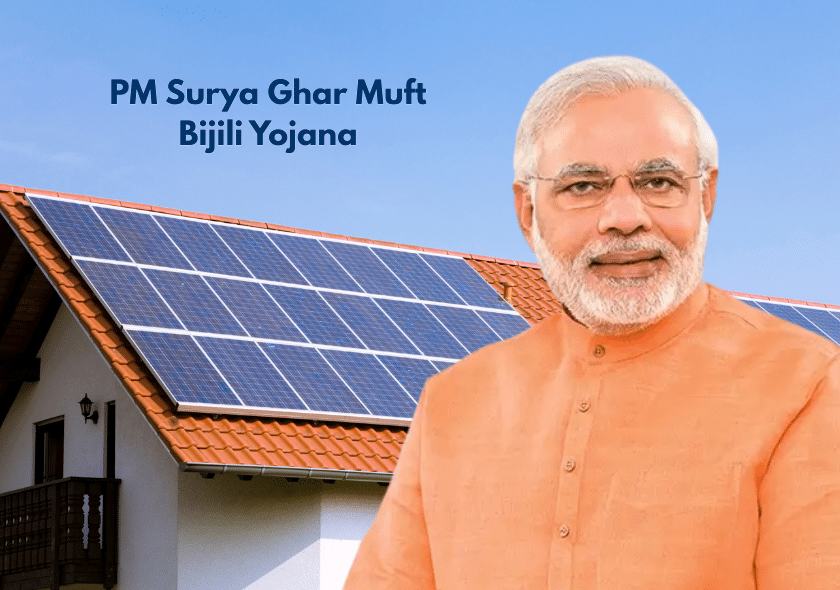

The PM Surya Ghar Yojana subsidy has become a key government initiative in 2026 to promote rooftop solar adoption across India. Here is a clear, step-by-step guide on eligibility, application process, documents, and how households can benefit from this scheme.
Understanding PM Surya Ghar Yojana and Its 2026 Updates
The PM Surya Ghar Yojana is a central government scheme aimed at providing financial assistance for installing rooftop solar panels in residential homes. In 2026, the scheme continues to focus on reducing electricity bills and promoting clean energy, especially in Tier-2 and Tier-3 cities where power costs and outages remain concerns.
The subsidy is directly linked to system capacity. Households installing up to 3 kW solar systems can receive significant financial support, with benefits credited directly to bank accounts. The scheme also integrates with DISCOMs and national portals to streamline approvals and installation tracking.
A major update in 2026 includes improved digital processing, faster approvals, and expanded vendor networks in smaller cities, making it easier for households outside metro areas to participate.
Eligibility Criteria for PM Surya Ghar Subsidy
Before applying, applicants must meet basic eligibility conditions. The scheme is designed for residential property owners across India.
Key requirements include having a valid electricity connection in the applicant’s name and sufficient rooftop space for solar panel installation. The property must be residential, not commercial or industrial.
The applicant should not have already availed of similar solar subsidies under overlapping schemes. Aadhaar linkage and a valid bank account are required for direct benefit transfer.
In Tier-2 cities like Nagpur, Indore, and Jaipur, local DISCOM approvals are now faster due to digitization under the scheme.
Step-by-Step Process to Apply Online
The application process for PM Surya Ghar Yojana in 2026 is fully online and centralized through the national solar portal.
First, visit the official National Portal for Rooftop Solar and register using your mobile number and electricity consumer number. After registration, select your state and DISCOM.
Next, fill out the application form with details such as rooftop size, proposed solar capacity, and installation preferences. Choose an approved vendor from the listed empanelled providers.
Once submitted, the DISCOM will review the application and issue feasibility approval. After approval, installation can begin through the selected vendor.
Post-installation, the system undergoes inspection. Once verified, the subsidy amount is credited directly to the applicant’s bank account.
Documents Required for Smooth Approval
Applicants should keep key documents ready to avoid delays. These include Aadhaar card, electricity bill, bank account details, and proof of property ownership.
In some cases, applicants may also need to submit a rooftop photograph or installation layout. Vendors usually assist in uploading technical documents after installation.
Accurate documentation ensures faster DISCOM approvals and timely subsidy disbursement.
Subsidy Structure and Financial Benefits in 2026
The subsidy amount depends on the installed solar capacity. For systems up to 2 kW, a fixed subsidy per kW is provided. Additional capacity up to 3 kW receives incremental support.
In practical terms, households can reduce installation costs significantly, making solar adoption more affordable. Monthly electricity bills can drop drastically, especially in high-consumption households.
For Tier-2 households facing frequent power cuts, rooftop solar also offers energy reliability, especially when combined with battery storage.
Common Mistakes to Avoid During Application
Many applicants face delays due to avoidable errors. Entering incorrect electricity consumer details or mismatched bank information can lead to rejection.
Choosing non-empanelled vendors is another common issue. Only approved vendors listed on the portal are eligible under the subsidy scheme.
Applicants should also avoid installing systems before receiving DISCOM approval, as this may disqualify them from subsidy benefits.
Takeaways
- PM Surya Ghar Yojana offers direct subsidy for rooftop solar installations up to 3 kW
- Application process is fully online via the national solar portal with DISCOM integration
- Tier-2 cities are seeing faster approvals and better vendor availability in 2026
- Accurate documentation and approved vendors are critical for subsidy approval
FAQs
1. How long does it take to receive the subsidy?
Typically, subsidy is credited within a few weeks after successful installation and inspection, depending on DISCOM processing time.
2. Can tenants apply for the scheme?
No, only property owners with a registered electricity connection can apply for the subsidy.
3. Is the subsidy available for systems above 3 kW?
Subsidy benefits are capped at 3 kW, but larger systems can still be installed without additional subsidy.
4. Do I need to pay the full amount upfront?
Yes, the installation cost is usually paid upfront, and the subsidy is reimbursed later directly to your bank account.