
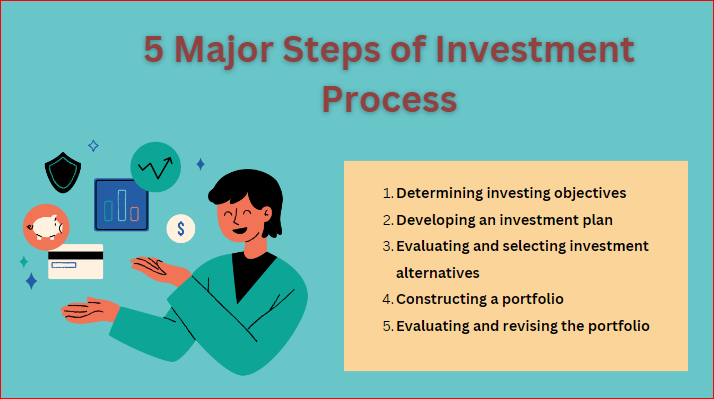

Evaluating a startup prospects before investing is essential because current market conditions demand tighter scrutiny, clearer financial discipline and stronger proof of demand. Many early stage companies are streamlining operations, and investors are now placing greater weight on fundamentals rather than hype driven growth metrics.
Understanding startup fundamentals and long term viability
Startups operate in unpredictable environments where early revenue statements can be misleading if growth is not consistent. Assess the size of the market first because a startup with a limited target segment struggles to scale sustainably. Market size, customer demographics and regional adoption patterns help determine whether the company can build momentum beyond early users. Secondary keywords like startup fundamentals and investor evaluation naturally support this section without crowding the narrative. A strong founding team with relevant experience also improves long term viability. Evaluate whether the team has worked in the same sector before and whether the founders hold clarity on product direction.
Analysing revenue quality and cost structure
A predictable revenue stream is a more reliable indicator than rapid but inconsistent spikes. Check if the startup earns through direct sales, subscriptions or transaction based models. Subscription models often provide better visibility for investors, while transaction models depend heavily on volume. Investors should evaluate customer acquisition cost and compare it with lifetime value. A company that spends heavily to attract users but fails to retain them exposes itself to cash burn risk. Review the cost structure to identify fixed and variable expenses. If the startup cannot reduce costs as it scales, profitability becomes difficult. Specific examples include logistics heavy startups that require capital intensive infrastructure and face thin margins. Investors need to study revenue pathways instead of relying only on headline growth numbers.
Evaluating traction, retention and user behaviour patterns
Traction metrics reveal whether the startup has found product market fit. Monthly active users, retention percentages and repeat purchase rates indicate whether customers see real value. A startup that grows quickly but loses users at the same pace faces long term instability. Investors should check cohort behaviour because it shows how users acquired in different months behave over time. If more recent cohorts perform better than older ones, the product is improving. If performance declines, the startup may be struggling with customer satisfaction. Retention also depends on solutions that solve recurring problems rather than one time needs. Startups with stronger retention require less marketing expenditure, which strengthens financial sustainability.
Assessing financial health and cash management discipline
A startup with clear cash management discipline is more resilient, especially in uncertain markets. Investors should review cash runway, burn rate and funding history. A longer runway provides stability and helps founders focus on execution instead of continuous fundraising. Analyse how previous funds were deployed. If most spending went into aggressive marketing with limited returns, the company may lack operational control. Scalable cost structures make a significant impact on margin improvement. For example, SaaS startups with centralised operations typically scale more efficiently than asset heavy startups that require physical expansion.
Understanding regulatory risks and sector specific challenges
Each industry carries different compliance requirements. Fintech startups must follow data protection norms and financial regulations. Health tech companies must handle patient privacy and medical data rules. Investors need to assess whether the startup has systems in place to manage compliance because lapses lead to penalties or loss of customer trust. Sector specific challenges like logistics delays, data security breaches or supplier dependency also influence sustainability. Evaluating these risks early prevents unforeseen disruptions later.
Studying competitive landscape and unique advantages
A startup must show clear differentiation to survive competition. Evaluate whether the product has defensible advantages such as technology depth, patents, specialised data or exclusive partnerships. Competitive analysis should include both direct and indirect competitors. Direct competitors provide similar services while indirect competitors offer alternative solutions to the same problem. A startup without a clear advantage will struggle to retain customers if stronger players enter the market. A defensible moat improves long term positioning and makes investments or employment decisions safer.
Assessing culture, team quality and operational execution
Investors and job seekers should equally evaluate team culture. A strong execution driven culture ensures consistent delivery of product improvements. Review how the team handles setbacks, how quickly issues get resolved and how transparent the internal communication is. Startups with unclear roles, high attrition or unrealistic product deadlines may not sustain growth. Employees considering joining should check if the startup offers learning opportunities, career growth paths and a stable leadership vision. These factors impact job stability and overall career progression.
Takeaways
Startups should be evaluated on market size, team strength and product clarity
Revenue quality, retention and cost structure reveal long term potential
Cash discipline and regulatory compliance are critical for sustainability
Competitive differentiation guides safer investment and career decisions
FAQ
What financial metrics matter most when evaluating a startup
Revenue quality, customer acquisition cost, lifetime value, cash runway and burn rate provide the clearest picture of financial stability.
How important is product market fit during early evaluation
It is essential because without product market fit, growth patterns remain unstable and the company relies heavily on marketing spending to survive.
Should employees evaluate startups differently than investors
Employees should assess team culture, stability, role clarity and growth opportunities in addition to financial metrics.
Is traction more important than revenue in early stages
Traction is useful for early validation, but sustainable revenue provides stronger evidence of long term viability.