
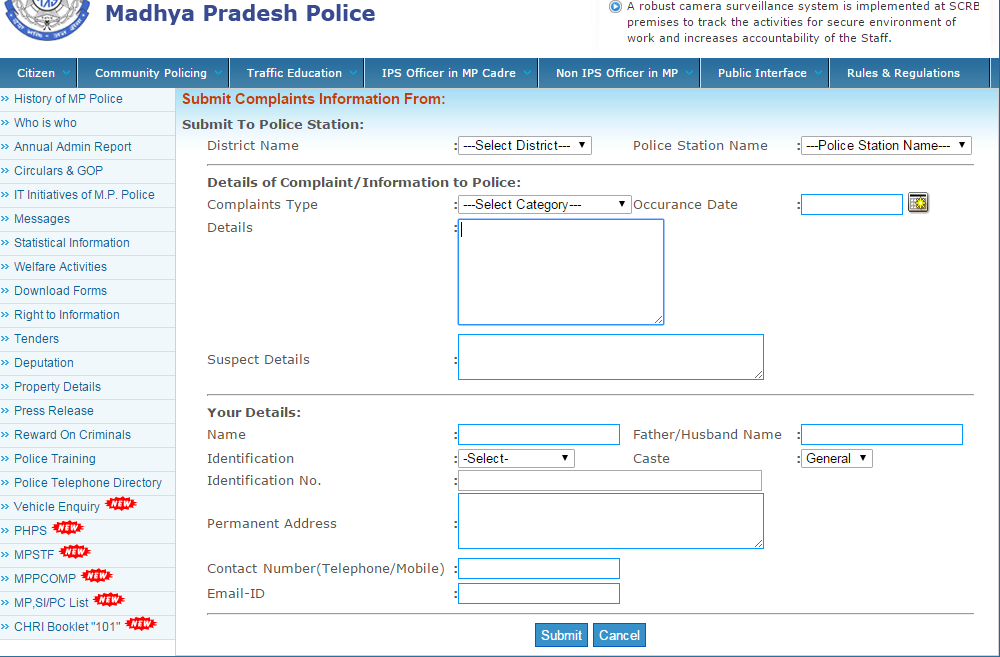

Filing an FIR online has become a practical option for residents of Tier-2 cities who want faster access to the police without repeated station visits. This guide explains how to file an FIR online in your city, what types of complaints qualify, and how to avoid common mistakes.
An online FIR is primarily meant for non-cognizable and preliminary complaints, and the process varies slightly by state. Understanding the correct steps helps prevent rejection or delays.
Understanding Whether Online FIR Applies to Your Case
Before starting, it is important to know whether your complaint is eligible for online FIR registration. Most Indian states allow online filing for issues like lost documents, mobile phone theft, minor fraud, missing persons, and property loss. Serious crimes such as assault, murder, or sexual offences still require physical reporting at a police station.
Tier-2 city police portals usually classify complaints as e-FIR, online complaint, or lost report. An e-FIR often leads to automatic FIR registration, while an online complaint may require verification by local police before conversion into an FIR. Checking this distinction saves time and sets the right expectation.
Finding the Correct State Police Portal
Each state operates its own police website or citizen service portal. Residents must file complaints only on their state police website, not central platforms. For example, Maharashtra, Gujarat, Rajasthan, and Madhya Pradesh all have separate online complaint systems linked to local police stations.
Search for your state police official website and locate sections labeled Citizen Services, Online FIR, e-Complaint, or Lost Report. Using unofficial websites can lead to data misuse or rejection of the complaint.
Step-by-Step Process to File FIR Online
Start by creating a user account using your mobile number and email ID. Most portals use OTP-based verification to confirm identity. After login, select the type of complaint from the available list.
Enter personal details accurately, including address, district, and nearest police station. Write the complaint clearly with date, time, location, and sequence of events. Avoid emotional language and stick to verifiable facts. Upload supporting documents such as identity proof, bills, or photographs if required.
After submission, you will receive an acknowledgement number or reference ID. This number is critical for tracking the complaint status and for future follow-ups.
What Happens After Submission
Once submitted, the complaint is reviewed by the concerned police station. In Tier-2 cities, verification may include a phone call or local inquiry. If approved, the complaint is converted into an FIR and assigned an FIR number. If rejected, the reason is usually mentioned on the portal or communicated via SMS.
Police may ask you to visit the station for signature verification or additional documents. This step does not cancel the online FIR benefit but ensures legal compliance.
Tracking FIR Status and Downloading Copies
Most state portals allow users to track FIR status using the acknowledgement number. You can view whether the FIR is registered, under review, or closed. Some portals also allow downloading a copy of the FIR or loss report, which is useful for insurance claims, SIM blocking, or official records.
Keep digital and printed copies safely. In many Tier-2 cities, banks and telecom providers accept digitally generated FIR copies.
Common Mistakes Tier-2 Residents Should Avoid
One common error is filing the complaint under the wrong category, which leads to rejection. Another issue is providing incomplete addresses or incorrect police station jurisdiction. Submitting false or exaggerated information can attract legal consequences.
Residents should also avoid waiting too long after the incident, as delays can weaken the complaint. Filing as soon as possible improves credibility and response time.
Offline FIR vs Online FIR in Smaller Cities
While online FIR saves time, it does not completely replace offline reporting in Tier-2 areas. Police infrastructure and portal efficiency vary by district. For urgent or serious crimes, visiting the police station remains the fastest and legally safest option.
However, for routine complaints and documentation, online FIR filing significantly reduces paperwork and follow-ups.
Takeaways
- Online FIRs are best suited for non-serious complaints like loss or minor theft
- Always use your state police official portal to file complaints
- Clear factual writing improves chances of FIR approval
- Keep acknowledgement numbers and FIR copies securely
FAQs
Can I file an FIR online from any city in India?
Yes, but only through your respective state police portal. There is no single national FIR filing website.
Is an online FIR legally valid?
Yes, once approved and assigned an FIR number, it has the same legal validity as an offline FIR.
How long does it take for an online FIR to be approved?
It usually takes 24 to 72 hours, depending on verification and workload at the local police station.
What should I do if my online FIR is rejected?
Check the rejection reason, correct the issue if possible, or visit the nearest police station with the reference number.