
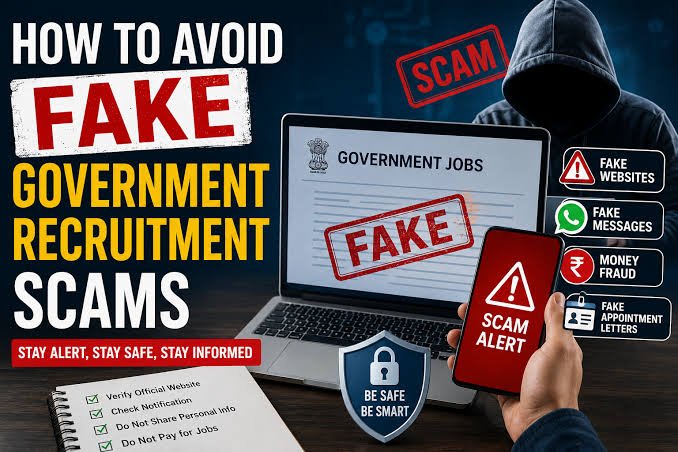

Fake government recruitment websites and job scams have become increasingly sophisticated, making it harder for job seekers to distinguish genuine opportunities from fraudulent ones. Before applying for any government vacancy, it is essential to verify the authenticity of the recruitment portal, notification, and payment process. Taking a few simple precautions can protect your personal information and prevent financial loss.
Why Government Job Scams Are Increasing
Government jobs remain highly sought after in India due to their stability, benefits, and career growth opportunities. This demand has also attracted fraudsters who create fake recruitment portals, impersonate government departments, and circulate misleading advertisements on social media, messaging apps, and unofficial websites.
Scammers often exploit the urgency surrounding recruitment notifications by promising guaranteed selection, early access to application forms, or direct appointments in exchange for money. In many cases, they use logos, official-looking designs, and website names that closely resemble genuine government portals to deceive applicants.
Understanding how legitimate government recruitment works is the first step toward avoiding these scams.
Verify the Official Recruitment Website
Before submitting an application, always check whether the recruitment notification is published on the official website of the concerned government department, ministry, commission, or public sector organization.
Authentic government recruitment websites usually use official government domains such as “.gov.in” or “.nic.in”. Recruitment notifications are also commonly available on the official websites of organizations like UPSC, SSC, Railway Recruitment Boards, State Public Service Commissions, banking recruitment agencies, and other government institutions.
Avoid applying through websites that use unusual domain names, excessive advertisements, or URLs that closely imitate official government websites.
Watch for Common Warning Signs of Job Scams
Fraudulent recruiters often follow similar patterns. Recognizing these warning signs can help you avoid becoming a victim.
Be cautious if a recruiter:
- Promises guaranteed government jobs.
- Requests payment for selection or appointment.
- Asks for bank account details unnecessarily.
- Demands payment through UPI, wallets, or personal accounts.
- Sends unofficial appointment letters without any examination or interview.
- Pressures candidates to act immediately because “limited seats” are available.
Legitimate government recruitment follows a transparent process involving official notifications, eligibility criteria, examinations, interviews where applicable, and published results.
Verify Recruitment Notifications Carefully
Many fake advertisements circulate on social media claiming that thousands of government vacancies have been announced. Before sharing or applying, verify the information through the official recruiting authority.
Check the following details:
- Advertisement number.
- Name of the recruiting organization.
- Eligibility criteria.
- Application dates.
- Official contact information.
- Examination schedule.
Cross-checking these details on the official website helps confirm whether the notification is genuine.
Protect Your Personal and Financial Information
Job applications require certain personal information, but applicants should remain cautious while sharing sensitive details online.
Never share:
- OTPs received on your mobile phone.
- Internet banking credentials.
- Debit or credit card details.
- UPI PIN.
- Passwords for email or banking accounts.
If an application fee is officially prescribed, it should be paid only through the authorized payment gateway mentioned on the official recruitment website.
Avoid transferring money directly to individuals claiming they can secure government jobs through influence or internal contacts.
How Social Media Job Scams Mislead Applicants
Fraudsters frequently use platforms such as WhatsApp, Telegram, Facebook, Instagram, and other social media channels to spread fake recruitment messages.
These posts often include attractive graphics, fake salary figures, and urgent deadlines designed to encourage immediate action without verification.
Before forwarding recruitment messages to friends or family members, verify them through official government sources. Sharing unverified information may unintentionally help scammers reach more victims.
What to Do If You Suspect a Job Scam
If you believe you have encountered a fraudulent recruitment website or fake government job advertisement, stop all communication immediately.
Preserve screenshots, emails, payment receipts, website addresses, and chat records if available. These may assist authorities during an investigation.
Victims or those who suspect cyber fraud can report incidents through the National Cyber Crime Reporting Portal or contact the national cybercrime helpline. Reporting fraudulent websites also helps prevent others from becoming victims.
Final Thoughts
Government recruitment in India follows established procedures that prioritize transparency and merit. No legitimate authority guarantees selection in exchange for money or personal favors.
Before applying for any government vacancy, spend a few minutes verifying the recruitment notification, website, and payment process. This small effort can protect your personal information, finances, and career aspirations while ensuring that your application reaches the correct recruiting authority.
Key Takeaways
- Apply only through official government recruitment websites using verified domains.
- Never pay anyone claiming to guarantee a government job or selection.
- Verify every recruitment notification through the concerned government authority.
- Report suspicious recruitment websites and fraudulent job offers to cybercrime authorities.
Frequently Asked Questions
Q1. How can I identify an official government recruitment website?
Official government recruitment websites generally use domains ending with “.gov.in” or “.nic.in” and publish detailed notifications issued by the concerned department or recruiting authority.
Q2. Do government departments ask candidates to pay for selection?
No. Legitimate government recruitment does not involve payments for selection, appointment, or guaranteed employment. Only officially notified application fees, if applicable, should be paid through authorized payment channels.
Q3. What should I do if I accidentally shared my details with a fake recruitment website?
Immediately stop further communication, change passwords if necessary, monitor your financial accounts, and report the incident through the National Cyber Crime Reporting Portal or the cybercrime helpline.
Q4. Are job advertisements on social media always fake?
No. Government departments may share official recruitment updates through verified social media accounts. However, applicants should always confirm the notification on the official recruitment website before applying.
(Internal keyword suggestions: fake government recruitment websites, government job scams India, how to identify fake job portals, government recruitment fraud, cyber safety for job seekers, official government recruitment websites, recruitment scam prevention, online job fraud awareness)